
New trial denied for Saxton man who drove through market doors, assaulted trooper
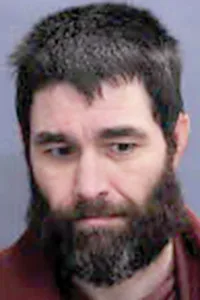
Duvall drove SUV through Saxton store doors, fought with police officers
Trending
The Pennsylvania Superior Court has denied a new trial for a Saxton man who in 2021 drove his SUV through the closed glass doors of the town's major market and sped through the vestibule before stopping.
After he got out of his vehicle, Jordan Edward Duvall became embroiled in arguments with bystanders and struggled with responding state troopers, attempting to headbutt and kick one officer.
He then threatened to slit the throat of another officer.
Another trooper who arrived at the scene began to follow Duvall as he attempted to walk away from the market.
That officer eventually used a taser to bring the fleeing suspect to the ground.
"His active resistance was captured by the patrol vehicle's dash camera, as was his erratic and offensive speech that he yelled while officers took statements from witnesses," according to the Superior Court opinion that was handed down last Friday.
The Superior Court judges reviewing the case -- Anne E. Lazarus, Mary Jane Bowes and Timika Lane -- added that the troopers in a search of Duvall's Honda CRV found what they believed was methamphetamine and straws used to ingest the drug.
Duvall, 35 years old at the time, was charged with multiple offenses including burglary, criminal trespass, aggravated assault, simple assault, resisting arrest and terroristic threats.
He was convicted by a jury of all charges except terroristic threats.
During the jury deliberations, it was revealed that Duvall had brought his dog with him that day and that the dog was in his vehicle.
The judge ordered him during the noon hour to take his dog home, pointing out he may be convicted that afternoon.
Duvall ignored the order, and when convicted, Judge E. Travis Livengood, still concerned about the dog's safety, postponed a hearing to revoke Duvall's bail until noon the next day
The appeals court reported that Duvall, rather than taking the dog home, absconded to New York state as well as posting Facebook messages "disparaging the justice system and threatening courthouse staff."
That led to a new charge of terroristic threats, the Superior Court panel explained.
When it came to the new charge, Duvall asked Livengood to recuse himself, an action that the judge rejected, noting, "He did not interpret Duvall's statements to be personal." There was no need to recuse himself, Livengood stated.
Duvall eventually was sentenced to a term of 16 to 32 years in prison.
He is serving his sentence in the State Correctional Institution, Houtzdale.
In his appeal to the Superior Court, Duvall called the sentence "unreasonable."
He sought a new trial, stating the verdicts were so contrary to the evidence "as to shock the sense of justice and so that right may be given another opportunity to prevail."
Duvall argued his brakes weren't working the day of the crash and contended no evidence was presented during the trial to contradict his story.
He also emphasized the sentence was above the range recommended by the state sentencing guidelines and argued Livengood should have recused himself.
The Superior Court panel rejected Duvall's request.
"Upon review, we cannot say that the court abused its discretion in sentencing (Duvall) above the guidelines," the opinion stated.
"Judge Livengood did not advocate against (Duvall) throughout the proceedings, but rather thoroughly explained his reasoning for the upward deviation from the guidelines and ordered his sentences consecutively," the panel stated.
The appeals court noted that Livengood also called Duvall a "sociopath," but the panel explained what he meant by that term.
He used it to describe Duvall's "repeated failure to follow his directives and conform to society."
The panel said the evidence supported Livengood's conclusion that Duvall's actions throughout the episode were "deliberate."
"Accordingly, the record reflects that the sentence the court imposed was reasonable, given the nature of Duvall's offenses, his conduct before and following his convictions, and Judge Livengood's observations.
"No relief is due," the appeals court concluded.
The Superior Court included in detail the judge's explanation for the lengthy sentence in the Duvall case.
Livengood initially called Duvall a sociopath, stating "his conduct has been shown to be one that he does not think that the norms of societal rules or the laws or any directives on how orderly society is supposed to function applies to him in any way."
By way of explanation as to why he used the alleged derogatory term, Livengood stated, in all his years as a judge (18), he has not seen a more intentional act captured on camera than Duvall going through the door of the market.
"He had to back up, position himself carefully through two bollards in order to get into and smash into the doors. It is perhaps one of the most intentional acts criminal-wise to be caught on camera," Livengood stated.
After going through the doors, Duvall then "hit the gas again and sped through the corridor," the judge continued by way of explanation.
The market was closed when the crash occurred, but as Livengood related, Duvall had no idea if there were workers in the corridor and, he stated, "it really appeared that he did not care because ... he sped through the corridor, the entryway of the market."
The judge also mentioned Duvall's attempt to headbutt and fight with the troopers, noting it as another instance where, he said, Duvall "decided not to follow any norms of society."
He concluded, "just by his very conduct, he's making it very clear, he's speaking as loudly as he can by his conduct, that he is a danger, clear and present danger to the public."