
Negative spin: Business owners not thrilled with state Supreme Court’s decision on skill games
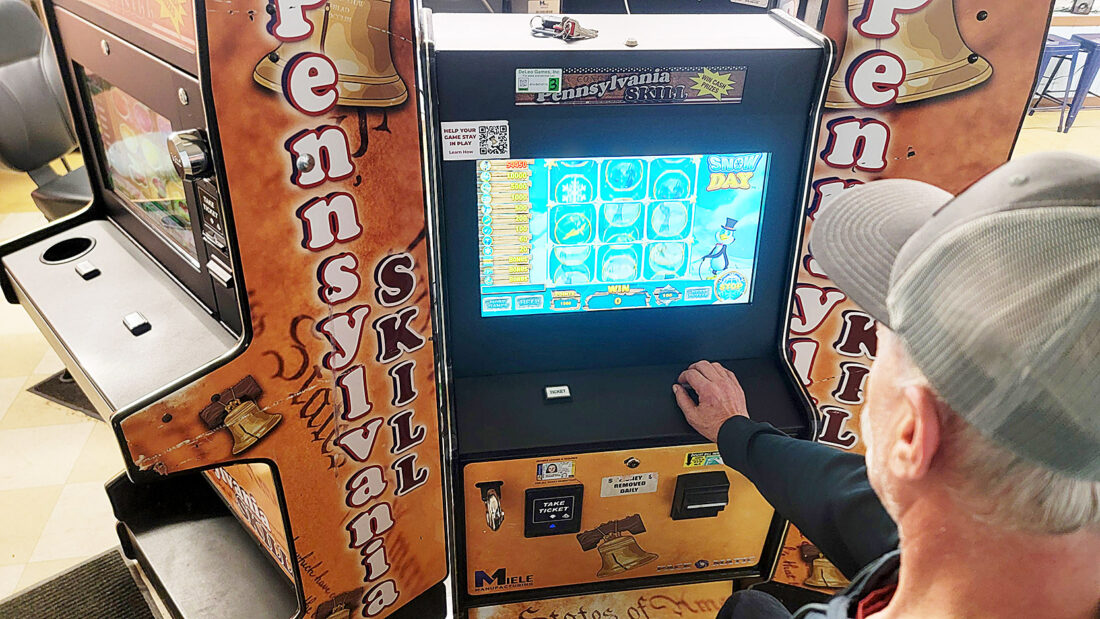
A Pennsylvania Skill game is played in a 24-hour game room. Mirror photo by Patrick Waksmunski
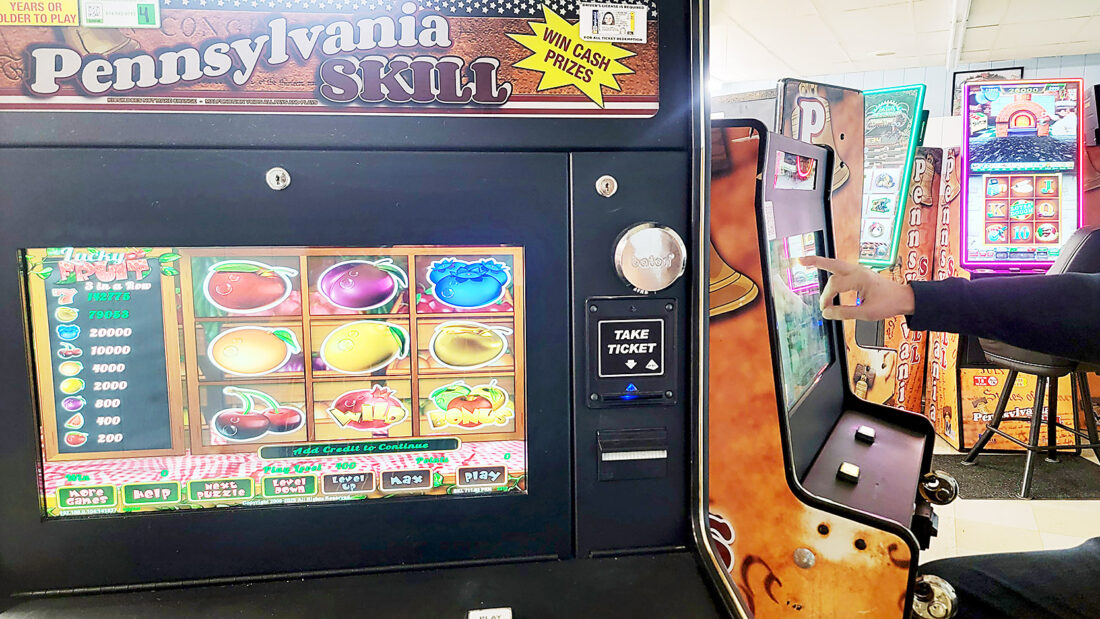
A patron plays a Pennsylvania Skill game in a local 24-hour game room. Mirror photo by Patrick Waksmunski
A Pennsylvania Skill game is played in a 24-hour game room. Mirror photo by Patrick Waksmunski
A patron plays a Pennsylvania Skill game in a local 24-hour game room. Mirror photo by Patrick Waksmunski
Trending
Allegheny Trade Co. owner Ken Westover doesn't play skill games and hasn't had them in his store for long, but he questions the basis of Monday's Pennsylvania Supreme Court ruling that the games don't actually require significant skill.
"Something's going on (in the realm of knowhow)," Westover said, based on his observations of players. "(Because) some people do well, and some do not."
Westover was fairly representative of the overall negative spin Tuesday expressed by most local business owners who spoke to the Mirror on the court ruling -- which equates the machines with slots, thus making them subject to the same regulations, although the ruling is suspended four months to give the General Assembly time to make statutory adjustments, if desired.
DeLeo Games of Altoona is a provider of those games to many local businesses.
"(W)e are disappointed by the court's decision to reverse prior rulings that many operators, location owners and small businesses have relied on for years," company President Tom DeLeo wrote in an emailed response to the Mirror's request for comment. "(However) we respect the judicial process and will continue to operate within the law."
Many small businesses, including taverns and convenience stores, along with nonprofits like veterans groups and volunteer fire companies, "depend on the supplemental income generated by skill games," DeLeo wrote.
The machines support local jobs and local communities, he added.
During the 120-day stay of enforcement, DeLeo plans to work "with industry partners, lawmakers and stakeholders to advocate" for "a fair, transparent and responsible solution that protects Pennsylvania businesses while providing appropriate oversight and regulation."
It's encouraging to him that "legislative leaders have already expressed interest in pursuing gaming reform and discussing a regulatory framework," DeLeo wrote.
He's hoping his customers and other community partners state their case with those lawmakers, he wrote.
Money from 'people's pockets'
It's "ridiculous" for the high court to have reversed prior rulings that had confirmed the skill games as legal, according to Westover.
If the games go away, "it will be taking a lot of money out of a lot of people's pockets," Westover said.
He had a couple machines installed in his shop a couple months ago "because everybody else has them, and they seem to be doing good," Westover said.
His idea was to supplement his revenue, should the main part of his business, firearms, slow down, he said.
He had noticed that the skill machines in the restaurant where he goes to eat wings are constantly busy, he said.
So far at his shop, it's mostly the firearms customers who are using the skill machines, along with a few individuals who walk for exercise along the street and have stopped in, said sales manager Don Roudabush.
Eventually, Westover and Roudabush expect that there will be people who come to the shop specifically to use the skill machines.
Westover wonders whether the state has an interest in doing away with the machines because they're in competition with casinos.
He hasn't received any commissions from his machines yet, he said.
But he would be upset to lose them, he said. If they remain, and his main business slows down, he would expect to add more of them.
Skill involved
Like Westover, Brandee Seevers thinks that there's significant skill involved in the skills games.
Seevers was sitting at a machine in the front room of the Johnston Plumbing office in Altoona Tuesday, where her friend, Ben Johnston, brother of the company owner, was also present.
Seevers demonstrated by triggering an option on a machine that required her to duplicate the order in which a succession of colored dots flashed, with each successive test increasing the number of dots involved -- thus increasing the difficulty of the task.
She plays every day.
She has good days and bad days, but figures she's "up" over the past year.
"It's a bunch of (crap)," Seevers said of the ruling.
Government has more important responsibilities like "getting crackheads off the corner," she said.
If the machines go away, "it will hurt a lot of people," said Johnston, who nevertheless explained that the plumbing business doesn't rely on its machines.
They're not slots
Jitendra Patel, owner of the Sunoco gas station and convenience store at 17th Street and Sixth Avenue, would prefer that things stay the same or that the machines be legalized.
He doesn't agree with the court's equating them with slots.
"They're not," he said.
They benefit the middle class and poorer individuals who make use of them, he said.
If they were legalized properly, it would be good for both the government and the people, Patel said.
Such legalization would also have the benefit of making people not scared, he said.
But if they were to be outlawed, it would seriously cut into his revenue and might even threaten the survival of his business, he said.
Nevertheless, he doesn't plan to worry about it, because it's out of his control, he said.
Gaming reform critical
"Gaming reform is a critical piece of resolving this year's budget," a pair of Republican leaders in the Senate -- President Pro Tem Kim Ward and Majority Leader Joe Pittman -- stated in a news release.
The Supreme Court decision "will hopefully force us to deal with an unregulated sector of the gaming industry that has both helped mom-and-pop operations, as well as local clubs and veterans organizations, while at the same time negatively impacting traditional gaming operations," Ward and Pittman wrote.
The goal should be to ensure "local establishments have the tools to remain viable," while also "protecting our most vulnerable population from falling into the throes of addiction," wrote House Republican Leader Jesse Topper, R-Bedford.
The ruling is a "significant victory for consumers, taxpayers and the rule of law," wrote Attorney General Dave Sunday in a news release. "The Supreme Court recognized what our office has argued from the beginning -- these machines operate as gambling devices and cannot legally exist without the same oversight, regulation and accountability as other forms of legalized gaming."
Mirror Staff Writer William Kibler is at 814-949-7038.