
Altoona Area School District’s adult education program fuels success
-
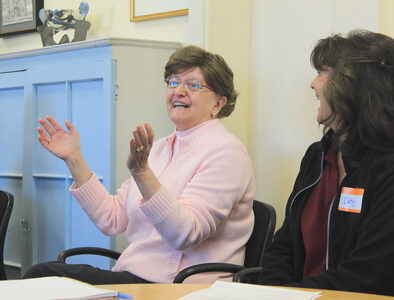
- Part-time instructor Dee Martin-Spallone shares her perspective on the Altoona Area School District’s Adult Education Program. Mirror photo by Colette Costlow
-
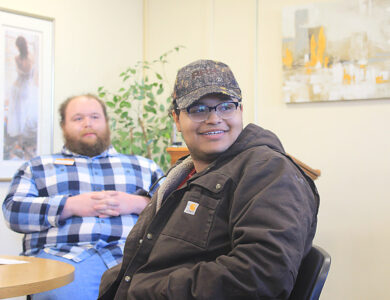
- Current student Zach Brown, 20, shares his accomplishments with the group, as he recently passed his reading exam and dreams of becoming an electrician. Mirror photo by Colette Costlow
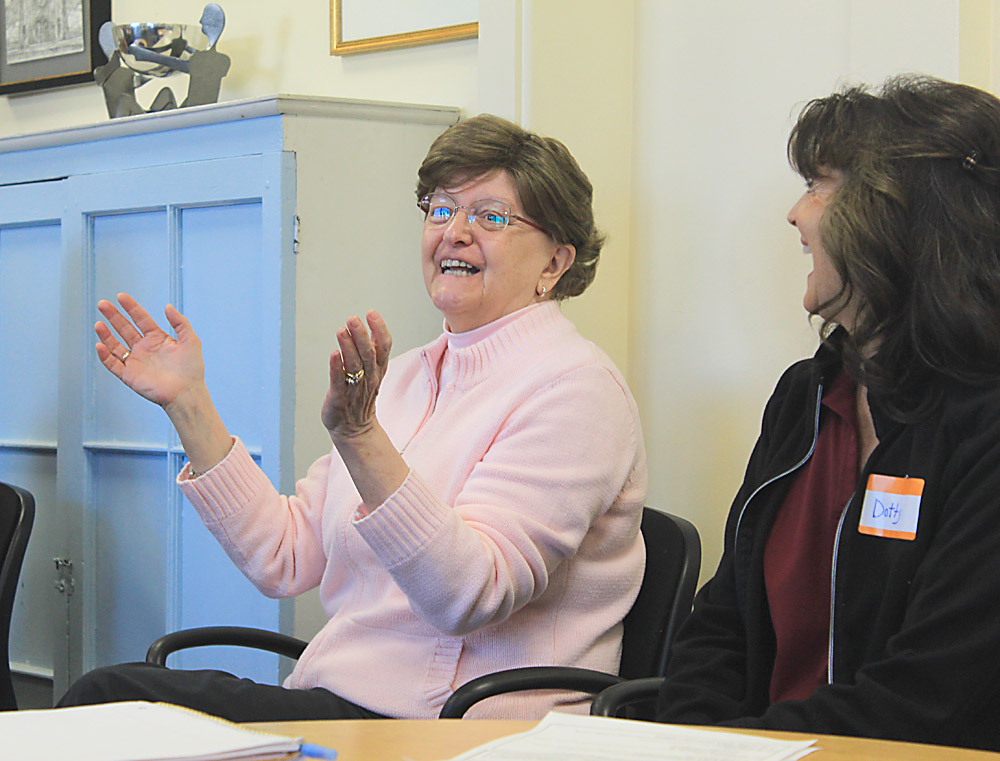
Part-time instructor Dee Martin-Spallone shares her perspective on the Altoona Area School District’s Adult Education Program. Mirror photo by Colette Costlow
Success stories from the Altoona Area School District’s Adult Education Program took centerstage Wednesday during a roundtable discussion with state Department of Education officials.
The free Adult Education Program has received more than $474,000 in funding from the Shapiro administration since 2023.
Lynette Kuhn, Deputy Secretary for Postsecondary and Higher Education, sat in on a roundtable discussion with students, alumni and staff to hear how integral the funding is to Altoona’s program.
The program has been Blair County’s adult education provider for almost 60 years, according to special programs coordinator Tina Swineford.
Adults can earn their GED and prepare for career changes or college with help from adult educators on the second floor of the ArtsAltoona Center on Sixth Avenue.
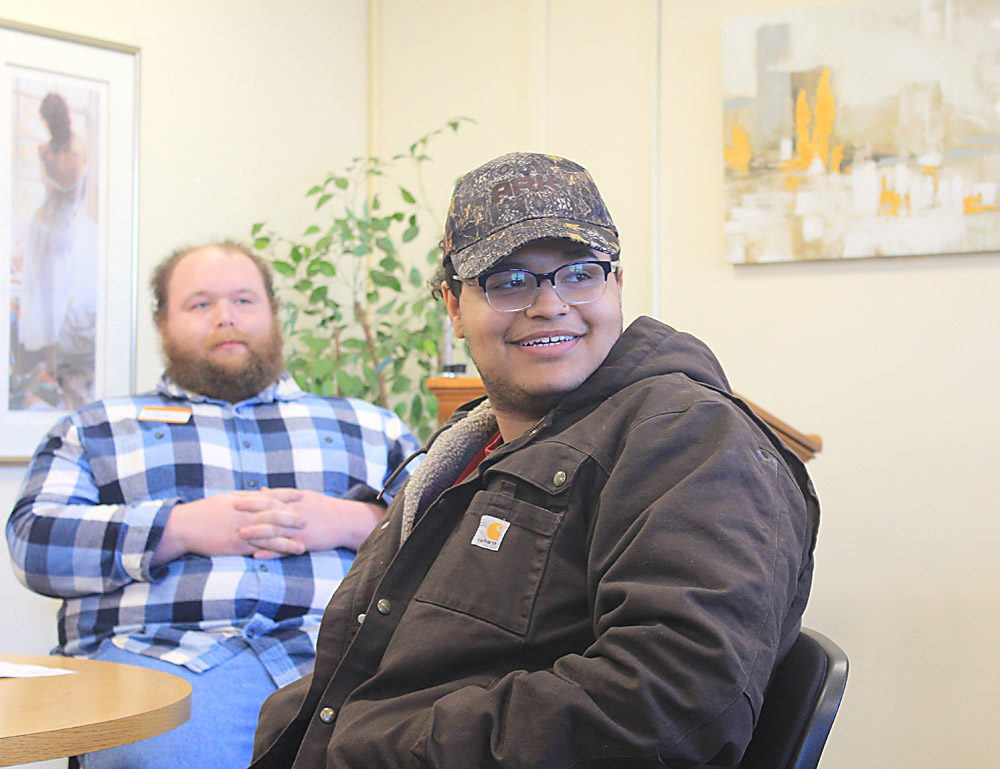
Current student Zach Brown, 20, shares his accomplishments with the group, as he recently passed his reading exam and dreams of becoming an electrician. Mirror photo by Colette Costlow
“We are a small program in comparison to others,” she said, “but you’re not going to find another program that compares with the heart and the soul and the dedication of our learners and our staff.”
Before hearing from local students, Kuhn said she believes in multiple pathways to finding employment, supporting a family and continuing the journey of success.
“In education, you sitting at this table is why we do what we do,” she said, “and is the reward at the end of the day to see the success of you and all of the students.”
Excelling alumni
Three alumni from Altoona’s adult education program shared their positive experiences from going back to school during the discussion.
Altoona resident Kiera Myrick, 36, enrolled in the Adult Education Program five years ago after needing a GED to get her barber license. After trying to achieve her goals without a degree, she realized that she needed more than a piece of paper.
“I didn’t know that I needed the support that I had from this place,” she said.
She said the program staff motivated her to care about her education and make her dreams of becoming a barber a reality.
“I will say that if I had to do it 1,000 times over again, I’ll pick this place all the time,” she said. “I tell people about this place all the time. If they don’t have anything, or they were in my situation, I always tell them to check this place out.”
“And they won’t be disappointed,” she added.
Former student David Motel, 31, received his GED in three weeks before going through the Clearfield County Career and Technology Center and attaining his commercial driver’s license.
“I put my head down and I went through it,” he said, mentioning that he had a newborn baby to care for at the time.
“I’m very fortunate for this program,” he said. “(If it) wasn’t for this program, I wouldn’t have had the occupation I have now. I’m very fortunate. That’s why these programs are so important.”
“He passed all four exams in three weeks,” Swineford said. “Brilliant, that never happens. Those exams are tough.”
She said that Motel is a great example of the program’s success stories.
“We’re really proud of him and the life that he’s built for himself,” she said.
Jawaher Mustafa, 33, recently took English as a Second Language classes through the program and now works as a bank teller.
Originally from Sudan, she said it’s difficult to come to a new country and learn a different language, but it’s easier when finding a supportive place like the Altoona Adult Education Program.
Swineford mentioned that Mustafa ran 1 to 2 miles to class on hot mornings, as Mustafa didn’t have access to a car.
“I’m so happy to be here today, and I appreciate your help,” she said.
Dedicated program instructor
Amanda Harrison, chief of the Division of Adult Education for the Pennsylvania Department of Education, asked Swineford about the effects of having one full-time instructor, as it’s a rarity among adult education programs.
“Tremendous,” Swineford said. “I wish we could have all full-time staff.”
Sonya DeArmitt, adult education lead instructor, is in the building throughout the week. With DeArmitt’s position, Swineford said they can add extra fast-track subject classes to help individuals pass their GED exams.
The teaching populations among grantees have 75% to 80% of part-time workers, Harrison said. Due to this trend, many instructors come to teach classes after working their full-time jobs.
As a result, adult education programs have to find a way to meet the mandated requirements set by the federal and state governments, she said.
A few years ago, Harrison said adult education received a $2 million increase in the state line item. While federal funds keep decreasing, a goal of theirs is to allow smaller programs to request a full-time staff position.
“I think it makes a huge difference,” she said.
Swineford said DeArmitt improved the program’s curriculum and better aligned it with the college and career readiness standards.
And the payoff for students has been immediate, DeArmitt said.
“I get to see people change their lives almost every single day,” she said. “It’s an amazing, amazing place. I love it.”
“Thank you for letting us do this,” she said to Harrison and Kuhn.
Taking the first step
Current adult education program students joined Wednesday’s roundtable discussion as well, sharing their own personal stories of finding success.
Katyrana Zhadan, 34, said the program has helped her learn more English, as she is originally from Ukraine.
When the Russia-Ukraine war broke out, she fled with her daughter to Poland before eventually moving to America. Her husband helped her enroll in English classes at the Altoona program one year ago.
“She’s put her nose to the grindstone; she’s been here every class,” Swineford said.
Zhadan said she just finished reading the children’s literature book, “Charlotte’s Web.”
“I love it,” she said. “More practice, practice.”
Nada Saleh of Altoona is also currently enrolled in classes.
Originally a physician in Saudi Arabia, Saleh is now brushing up on her English skills in the adult secondary class. Meanwhile, she’s studying for the United States Medical Licensing Exam with hopes of practicing medicine in America.
“So I have an opportunity to come here and start my life here again,” she said.
When asked how she found out about Altoona’s Adult Education Program, Saleh said she asked ChatGPT, and the crowd erupted with laughter.
Altoona resident and current student Zach Brown, 20, recently passed his reading exam with hopes of becoming an electrician.
He told the discussion participants he switched to cyber school when attending Altoona Area High School, but later dropped out of the program due to a lack of motivation.
He found success in the workforce as a retail manager, but later became unhappy. He asked his mother about adult education, and she recommended Altoona Area’s program.
Altoona Area School District Superintendent Brad Hatch asked Brown for feedback as a previous student who didn’t adapt to traditional schooling.
“What can we do differently, in terms of offering, in terms of support to help prioritize finishing or offer an equivalency type program that can get you to where you want to be so that you’re out there doing what you want sooner,” he said.
Brown said being present in a school is important, so he suggested a hybrid model for students who struggle with traditional learning.
“I’d definitely say at least try to go in person maybe one day a week,” he said. “I think that changes a lot in a person’s motivation.”
Hatch said students could attend school in a hybrid model while completing core classes as well. So students could get the required curriculum and hands-on experience.
“I think the more that you’re experiencing what you want to do — and I’ve heard that as a theme — the more that you’re able to experience and see and be a part of what that’s going to look like,” Hatch said.
The program functions because of teamwork at the state and local level, Altoona Area School District board member Mike Pappas said during the discussion.
He said success is defined by what someone contributes to their society, which is why Blair County’s adult education program continues to be a bedrock in the community.
“As long as I’m on the school board, this program will continue,” he said. “Trust me on that. We’ll continue to make this work.”
Mirror Staff Writer Colette Costlow is at 814-946-7414.
Local News

Answering the call: Blair County leaders mark Child Abuse Prevention Month with flag-raising event at courthouse
Altoona Area School District’s adult education program fuels success
Area: News in brief from around the region
Cornhole tournament set for April 11 The Center for Child Justice, Blair County’s Children’s Advocacy Center ...
Ralph J. Albarano & Sons Inc. co-owner remembered for expertise in construction field
Philly man arrested for drugs in Altoona
Zoning Hearing Board grants variances for planned Altoona fantasy art museum
The Zoning Hearing Board Wednesday granted seven variances requested by the local engineering firm that has been ...