Strategic plan aims to align higher ed, economic growth

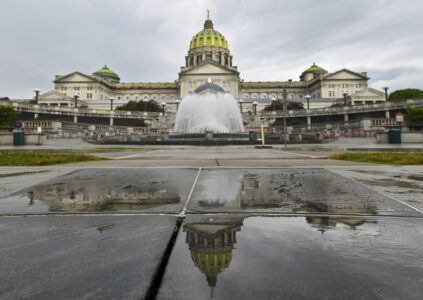
The Pennsylvania State Capitol is seen, Monday, June 30, 2025, in Harrisburg, Pa. (AP Photo/Aimee Dilger)
A new plan to get higher education back on track highlights linking postsecondary work with economic development priorities in Pennsylvania.
The strategic plan adopted by the newly created State Board of Higher Education seeks to unite both public and private higher ed institutions in a common mission.
“The 10-year plan establishes six clear, measurable goals and related strategies to tackle our most pressing challenges,” said board chair Dr. Cynthia Shapira.
One fact driving the plan is that 65% of jobs require getting some type of postsecondary credential. These run the gamut from a four-year or two-year college degree to obtaining an occupational license or certificate.
In addition, some 200,000 Pennsylvanians will lack the credentials needed to meet employer demands by 2030.
To address this, the plan sets increasing the number of high school graduates getting postsecondary credentials as its number one goal. That can be done by adding more dual credit courses in high schools, expanding career and technical education and removing barriers such as internet access and childcare that prevent individuals from completing certificate work, the plan said.
The plan tackles affordability issues by recommending lowering the price of credentials and decreasing debt, expanding financial aid and forgiving debt for in-demand credentials.
Postsecondary education should support state and regional economic development efforts, the plan said. It suggests offering incentives to convert academic research into new products, an idea that’s been suggested before.
Students in postsecondary education should expect opportunities for paid, real-world work experience as part of it, the plan said.
The plan comes after tumultuous years for higher education in Pennsylvania: a declining pool of
college age students, the COVID-19 pandemic, merger of six state-owned universities in western and central Pennsylvania and the decision by Pennsylvania State University to close many branch campuses.
The higher education board was created two years by law and tasked with developing the plan.
Performance-based funding
Meanwhile, a state council established another plan for steering state aid to three state-related universities based on academic performance in such areas as graduation rates, degrees tied to high-demand jobs and attracting specific categories of students. The three universities are Penn State, University of Pittsburgh and Temple University.
Gov. Josh Shapiro proposed $30 billion in performance-based funding for the three universities in the Fiscal Year 2026-27 state budget.
He proposed $625 million, a $5 million increase, for the Pennsylvania State System of Higher Education.
He proposed a flat-funded $277 million for community colleges.
Local News

Hegseth insists the Iran conflict is ‘not endless’ and declares, ‘We fight to win’
Businessman to be recognized for leadership in Bucks, Bedford and Lehigh counties
Strategic plan aims to align higher ed, economic growth

Altoona man killed in I-99 crash

US, Israel strike Iran