
Volunteers sought to help stabilize Glen White coke ovens near Horseshoe Curve
Bellwood-Antis senior to host meeting tonight on saving Glen White structures
-
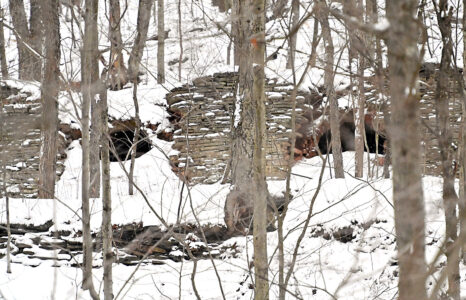
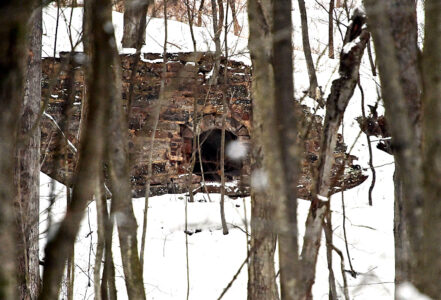
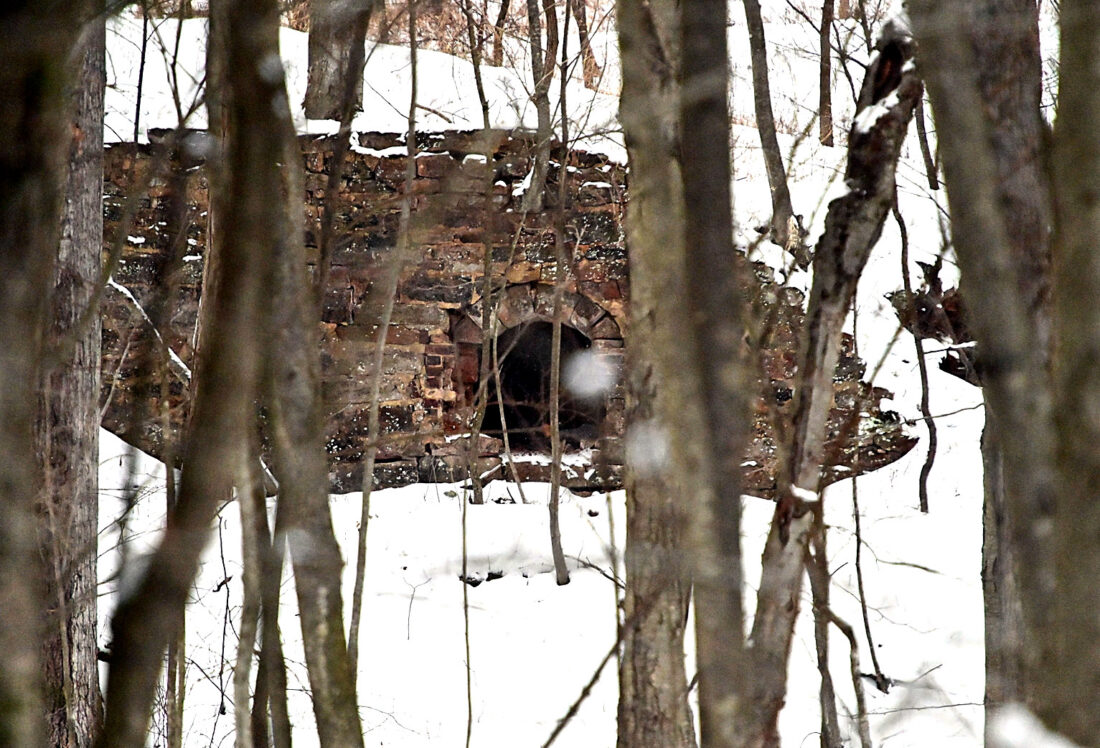
- the mainline culvert at Horseshoe Curve. Mirror photo by Patrick Waksmunski
-
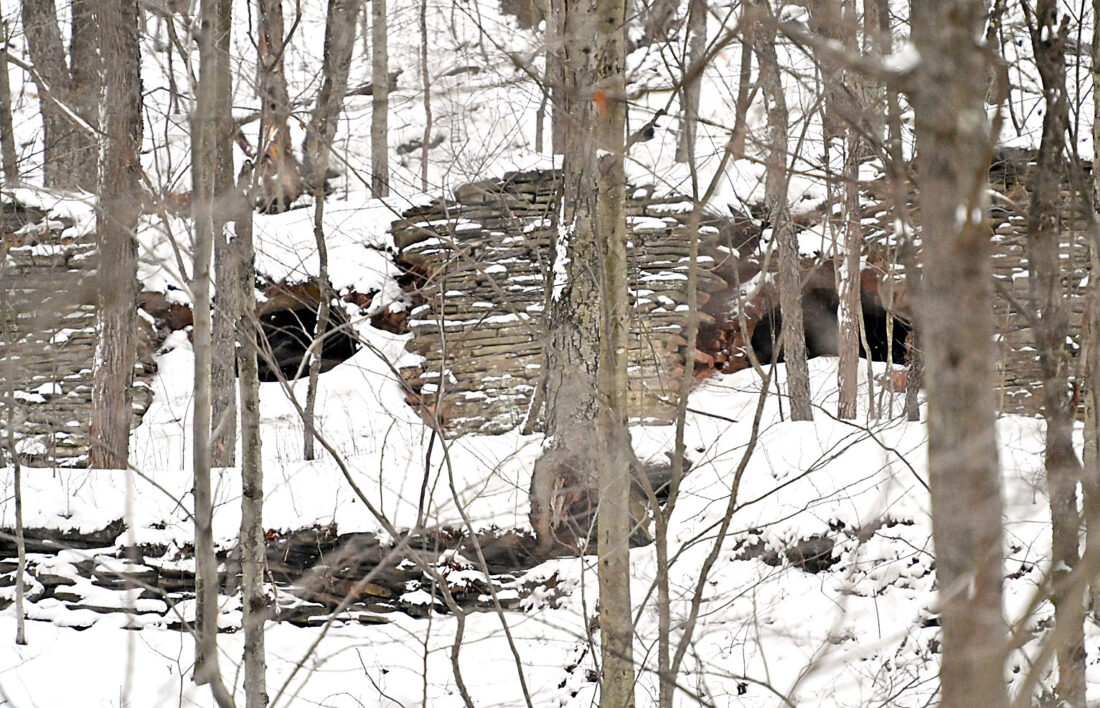
- Each of the 98 Glen White ovens, built in the 1880s, has a three- or four-foot hole in front and a smoke hole in the top. Coal was burned within the ovens, whose heat turned the coal to coke, which was then shipped by rail to steel mills in Johnstown and Pittsburgh. Mirror photo by Patrick Waksmunski
the mainline culvert at Horseshoe Curve. Mirror photo by Patrick Waksmunski
A Bellwood-Antis High School senior with an interest in local history is holding a meeting at 6:30 p.m. today, Tuesday, Feb. 24, at Baker Mansion to recruit volunteers to help stabilize and preserve a row of coke ovens located along Glen White Road, starting about a mile and a half beyond the mainline culvert at Horseshoe Curve.
The ovens, along with nearby coal mines, were manned largely by residents of a former settlement called Glen White, located on both sides of the road, with a town square on the left side of the road, 1.7 miles from the culvert, according to Kevin Stiver, who has written a book titled “Glen White, PA: The town that was Forgotten in the Alleghenies.”
Trees have been growing up among the ovens, which are on the right side of the road, forcing apart some of the stones and causing some to collapse, and if something isn’t done soon, the structures could eventually be lost, according to Stiver.
At the meeting, Stiver will discuss the type and quantity of work that needs to be done and a timeline that may include a startup work date in March, according to a Facebook post on Stiver’s Altoona Pennsylvania History page.
Forty-five or 50 individuals have expressed interest in his proposed stabilization project, according to Stiver.
Each of the 98 Glen White ovens, built in the 1880s, has a three- or four-foot hole in front and a smoke hole in the top. Coal was burned within the ovens, whose heat turned the coal to coke, which was then shipped by rail to steel mills in Johnstown and Pittsburgh. Mirror photo by Patrick Waksmunski
Stiver is working with the Altoona Water Authority, on whose grounds the ovens are situated, and which is expected to provide a permit for the work; and with the Blair County Historical Society, which is headquartered at the mansion.
Among tasks that will need done is the removal of trees a foot or less in diameter or that are a threat to structural integrity of the ovens, Stiver said.
A few of the individuals working on the project will operate chain saws, while others will pile the trunks, limbs and brush at locations chosen by the authority.
A local landscaping firm is expected to donate labor and materials to construct a trail to the ovens, which are visible from the road in winter.
Built in the 1880s, the 98 ovens look like masonry igloos, according to Stiver.
Each has a three- or four-foot hole in front and a smoke hole in the top, Stiver said.
Coal was burned within the ovens, whose shape helped contain the heat, which turned the coal to coke, which was shipped via a small rail line parallel to the road to the mainline at the Curve, and thence by rail to steel mills in Johnstown and Pittsburgh, according to Stiver.
“Coke men” and “stick men” from the town worked at the ovens, loading them with coal, helping to ensure the fires continued to burn and emptying their contents, Stiver said.
The town was founded shortly after the Curve opened in 1854, Stiver said.
Lumbering in the area was predominant at first, while coal mining operations began about 1859, Stiver said.
On the left side of the road, eventually, there were constructed a school, a church, a company boarding house and three company executive houses for the storekeeper, engineer and mine foreman; plus an additional three company houses, Stiver said.
On the right side were constructed a coal tipple at the uphill end of the row of coke ovens; 20 additional company houses, most of which provided homes for two families, although some housed three, Stiver said.
It became a “really bustling place,” Stiver said.
The church repeatedly changed denominations, based on the faith professed by the latest wave of immigrants, Stiver said.
There were robberies, murders, fights in the streets over cards, thefts, cave-ins in the nearby mines and accidents.
A man from Hungary who walked from Glen White to the Curve, then along the mainline to Gallitizin in December 1914 to get $9.25 from a bank there to pay for his wife to come to the U.S., was found frozen to death in a snow bank the next day near the Curve by track walkers — with the bank receipt in his pocket, Stiver said.
It was minus 15 degrees the previous night, he said.
The death of the town itself stretched over several years, beginning in the late 1930s with financial struggles for the company that ran the place.
The company’s property went into voluntary receivership, leading to a takeover by another firm, with help from a financial organization.
About 1.5 years after the second company took over, the mines closed, although they reopened briefly in the 1940s, before closing for good, as the new firm hadn’t paid anything back on the loan, Stiver said.
The rails and the steam engines were sold for scrap and the town itself was sold to the city of Altoona, because it is within the watershed that feeds the three-reservoir system below the Curve.
The residents were given a year to vacate, Stiver said.
Most of the families dismantled their houses and rebuilt them using the materials from Glen White along the highway just below the Curve — or in Gallitzin up the mountain, Stiver said.
Some of the foundations remain visible at Glen White.
Many motorists who travel the road between the Curve and Gallitzin-Coupon Road at the top have no idea that less than 100 years ago, they’d passed through the remnants of “one of the most industrious places among the mountains,” Stiver said.
Mirror Staff Writer William Kibler is at 814-949-7038.
Local News
Volunteers sought to help stabilize Glen White coke ovens near Horseshoe Curve
State Attorney General probe results in Philly-to-Cambria County drug ring arrests
Following a yearslong investigation and recent arrests, state Attorney General Dave Sunday, along with state and ...
Portage theater program for youth launched
Crichton McCormick Park’s Backstage Door Club is putting on its first two-week musical production — ...
State grant funds rescue vehicle for Vintondale Fire Company
The Citizens Fire Company of Vintondale will add a side-by-side emergency rescue vehicle to its roster after ...

Storm’s ‘Goldilocks’ combo serves up monster snowfall
Shapiro orders flags across state at half staff in honor of Jackson on March 7
HARRISBURG — Gov. Josh Shapiro on Monday ordered United States and Commonwealth flags on all Commonwealth ...