Forging ahead: Petit becomes director of Colerain Center
Old Bedford Village blacksmith Dave Petit transitions to director of historic Colerain Center
-
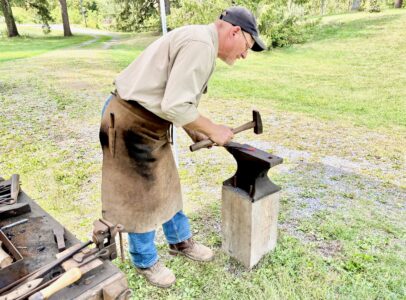
- Courtesy photo / Dave Petit works some metal on his anvil.
-
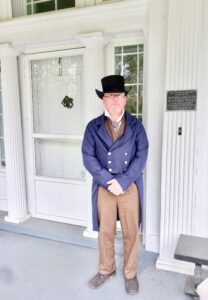
- Courtesy photo / Dave Petit will become the inaugural executive director of the Colerain Center in Huntingdon County.
-

- Courtesy photo / Petit will be the new executive director of the Colerain Center in Huntingdon County, a nonprofit recounting the history of the area’s iron forges.
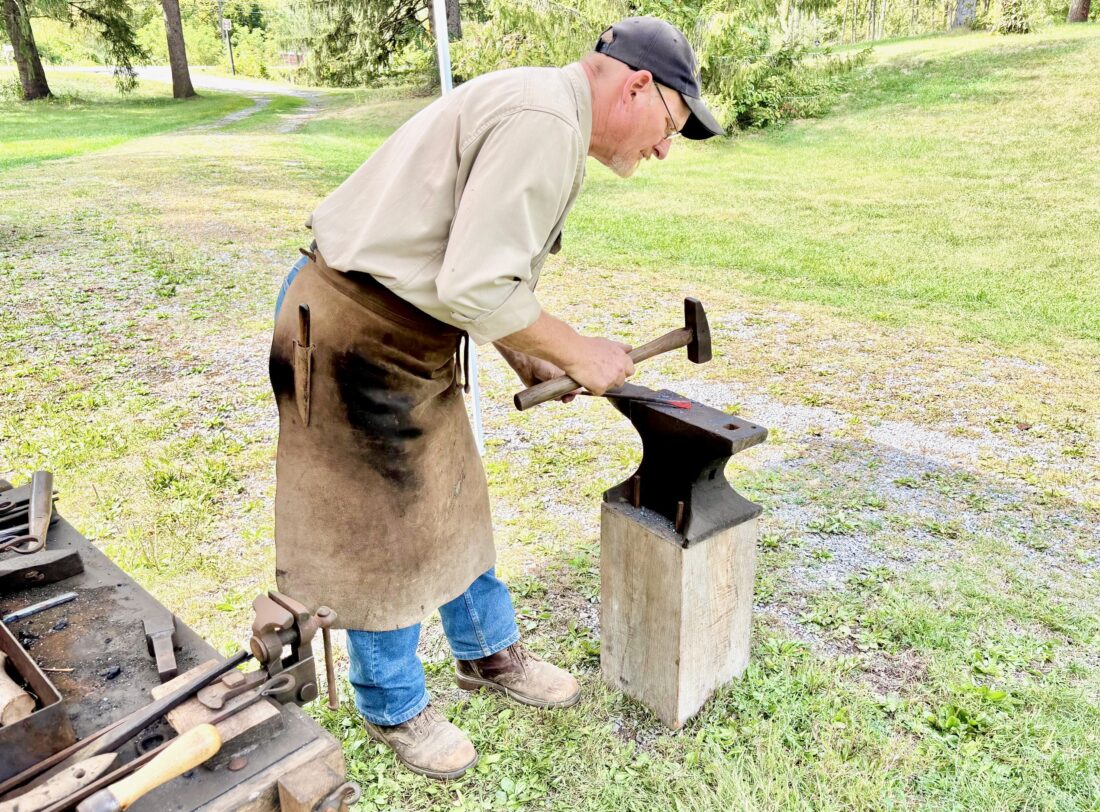
Courtesy photo / Dave Petit works some metal on his anvil.
Dave Petit describes his innate curiosity as “a dog with a bone” when he discovers a new research fixation, whether it be Civil War reenactment, historic furniture making or traditional blacksmithing.
Now, his attention is fully fixed on his new position as the inaugural executive director of the Colerain Center in Spruce Creek, as he looks to develop its art and education programming.
From visiting historic sites in the Chambersburg area with his family as a child, the study of history has been a central pillar in Petit’s life.
“It’s always been there for me, a deep appreciation (of history),” Petit said.
A history teacher Petit encountered in eighth grade further cemented his interest.
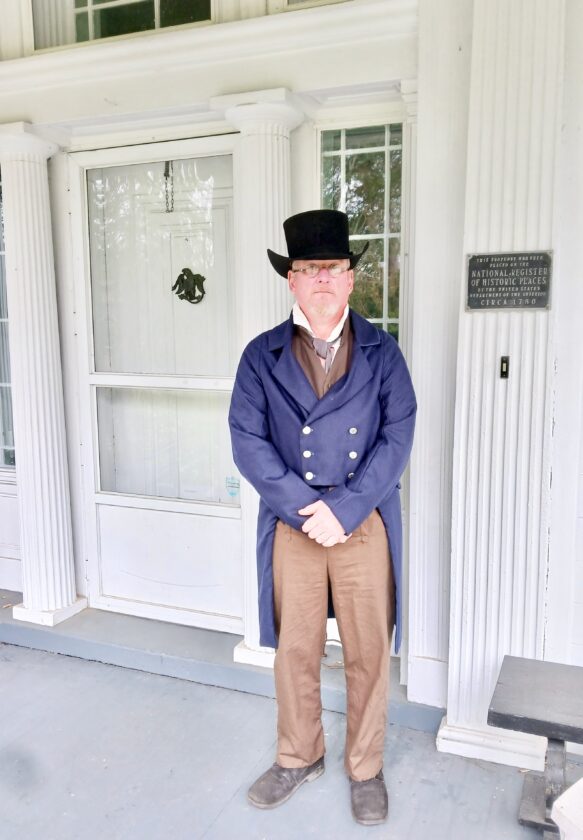
Courtesy photo / Dave Petit will become the inaugural executive director of the Colerain Center in Huntingdon County.
“He was very inspiring, the way he used a lot of man-made artifacts to teach, and his style of teaching is now my style of teaching,” Petit said.
About this time, Petit began learning the craft of historic furniture-making and using traditional tools and techniques.
This led Petit to participate in a local group of Civil War reenactors, who benefitted from Petit’s cabinetry skill to include period accurate pieces in their displays.
Petit said he appreciated the high level of craftsmanship necessary to produce reenactor-quality costumes and related supplies.
According to Petit, his interests in Civil War history “faded” after spending nearly three decades with the group.

Courtesy photo / Petit will be the new executive director of the Colerain Center in Huntingdon County, a nonprofit recounting the history of the area’s iron forges.
He joined a new group of early 1800s reenactors in 2011, who led him to volunteering at Old Bedford Village two years later.
When a blacksmith position at the village opened up in 2014, Petit knew it was time to “take the leap” into a new career.
Petit moved into the village later that year, and threw himself into learning everything he could about traditional blacksmithing.
“I really embraced the history of it, especially the role (blacksmithing) played in the region,” he said.
Petit launched himself “full bore” into learning the new skill, mainly from older books and a series of instructional DVDs.
Petit now has a full collection of self-made woodworking and blacksmithing tools, plus a mobile smithing setup — for off-site educational demonstrations — that fits neatly in the bed of his truck.
At the village, Petit took on many roles, from leading educational programs, leading tours to electrical and cabinetry work in the historic structures.
After spending more than a decade at the village, Petit began looking for another position in local preservation education, citing a need for an improved work-life balance.
A local institution
The Colerain Center takes its name from the eponymous Colerain Forges, an 18th-century ironworking site nestled alongside Spruce Creek in northern Huntingdon County.
According to Petit, the forges played an integral role in the development of the regional iron industry, as a number of local furnaces would bring their freshly smelted pig iron to Colerain to be shaped into a variety of finished goods.
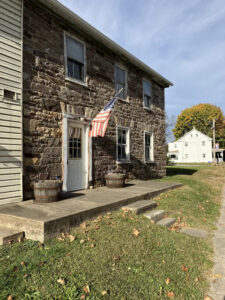
The Colerain Center boasts one of the best-preserved ironmasters mansions’ in the region, Petit said, which gives contemporary visitors a glimpse into life in the early 19th century.
“It was the crown jewel of their operation,” he said.
Although ironwork at the forges stopped in 1874, the property took on a new life as a meeting place for local artists under the ownership of the Stewart family.
The property changed hands several times over the next century, before California attorney and author Dorothy Gray Gurney purchased the land and began the long work of restoring the building to its former glory.
The mansion was added to the National Register of Historic Places in 1990 thanks to the efforts of Gurney and her husband Hartley, who died in 2006.
Dorothy Gurney founded the Colerain Center for Education, Preservation and the Arts as a 501(c)(3) nonprofit in 2019, donating the property to the new foundation.
Gurney died in 2022 at the age of 85.
The center has carried on her legacy by using the property to host a range of educational programming focused on the early iron industry and a wide array of arts programming.
Future plans
The center has seen an influx of visitors since the pandemic, leading the board to create its first full-time executive director position in early 2026 to catalyze further growth.
“We are excited to have Dave Petit as an extraordinary addition to the Colerain Center,” Colerain Center Board President Jerry Zolten said in a release. “He brings to the table not only a deep knowledge of Pennsylvania industrial history, but also an exceptional ability to talk about it and to demonstrate hands-on in the old ways.”
Petit said he wants to use his multifaceted experience in historic preservation and education to expand the center into a regional academic resource for the early iron industry.
“I think if we can bring in more history, that pulls in more people,” Petit said.
Petit added that striking the right balance of colorful arts programming and rich historic focus will be the key to the continued growth of the center.
“(Petit) is the perfect choice to be our first executive director … we couldn’t be happier to have him leading the Colerain Center forward, and we’re excited to see where he’ll take it next,” said Chris Rosenblum, Colerain board member.
Mirror Staff Writer Conner Goetz is at 814-946-7535.
Local News
Forging ahead: Petit becomes director of Colerain Center

Blizzard warnings cascade across East Coast as storm hits
Local county fire departments, EMS receive grant funding
Grant funding for local fire and emergency medical service departments was recently announced. The grants are ...
Canal bicentennial recalls transportation projects
Two hundred years ago, Pennsylvania lawmakers arrived at the Capitol in a state of panic. Pennsylvania’s ...
A look at the state’s historic projects