A look at the state’s historic projects
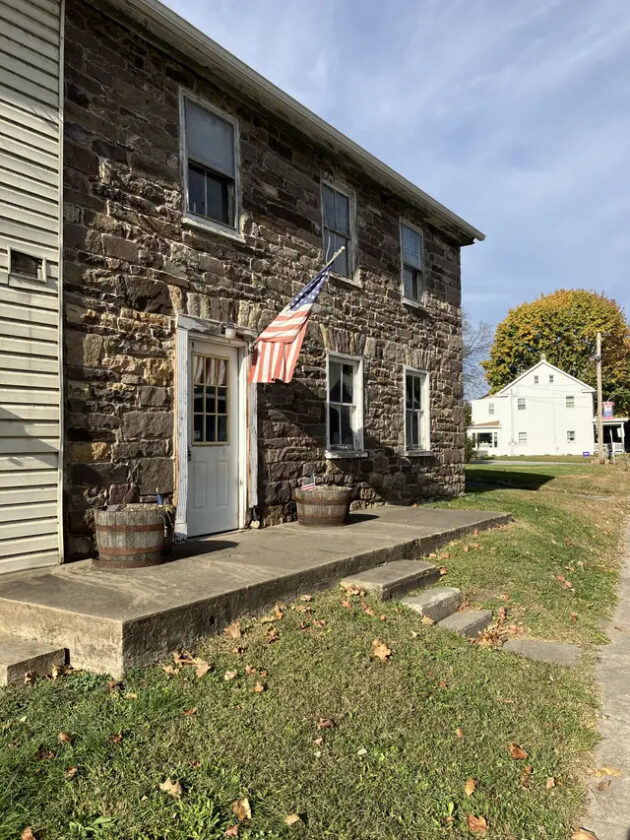
Photo courtesy of Robert Swift/CapitolWire Pictured is the Clarks Ferry Tavern stopping place on Pennsylvania Main Line Canal, Duncannon.
The story of transportation in the Keystone State is largely about finding ways to cross the Allegheny Mountain barrier dividing the state.
Or so it’s been until recent decades.
The historic challenges impeding big east-west transportation projects provides a reference point to the current stalemate over transportation funding in Harrisburg and the political divisions complicating the debate.
The state-built Pennsylvania Main Line Canal, launched 200 years ago this month, is an example of a big cross-state project that was completed despite those impediments.
In the 1820s, Philadelphia merchants wanted the natural resources of the Pittsburgh region. Pittsburgh residents sought manufactured items from Philadelphia.
The Juniata River was a natural waterway west. Ingenuity got the canal boats across the mountains.
The westward push took other transportation routes, too.
Native American paths were the foundation of British military roads. They in turn became turnpikes.
Starting in the 1850s, railroads became a successful competitor to the canals. Eventually, the state got out of the canal business.
Modern transportation era
The auto age brought the state highway system of the 1920s — Route 30, the Lincoln Highway and Route 22, the William Penn Highway, along the old Main Line Canal.
The Pennsylvania Turnpike was a technological feat when it opened in 1940.
The post-WW2 era brought the interstate system. It took a decade to build Interstate 80, the Keystone Shortway linking east to west in the northern tier.
While Washington picked up most of I-80’s construction costs, a state share was needed. It took logrolling and arm-twisting for the General Assembly in 1961 to pass a 2 cents a gallon hike in the state gasoline tax to provide that share.
The transportation focus after I-80’s completion in 1970 was about fixing deteriorating roads and bridges.
Two different governors proposed tolling I-80 to generate revenue for needed maintenance on the road ravaged by bad weather.
A 2007 state law requires the Turnpike to fork over a share of its revenues to support the state highway system.
Regional projects
In recent decades, Pennsylvania completed a spate of big regional highway projects: Interstate 99, the Appalachian Thruway (Route 15) north of Williamsport, widening of Routes 322 and 422 and the Central Susquehanna Valley Thruway among them.
PennDOT’s 12-year Transportation Plan lists some more: rehabilitation of Clarks Ferry Bridge at an old canal site over the Susquehanna River, the State College Area Connector and Exton Bypass in Chester County to name a few.
As Gov. Josh Shapiro again proposes targeting a share of the state sales tax again to fund mass transit, the question remains of how to break the transportation funding stalemate.
Shapiro, the Republican-controlled Senate and Democratic-controlled House couldn’t agree on a funding package covering both mass transit and highways/bridge work during last year’s state budget stalemate.
“We are in a cycle now where several larger projects are in the pipeline which is causing some pressure on smaller roadways,” said Jason Wagner, managing director of the Pennsylvania Highway Information Association. “So, the funding issue is very much a real issue for the state. But, unfortunately, these ‘larger projects’ in the pipeline doesn’t seem to be moving the needle within the General Assembly and causing them to act.”
Local News
Forging ahead: Petit becomes director of Colerain Center

Blizzard warnings cascade across East Coast as storm hits
Local county fire departments, EMS receive grant funding
Grant funding for local fire and emergency medical service departments was recently announced. The grants are ...
Canal bicentennial recalls transportation projects
Two hundred years ago, Pennsylvania lawmakers arrived at the Capitol in a state of panic. Pennsylvania’s ...
A look at the state’s historic projects