
Dispelling the darkness: Triumph of light over darkness especially poignant this Hanukkah season
Triumph of light over darkness especially poignant this Hanukkah season
-
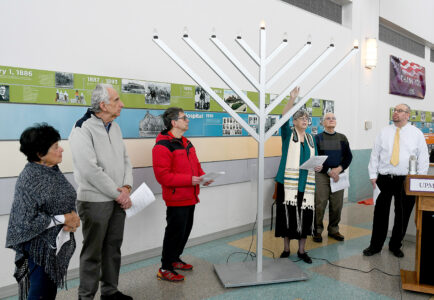
- Rabbi Audrey Korotkin of Temple Beth Israel (third from right) explains the significance of the candles at UPMC Altoona’s annual Hanukkah Menorah lighting on Monday. With her at the ceremony in the hospital’s atrium are (from left) Jewish community members Roz Sky, Joel Hollander, Michael Kline, William Wallen and Rabbi Josh Wohl of Congregation Agudath Achim. Photo courtesy of Don Clippinger
-
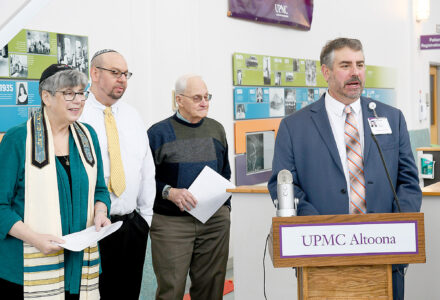
- UPMC Altoona President Michael Corso speaks at the annual lighting of the Menorah at UPMC Altoona on Monday while Rabbi Audrey Korotkin of Temple Beth Israel (from left), Rabbi Josh Wohl of Congregation Agudath Achim and William Wallen, retired executive director of the Greater Altoona Jewish Federation, look on. Photo courtesy of Don Clippinger
-
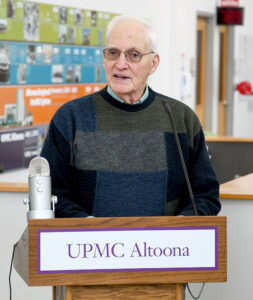
- William Wallen, retired executive director of the Greater Altoona Jewish Federation, explains the tradition of the annual Hanukkah Menorah lighting at UPMC Altoona on Monday in the hospital’s atrium. Photo courtesy of Don Clippinger
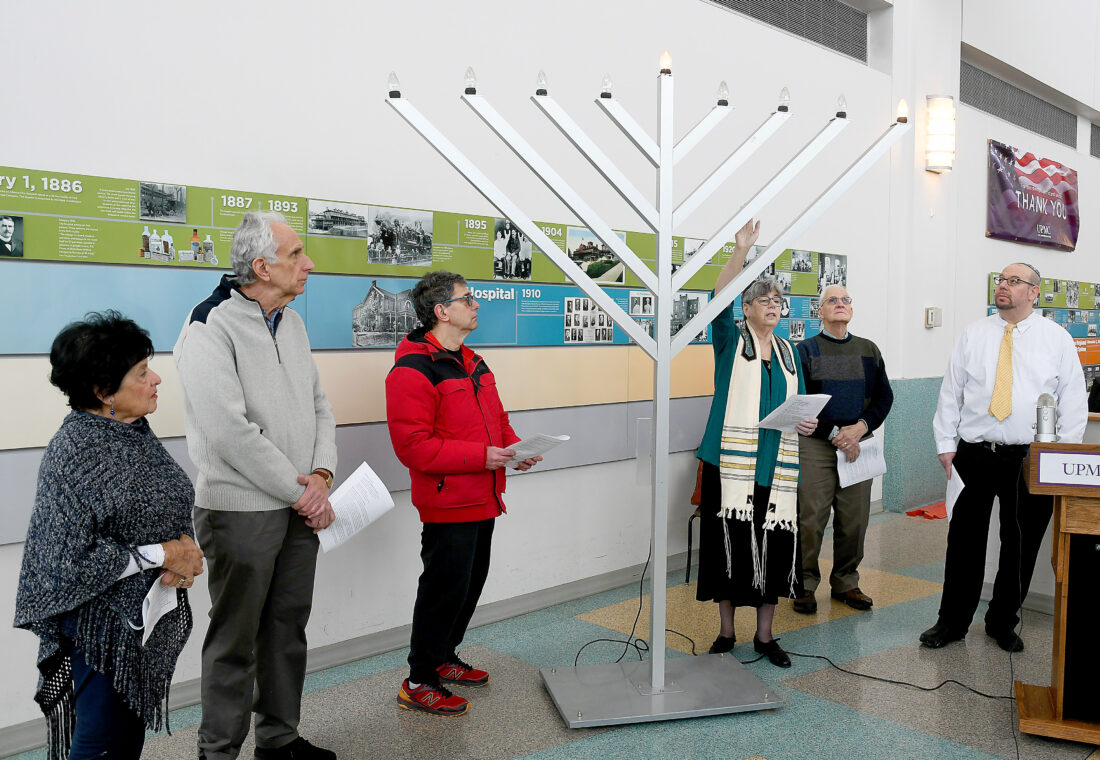
Rabbi Audrey Korotkin of Temple Beth Israel (third from right) explains the significance of the candles at UPMC Altoona’s annual Hanukkah Menorah lighting on Monday. With her at the ceremony in the hospital’s atrium are (from left) Jewish community members Roz Sky, Joel Hollander, Michael Kline, William Wallen and Rabbi Josh Wohl of Congregation Agudath Achim. Photo courtesy of Don Clippinger
In the aftermath of the weekend attack at a Hanukkah celebration at Bondi Beach in Australia, and in the broader context of the Israeli-Hamas war, there is much darkness and angst in the Jewish community locally and worldwide.
It’s the sort of metaphorical darkness that the feast of Hanukkah is designed to contend with at a time of year when literal darkness predominates in the northern hemisphere.
The metaphorical darkness of hatred and animosity that seems to be ascendant throughout much of the world is largely the result of widespread failure to follow the key precept of the main western religions — Christianity, Judaism and Islam — to love one another, to welcome and be kind to strangers and to care for the poor, according to Bill Wallen, former executive director of the Greater Altoona Jewish Federation, who spoke to the Mirror after serving as master of ceremonies at Monday’s annual lighting of the Menorah at UPMC Altoona.
It’s traditional in Judaism not to shy away from disputation and argument — as in the old joke, “two Jews, three opinions,” Wallen said.
But the best of that tradition is argument “for the sake of heaven,” he said.
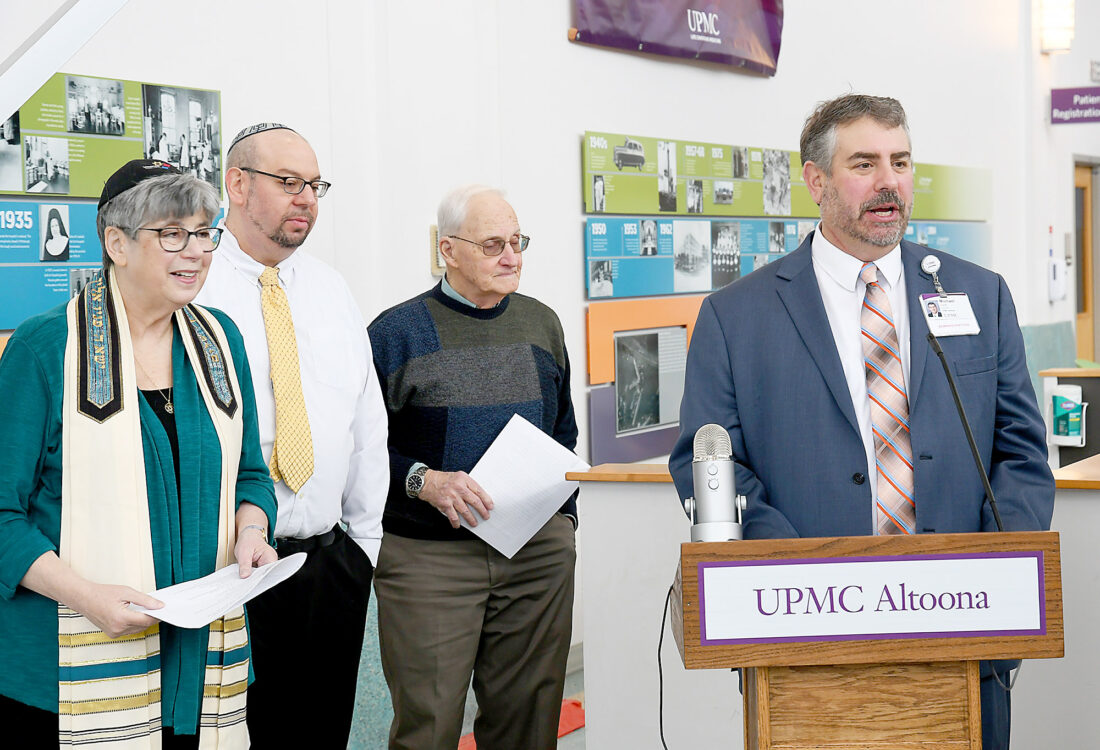
UPMC Altoona President Michael Corso speaks at the annual lighting of the Menorah at UPMC Altoona on Monday while Rabbi Audrey Korotkin of Temple Beth Israel (from left), Rabbi Josh Wohl of Congregation Agudath Achim and William Wallen, retired executive director of the Greater Altoona Jewish Federation, look on. Photo courtesy of Don Clippinger
That is argument not to burnish one’s ego or to establish dominance or to “win,” but rather to discover truth and to enable “collective growth and deeper understanding, honoring both sides’ perspectives,” while ensuring “enduring, constructive dialog,” according to an online source.
“We’ve lost that in our world,” Wallen said.
Instead, nowadays, each side feels “backed off into corners,” Wallen said.
There is too much “demonizing” of opponents, and respect for the other side has been lost, he said.
The teaching in Genesis that God created everyone in his image ought to be an antidote to such unfortunate practice, according to Wallen.
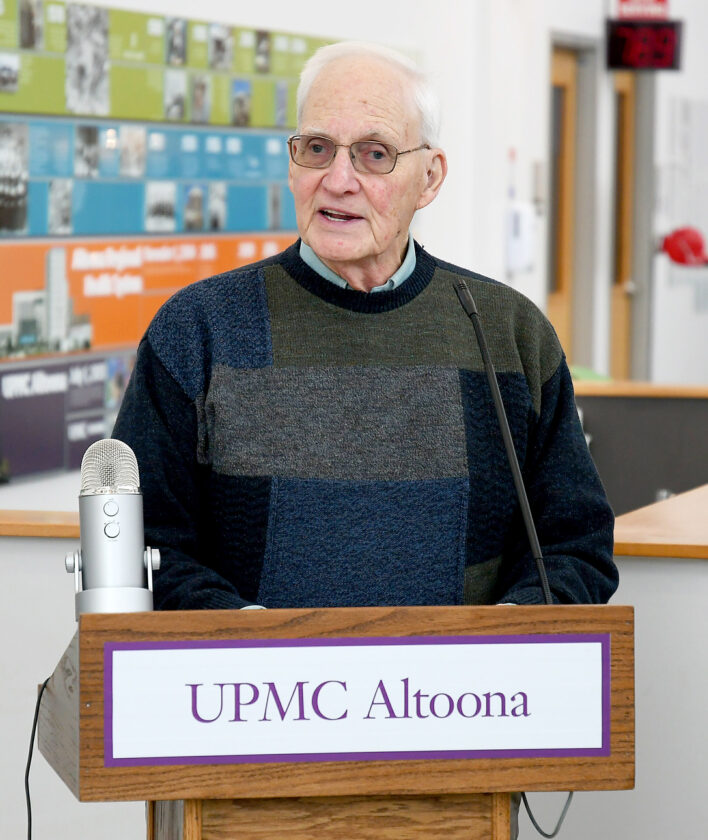
William Wallen, retired executive director of the Greater Altoona Jewish Federation, explains the tradition of the annual Hanukkah Menorah lighting at UPMC Altoona on Monday in the hospital’s atrium. Photo courtesy of Don Clippinger
But many people have moved away from religion, and many who’ve stayed have nevertheless lost touch with those key precepts, he said.
He was asked if it is a time that could benefit from the coming of a prophet.
“That would help,” Wallen said, laughing.
Our time needs leaders who can “show the way,” he said. “To get back to the essence of what our religions teach.”
“It’s a tough time, but it always seems to be a tough time,” said Neil Port, who played the piano for the event. “We need more love, more tolerance and more understanding for all of us.”
Port and his family have been to Bondi Beach, so he has a personal acquaintance with the site of the most recent incident of antisemitic violence that has gained attention worldwide.
He takes such attacks personally, Port said.
Wallen, too, has a personal connection with another recent spate of violence that has gotten wide attention — the attack at Brown University, where his granddaughter is a student, although the motive for that attack isn’t clear, he said.
The lighting of the Menorah for Hanukkah represents the miracle that attended the rededication of the second temple in the second century BCE after the triumph of the Maccabees over the Seleucids (Syrian-Greeks), who had tried to enforce Greek culture and beliefs on the Jews and who had desecrated the temple, according to Rabbi Josh Wohl, of the Agudath Achim Congregation, and chabad.org.
The Maccabees found one undefiled cruse of olive oil, enough for one day — yet the oil from that cruse burned for eight days, enough time to produce additional oil according to the rules of ritual purity, according to Wohl and the website.
That Hanukkah tradition argues for optimism, in that “we hope to shine light on the world,” Port said.
Local News
Dispelling the darkness: Triumph of light over darkness especially poignant this Hanukkah season
Lawmakers introduce bill to require parental leave
The decades-long battle for paid parental leave in the U.S. has moved in fits and starts, with 13 states and the ...
Virginia man killed in Bedford crash
A 61-year-old Virginia man was killed in a three-vehicle crash Thursday in Bedford County. According to state ...
Groups urge Shapiro to dial back support for data centers
Environmental groups last week called on Gov. Josh Shapiro to dial back his support for development of artificial ...
Altoona man heading for jury trial in four joined cases
Greater Altoona Career and Technology Center invests in building upkeep, student success
Editor’s note: The following, focused on the Greater Altoona Career and Technical Center, is the final ...