
State transportation secretary visits Altoona amid roadwork
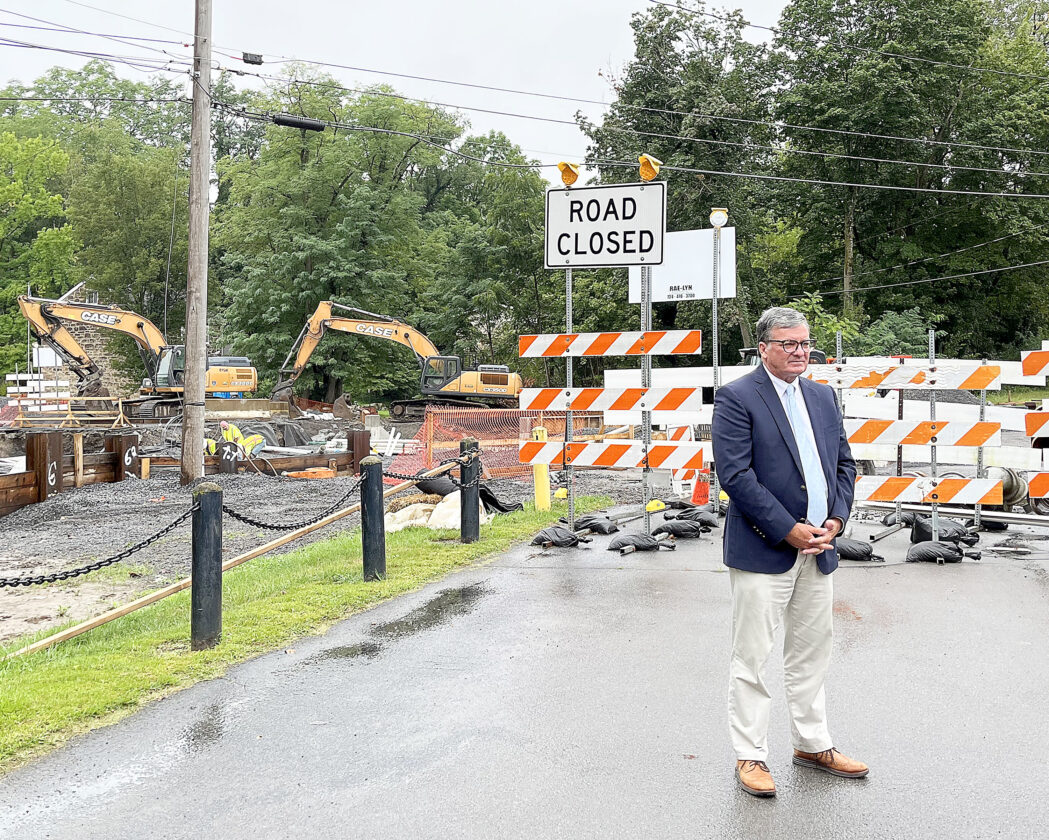
State Transportation Secretary Mike Carroll attends a news conference in Altoona, about 150 feet from where workers were encapsulating live fiber optic cable in split piping as part of their replacement of the Union Avenue/Route 36 bridge over Mill Run at 31st Street. Mirror photo by William Kibler
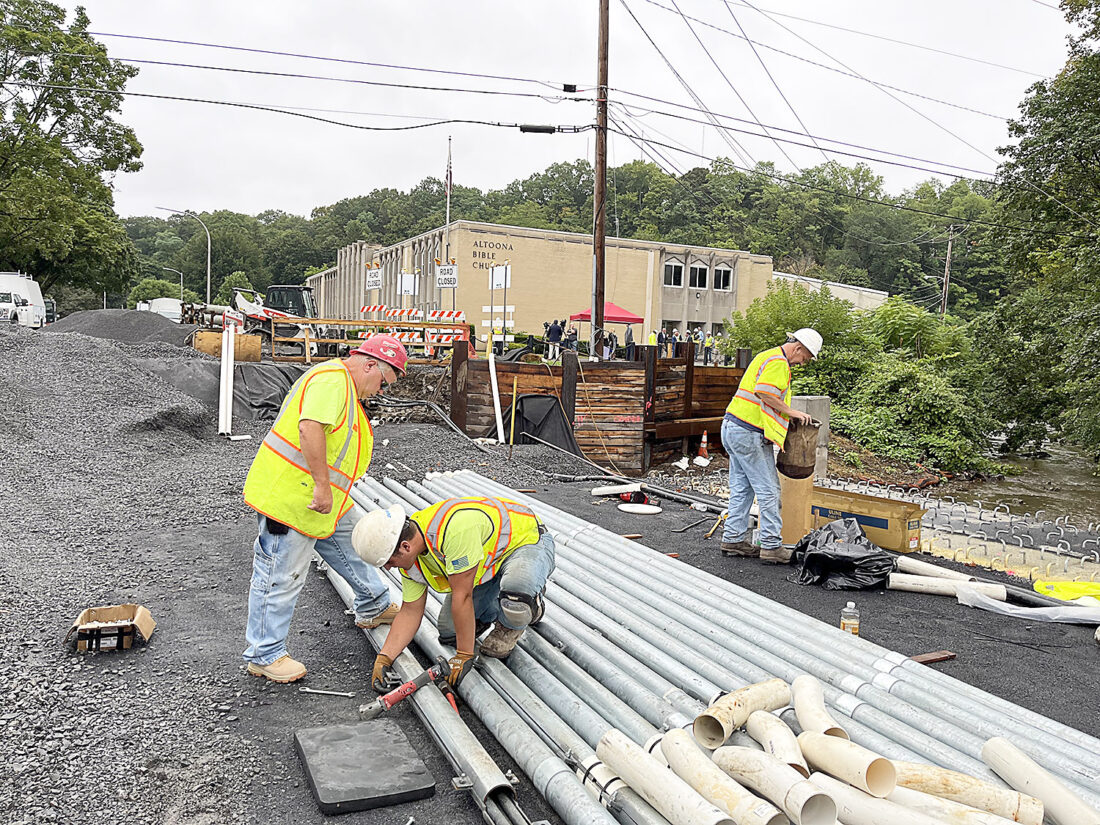
The closure of the Union Avenue/Route 36 bridge over Mill Run at 31st Street began in June and is expected to end in October. Mirror photo by William Kibler
State Transportation Secretary Mike Carroll attends a news conference in Altoona, about 150 feet from where workers were encapsulating live fiber optic cable in split piping as part of their replacement of the Union Avenue/Route 36 bridge over Mill Run at 31st Street. Mirror photo by William Kibler
The closure of the Union Avenue/Route 36 bridge over Mill Run at 31st Street began in June and is expected to end in October. Mirror photo by William Kibler
Trending
PennDOT District 9 Executive Vince Greenland spoke recently with a neighbor who complained about endless encounters in recent months with orange barriers that have been placed along local highways at the edges of construction projects.
For the neighbor, the barriers represent frustration; for Greenland, protection for workers on those projects; and for state Transportation Secretary Mike Carroll -- in town for a news conference Wednesday -- their proliferation serves as a reminder that federal funding passed a few years ago has helped swell the state's ability to undertake such work.
The funding is part of the 2021 five-year Bipartisan Infrastructure Law, which has added $700 million annually to PennDOT's budget -- taking it to the current $2.8 billion, Carroll said, standing about 150 feet from where workers were encapsulating live fiber optic cable in split piping as part of their replacement of the Union Avenue/Route 36 bridge over Mill Run at 31st Street.
The Union Avenue bridge work is itself part of an $8.2 million project that includes repaving four miles of Route 36, with 62% of that amount from the federal government and the rest from the state, according to a PennDOT news release.
It's hard to estimate the amount the BIL has added to the annual budget for Blair County, Greenland said.
In District 9's 2023 Transportation Improvement Plan, Blair County's share was 60% higher than it had been in the 2021 TIP -- there's a new four-year TIP every other year, according to Greenland.
In the current TIP -- the 2025 plan -- Blair is up 4%, he said.
"Problem is, TIPs had been decreasing over time since 2015, so the increase(s) really just put us back where we were," Greenland said.
The current four-year TIP calls for spending $72 million in Blair County.
Statewide, PennDOT will be bidding out a total of 1,400 projects this year, according to Carroll.
During the first half of the year, workers have made improvements to 1,800 miles of roadway and 225 bridges, according to the news release.
In District 9 this year, PennDOT has opened bids on $119 million worth of work, according to Greenland.
Counting projects previously bid that carried over into this year raises that total to $260 million, he said.
That represents 167 miles of paving, 92 bridges replaced or repaired and 453 miles of road seal coated, according to the news release.
For years, the focus in District 9 has been maintenance of current assets.
Top priority is given to the major ones, like I-99 and the new section of Route 22, constructed with funds procured by Bud Shuster, formerly chairman of the U.S. House Transportation Committee.
There are also many other corridors built of concrete in the 1950s and 1960s, Greenland said.
Stretching out their service lives helps PennDOT postpone far more costly complete reconstruction, he said.
A huge percentage of the state's 25,000 bridges are more than 50 years old, Carroll said.
It's critical to keep them in shape, as it's a huge inconvenience when maximum weights need to be reduced or the bridges need to be closed altogether, especially in rural areas, where alternate routes can be long, Carroll said.
The previous Union Avenue bridge was more than 100 years old and past its useful life, Carroll said.
The bridge is heavily used -- 9,200 vehicles per day, said Brad Brumbaugh, assistant district executive for construction.
The project has forced motorists to use alternate routes between Pleasant Valley and the central part of the city.
The closure began in June and should end in October, Brumbaugh said.
The current BIL is in its fourth year, Carroll said.
He's hopeful that after year five ends at the end of September 2026, Congress passes a new bill that will at least maintain the level of funding that the BIL established, he said.