
Altoona Area High School debuts lunar lander
Planetarium’s space race museum now boasts hands-on simulator for guests
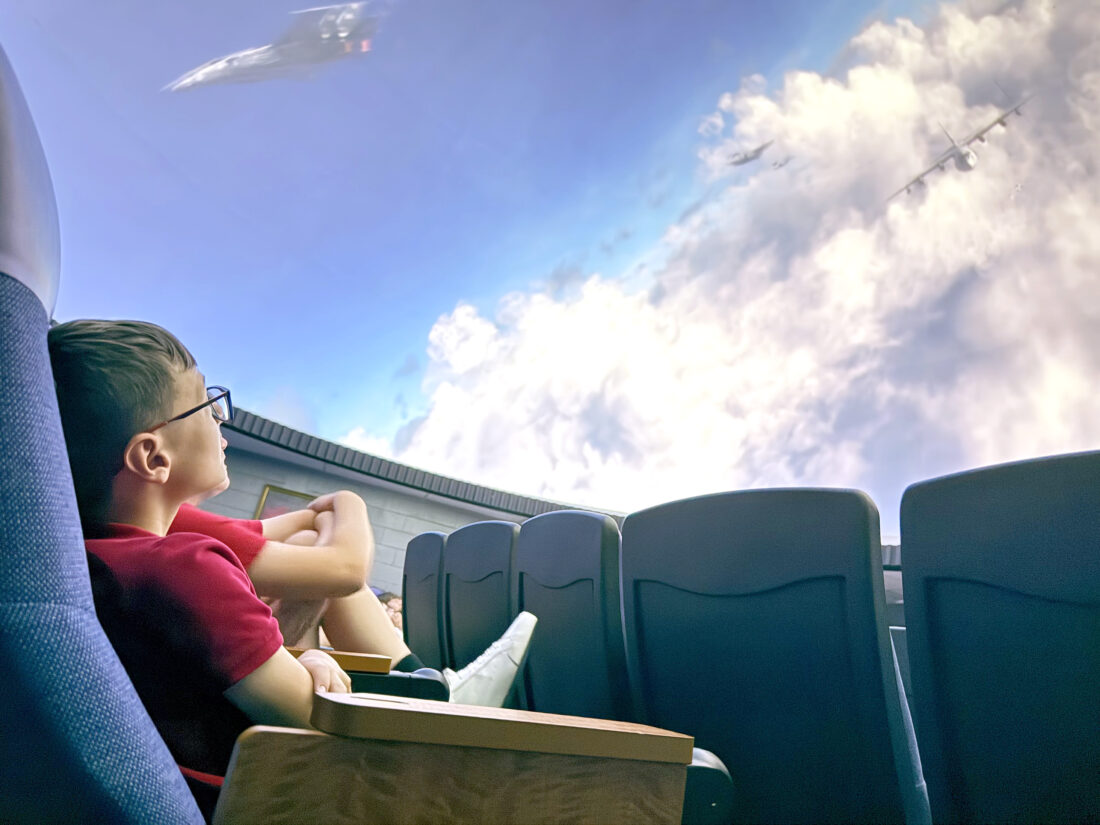
McAuliffe Heights fifth grader Mayson Becker watches the “Always Above” sky show in the Neil Armstrong Planetarium on Friday. Mirror photo by Matt Churella
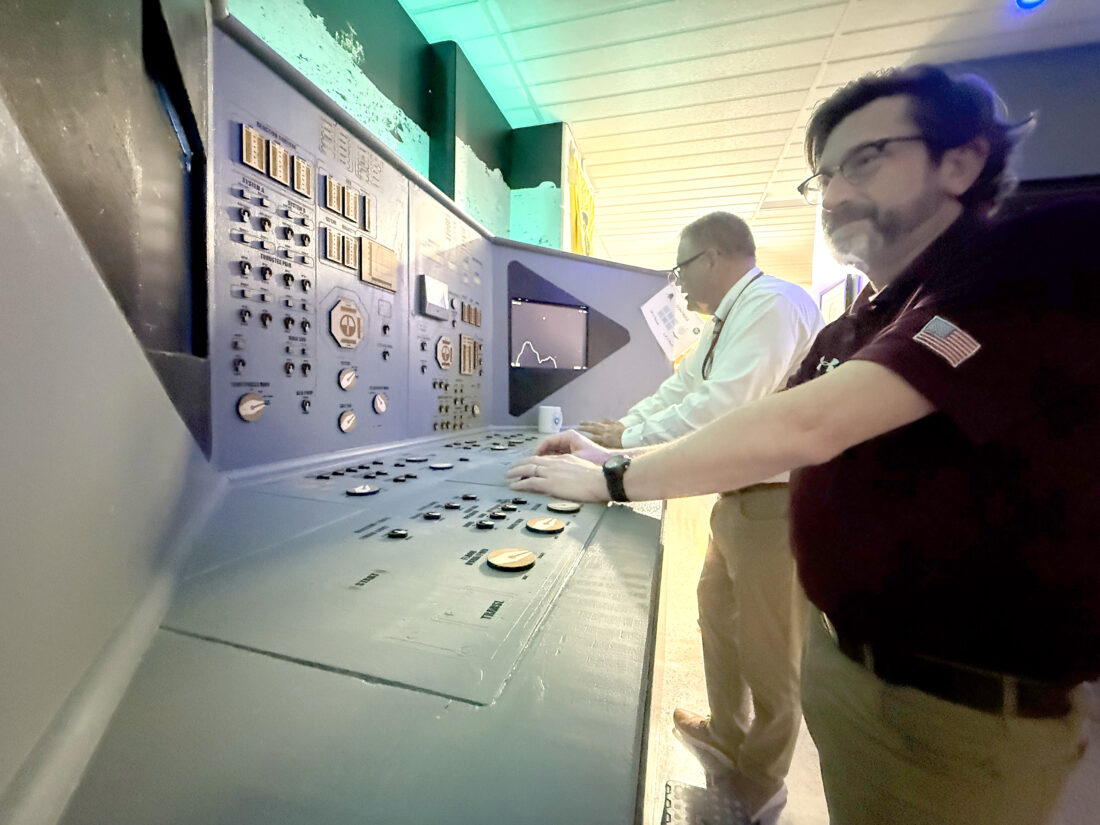
Altoona Area Assistant Superintendent of Secondary Education Mark Harrington and High school Principal Andrew Neely (right) test the lunar lander simulator at the Neil Armstrong Planetarium on Friday. Mirror photo by Matt Churella
McAuliffe Heights fifth grader Mayson Becker watches the “Always Above” sky show in the Neil Armstrong Planetarium on Friday. Mirror photo by Matt Churella
Altoona Area Assistant Superintendent of Secondary Education Mark Harrington and High school Principal Andrew Neely (right) test the lunar lander simulator at the Neil Armstrong Planetarium on Friday. Mirror photo by Matt Churella
Trending
After two years of critical thinking, creativity and collaboration among students and teachers at the Altoona Area High School, the Neil Armstrong Planetarium now has a hands-on, interactive Lunar Lander simulator on display.
Planetarium Director James Krug said the school's space race museum has been around for nearly seven years. But after watching guests visit over that time, Krug noticed there weren't many items for viewers to interact with like at other museums, he said.
About two years ago, Krug said he had an idea to create something special and asked fellow high school teachers Todd Bennett and Mike Baker for their help in building a lunar lander simulator that is "very equivalent" to what astronauts used to land on the moon during the Apollo 11 mission.
Bennett and his mechanical design class used AutoCAD, a design software, to meticulously recreate full-scale sections of the Lunar Lander while Baker worked to adapt the technology used to create the interactive two-player game that now sits in the planetarium's lobby, Krug said.
Bennett said many of the students -- some of whom have since graduated from the district -- were also in Krug's astronomy classes and enjoyed designing the panels that each match the actual size of the lander.
He recognized each of the students for their work at the simulator's unveiling Friday -- Taber Baker, Ethan Keener, Thomas Dunkle, Zac Adams, Blaze Esworthy, Anthony Jablonski, Emily Berkheimer, Alyssa Koch and Scott Detwiler.
Baker took his class for a second year to review and edit all the final design files to ensure consistency and readiness for fabrication, Bennett said, adding the student's designs were then brought into the physical world, using lasers to engrave and cut wood panels.
"(Taber Baker) helped me build it up in our metal shop before we moved it over here to the planetarium," Bennett said, noting the other students were "all on board from the beginning" of the project.
"None of this could have happened without the outstanding group of students," Bennett said.
Mike Baker said Bryce Cossitor, the district's technology director, supplied him with old computers and materials that were repurposed to create the simulator.
"We reused and recycled everything we could," Baker said.
The simulator was funded through an Altoona Area School District Foundation venture grant and with the "generous support" of the Altoona Curve, Krug said.
High school Principal Andrew Neely and Assistant Superintendent of Secondary Education Mark Harrington were some of the first to test the new simulator. The objective is to land the lunar module on a flat surface of the moon, Neely said.
Four students from McAuliffe Heights at Irving Elementary School were also able to test out the simulator, earning their astronaut wings, as a group of their peers looked on.
The students then entered the planetarium's auditorium, where they looked up to the ceiling to view a new 12-minute special, "Always Above," from the United States Space Force.
Altoona Area's planetarium was one of 30 planetariums in the nation that debuted the new special Friday, Krug told the students.
In the "sky show," the students first saw a view of the high school's campus zoom out into space and launch toward the moon before the special began.
According to the video's narrator, the night sky has inspired and captivated the greatest minds around the world throughout history.
Students learned there are over 50,000 satellites orbiting Earth that are responsible for transmitting their favorite movies and television shows, enabling people to shop with the press of a button and helping first responders reach those in need when every second counts.
There are also advanced "attack satellites" capable of dragging other satellites out of their orbit, disrupting the ability to transmit and receive communications, the video stated, adding it's the job of the U.S. Space Force to guard the nation's satellites in space.
Fifth grader Mayson Becker said he enjoyed watching the video.
"It was pretty cool," Becker said.