
Pumped up: Dry growing season spurs pumpkin farmers to rely on irrigation
Dry growing season spurs pumpkin farmers to rely on irrigation
-
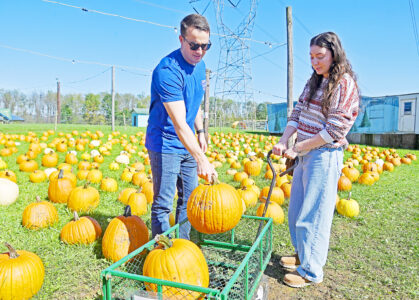
- Seth Bender and Elizabeth Yahner of Altoona choose a pumpkin at JB Tree Farm west of Alexandria. Mirror photo by Patrick Waksmunski
-
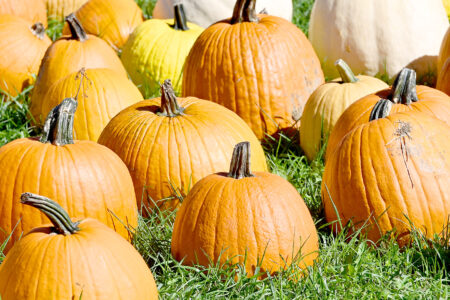
- A variety of pumpkins are available at JB Tree Farm on Route 22 near Alexandria. “We chose seeds for all different colors of pumpkins this year,” said Evelyn Bookhammer co-owner of JB Tree Farm. Mirror photo by Patrick Waksmunski
-
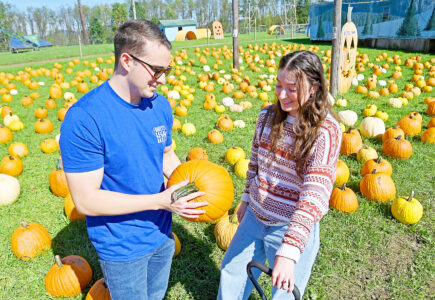
- Seth Bender and Elizabeth Yahner of Altoona choose a pumpkin at JB Tree Farm west of Alexandria. Mirror photo by Patrick Waksmunski
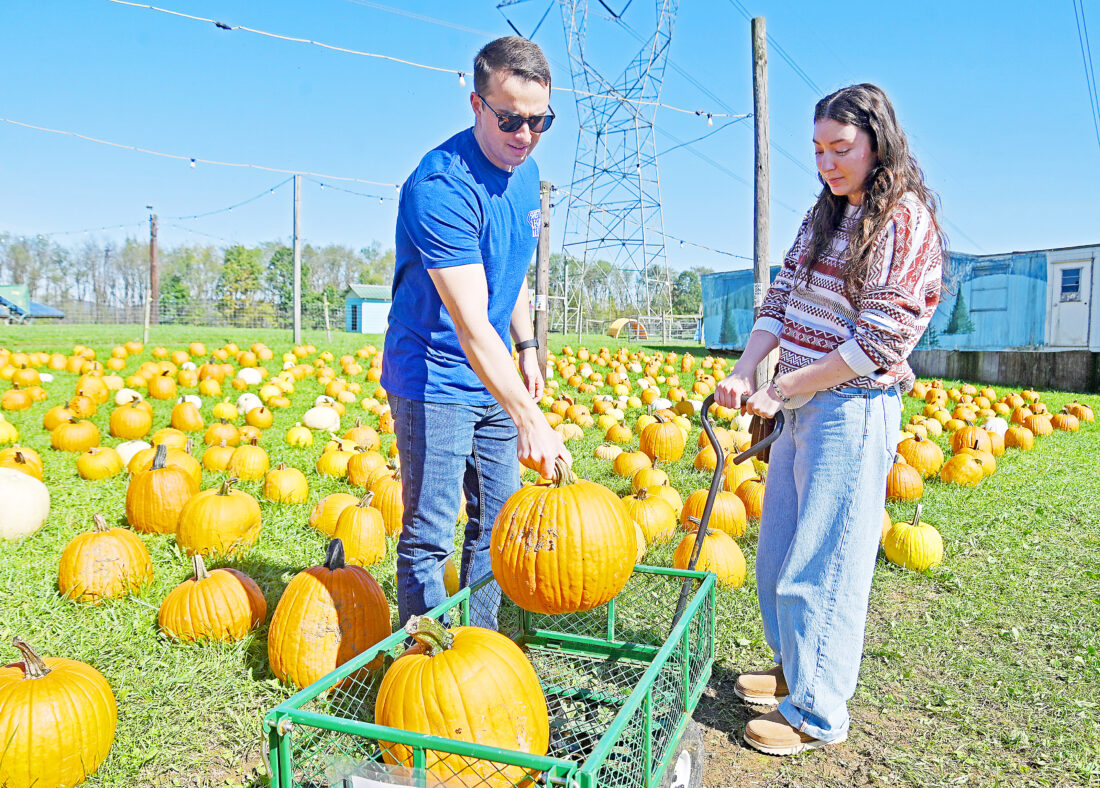
Seth Bender and Elizabeth Yahner of Altoona choose a pumpkin at JB Tree Farm west of Alexandria. Mirror photo by Patrick Waksmunski
A dry growing season made for mixed results in the pumpkin crop this year, and irrigation played a big role in the survival of their pumpkins, according to local growers.
“The ones we grew here look great,” said Evelyn Bookhammer, co-owner of JB Tree Farm on Route 22 near Alexandria, which offers a wide variety of pumpkins.
“We chose seeds for all different colors of pumpkins this year, so you could buy about nine different shades of oranges, yellows, tans, blue, green, white, variegated, bumpy orange, bumpy white and yellow pumpkins/squash,” Bookhammer said.
With the dry summer weather playing a role with this year’s crop, irrigation was important, Bookhammer said. She said it was impossible to rely solely on the rain this year, so having their own source of water played a big role in a successful season for them.
“The size of our pumpkins is good because we irrigate and do not rely solely on rain. For us it was a good growing season in the pumpkin patches because we have adequate water near the pumpkins for sufficient irrigation,” said Bookhammer, whose prices are the same as the last several years.
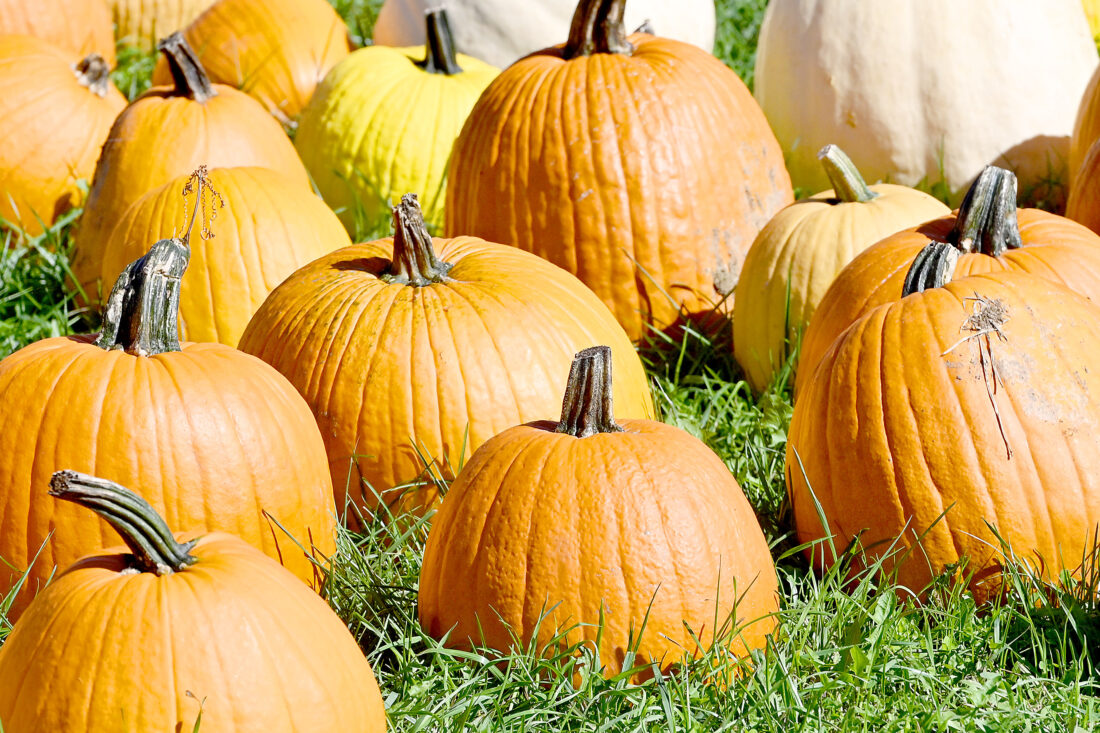
A variety of pumpkins are available at JB Tree Farm on Route 22 near Alexandria. “We chose seeds for all different colors of pumpkins this year,” said Evelyn Bookhammer co-owner of JB Tree Farm. Mirror photo by Patrick Waksmunski
Sam Weyant, owner of Sam Weyant’s Berry and Vegetable Farms, Claysburg, agreed, saying this year was remarkably dry and his crop would not have survived without his irrigation system. Moisture would regularly evaporate within a matter of hours.
“Without irrigation, I wouldn’t have (anything). Absolutely nothing. People don’t realize how dry it was,” Weyant said. “It was an average year, I couldn’t keep up with everything. I would water one day, we had all that heat and wind. It sucked all of the moisture out of the ground. I would put water on an acre and the next day you wouldn’t know I watered it.”
Weyant said the size of his pumpkins is good but “you can’t make it without irrigation.”
He said pumpkin prices are good and he sells them by volume.
“Leighty’s (Farm Market in Newry) takes all of my pumpkins. Last year I sent them 100 bins with 35-40 in a bin. Everyone ought to be a farmer for one year, then they would never complain about prices,” Weyant said.
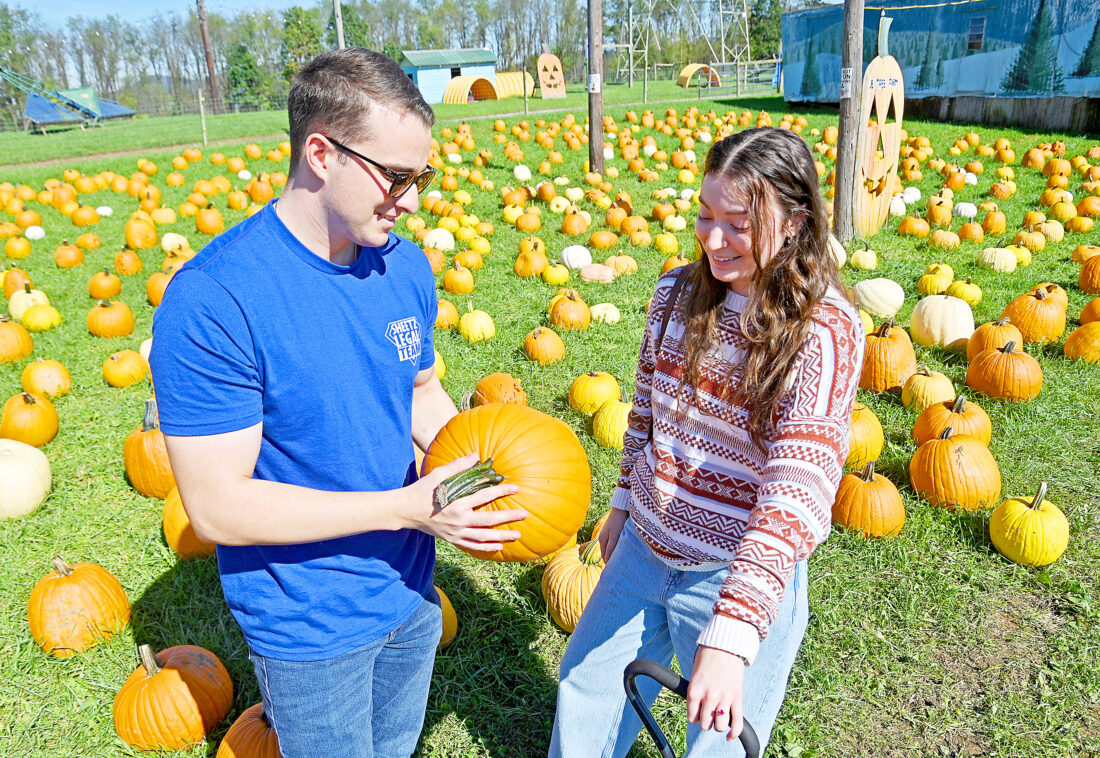
Seth Bender and Elizabeth Yahner of Altoona choose a pumpkin at JB Tree Farm west of Alexandria. Mirror photo by Patrick Waksmunski
Pumpkin production is widely dispersed throughout the United States, with crop conditions varying by region. All 50 states produce some pumpkins, but six states produce more than half of them by weight.
In 2022, Illinois maintained its leading position in pumpkin acreage, harvesting more than twice as many pumpkin acres as any of the other top states, at 17,600 acres. In the same year, California, Indiana, Michigan, Pennsylvania and Virginia each harvested between 4,200 and 6,300 acres.
Yields vary substantially among states and over the years within a state, depending on pumpkin varieties and growing conditions. On average, Pennsylvania typically averages 12,000 pounds per acre.
In Cambria County, Gresh Hill Farm near Ebensburg had a good crop of pumpkins.
“We got more rain than the southern part of Cambria County, ours turned out pretty well. We may not have as many but the ones we have look beautiful,” said co-owner Sarah McMullen. “We have some beautiful pumpkins out there.”
However, it was not a good year for Benshoff Farms in New Germany.
“We had a disaster, it was dry for two months with very little rain, the crop is way down but the weeds still grow. It is a nonprofitable year for us, there is not much you can do about the weather,” co-owner Jim Benshoff said. “Some vines only have one pumpkin but they have good size. We are off a little, but our prices are a bit higher but not much. There were other places which had a good crop. There is always next year; hope springs eternal.”
In 2022, farmers in the top six pumpkin-producing states harvested more than 1 billion pounds of pumpkins combined, with Pennsylvania producing about 90 million pounds.
All states see year-to-year changes in the price of pumpkins received by growers. In 2022, among the six top producing states, Pennsylvania received the highest price for its pumpkins, at about $280 per 1,000 pounds.
Total pumpkin production value of the top six states increased 25% from $107 million in 2020 to $134 million in 2022. Pennsylvania produced $25 million.
Mirror Staff Writer Walt Frank is at 814-946-7467.
Local News

Answering the call: Blair County leaders mark Child Abuse Prevention Month with flag-raising event at courthouse
Logan Township approves solar farm off Old Sixth Avenue Road
The Logan Township supervisors Thursday approved a land development plan for a solar farm on a hillside between Old ...
Hollidaysburg Borough Council approves compromise to include Slinky exhibit at Reiser House
In a split vote, Hollidaysburg Borough Council Thursday ordered a compromise to settle the controversy over Mayor ...
Partial roof collapse kills 1 in Philly
A stairwell roof at a parking garage being built in Philadelphia collapsed suddenly, killing one person and leaving ...
Altoona Zoning Hearing Board approves parking variance for Juniata duplex
The city Zoning Hearing Board Wednesday granted Duncansville developer Ken Weidley a variance that will allow him ...
Hollidaysburg Borough Council approves compromise to include Slinky exhibit at Reiser House
In a split vote, Hollidaysburg Borough Council Thursday ordered a compromise to settle the controversy over Mayor ...