
NS brings hazmat training to city
County’s first responders receive chance to perform exercises for railcar chemical emergencies
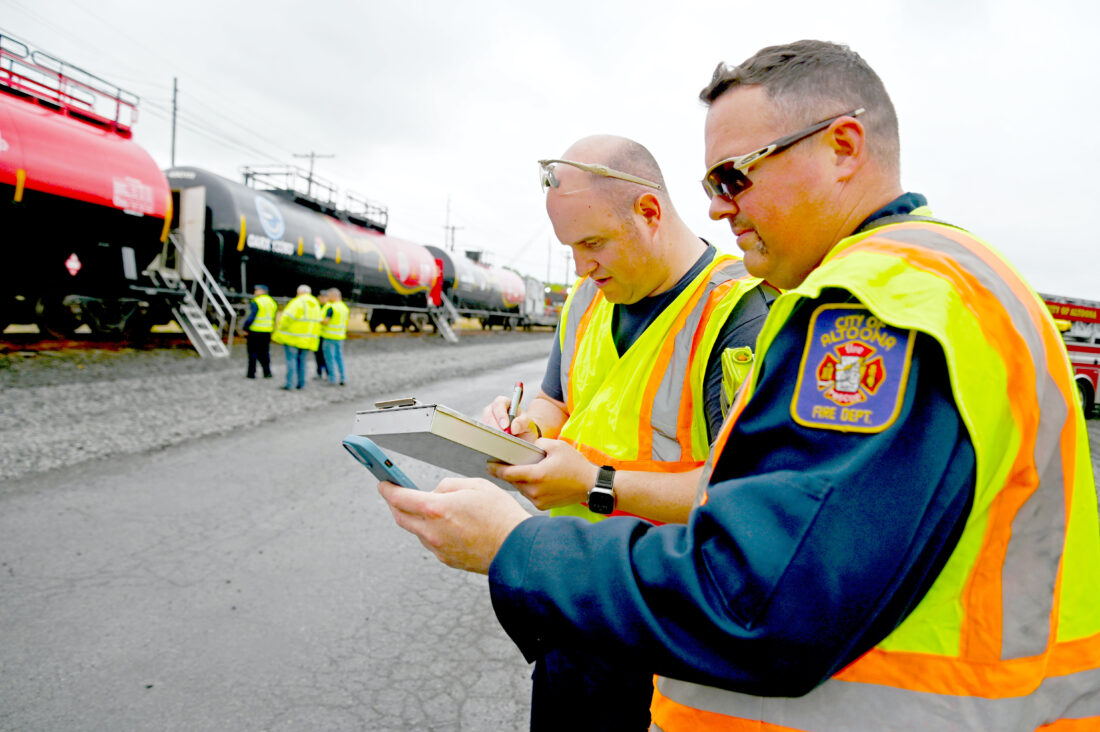
Altoona Fire Department firefighter Matt Rhoa (left) and Capt. Bryson Peterman identify contents of tank cars from their markings during Norfolk Southern’s Operation Awareness & Response training for first responders at Rose Yard in Juniata on Tuesday afternoon. Mirror photo by Patrick Waksmunski
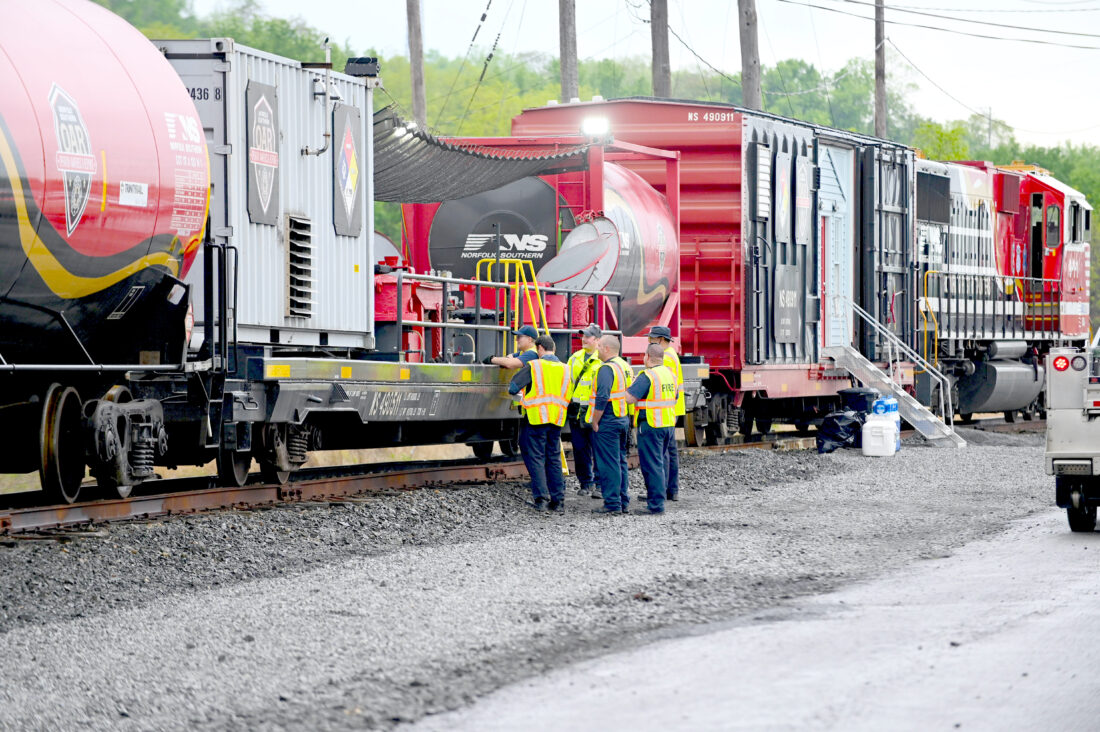
Area first responders learned about tank cars valves and fittings during Norfolk Southern's Operation Awareness & Response training for first responders at Rose Yard in Juniata on Tuesday afternoon. Mirror photo by Patrick Waksmunski
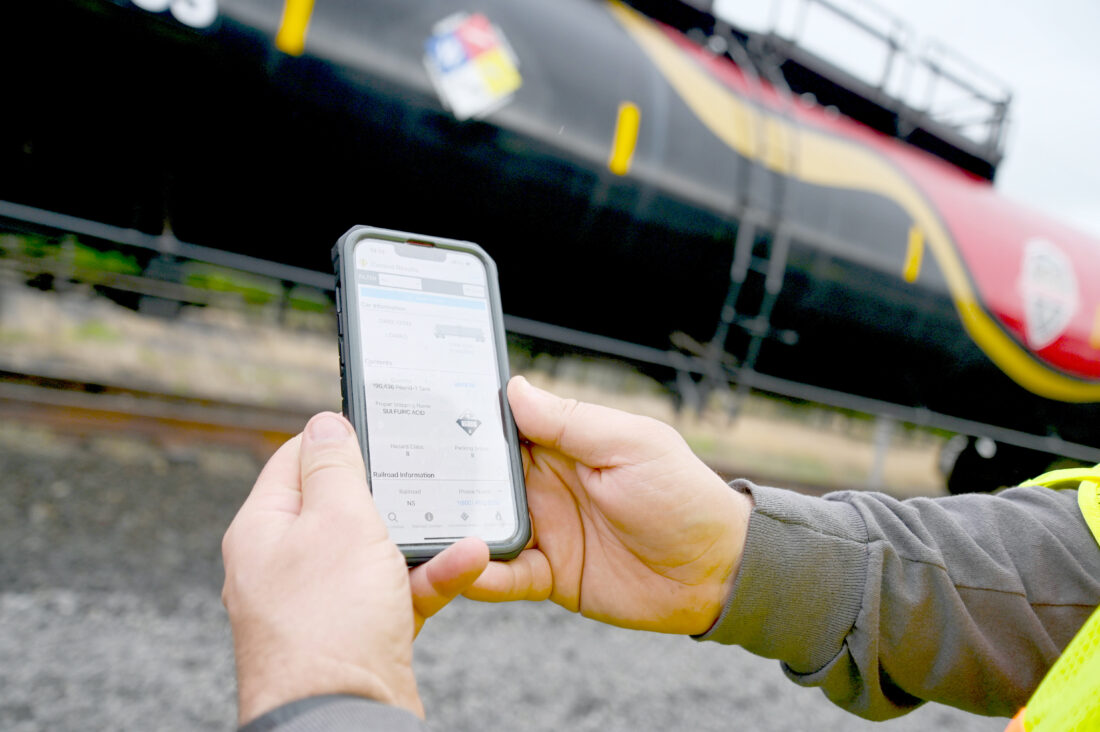
Area first responders learned to use the AskRail mobile app to identify contents of tank cars from their markings during Norfolk Southern's Operation Awareness & Response training for first responders at Rose Yard in Juniata on Tuesday afternoon. Mirror photo by Patrick Waksmunski
Altoona Fire Department firefighter Matt Rhoa (left) and Capt. Bryson Peterman identify contents of tank cars from their markings during Norfolk Southern’s Operation Awareness & Response training for first responders at Rose Yard in Juniata on Tuesday afternoon. Mirror photo by Patrick Waksmunski
Area first responders learned about tank cars valves and fittings during Norfolk Southern's Operation Awareness & Response training for first responders at Rose Yard in Juniata on Tuesday afternoon. Mirror photo by Patrick Waksmunski
Area first responders learned to use the AskRail mobile app to identify contents of tank cars from their markings during Norfolk Southern's Operation Awareness & Response training for first responders at Rose Yard in Juniata on Tuesday afternoon. Mirror photo by Patrick Waksmunski
Trending
The Altoona Fire Department has a tank car it uses periodically for practicing its hazardous materials response, but the car is equipped with only one kind of valve, suitable for transporting chlorine.
This week, city firefighters and other first responders from Blair County can get a handle on the operation of many kinds of railcar valves by attending classes and doing exercises on Norfolk Southern's Hazmat Safety Train.
"It's a rare opportunity," said Blair County Emergency Management Director Mark Taylor.
Reading or hearing about how to handle emergencies is fine, but hands-on is better, Taylor said.
Consisting of a locomotive, three tank cars, two classroom cars and a car with a variety of valves, the Safety Train travels to various locations within the 22 states where Norfolk operates, providing free instruction to first responders, according to NS spokeswoman Heather Garcia.
The training helps ensure the responders are familiar with the equipment when derailments or other accidents occur, Garcia said.
Coupled with firehouse visits, the setup provides instruction for about 5,000 first responders per year, she said.
The train is parked at Rose Yard through Thursday.
Groups of first responders are taking classes for six hours during the day, while other groups take classes for three hours in the evenings, according to Deputy Altoona Fire Chief Mike Hawksworth.
Altoona is sending three shift contingents.
There is a combination of classroom and practical instruction, Hawksworth said.
This evening, there will be a local chlorine leak simulation involving the five fire companies in Logan Township, the Blair County Hazmat Team, whose members are Altoona firefighters, and the Centre Region Hazmat Team, Taylor said.
Not only do firefighters get to work on the rail equipment, but they also get to use the AskRail app that allows first responders to learn quickly what's in a particular car and what all the cars carry in the train of which that railcar is a part -- all based on any car's number, officials said.
With AskRail, first responders don't need to depend on the printed "consist" or cargo inventory kept in the cabin of the lead locomotive.
The engineer of a train involved in an accident might not be easily accessible to first responders, even if only because he might be a considerable distance away from the problematic car or cars, Hawksworth said.
Participants this week also get to work with their PEAC software modeling program, which calculates danger zones from which people may need to be evacuated, based on the nature and amount of leaking substances and the weather, which can determine the direction and extent of a gas plume, according to Hawksworth.
There has been criticism from local emergency management officials in recent times of Norfolk Southern's willingness to share information about problems.
But communications are improving, Hawksworth said.
Hawksworth met recently with a Pittsburgh-based regional manager for the railroad company, which was reassuring, he said.
If an accident happens, it's better to be talking to someone you know from a face-to-face meeting than to be encountering that someone for the first time at 2 a.m. "in a dire situation," Hawksworth said.
Recent communications with the company will also ensure that local hazmat officials can get in touch with the regional manager more quickly than before, when necessary, he said.
Mirror Staff Writer William Kibler is at 814-949-7038.