
Mount bucking enrollment decline
As universities see post-pandemic drop in admissions, MAC posts 20% increase
Trending
Mount Aloysius College is bucking the trend of declining admissions that colleges and universities across the country have seen since the COVID-19 pandemic.
Over the last three years, the Cresson-based college has seen growth of 20% in students according to Jacob Yale, vice president for enrollment management.
According to the National Student Clearinghouse, the undergraduate student decline showed signs of slowing heading into the spring semester, but the organization still reported that colleges and universities nationwide are enrolling 1 million fewer students compared to pre-pandemic levels.
Because of the Mount's increase in enrollment, the college's residence halls are full and there is a waiting list.
"There is an amazing energy on campus," he said.
On top of that, the Mount's total enrollment has increased more than 10% over the same time period, with three years of increases.
"We're very thankful for all of our Mounties, and are thrilled that our growth is reversing the national trend," Yale said.
Other area schools are seeing a rebound.
Elizabeth Homan, vice president for strategic marketing and communication at Juniata College, said the school has experienced mixed enrollment outcomes, which includes declines over the past few years.
She attributed this to demographic shifts, disruptions brought on by the pandemic and an increase in the 18-23 college-going population heading directly into the workforce.
"I am pleased to share the good news that the incoming fall 2023 undergraduate class represents the third-largest on record at Juniata," Homan said.
Recent years have had new fall incoming classes in the mid-300 ranges.
At the time of the interview, 437 undergraduates were planning to enroll at Juniata for the fall semester, along with 21 new graduate students, for a total of 458 incoming students.
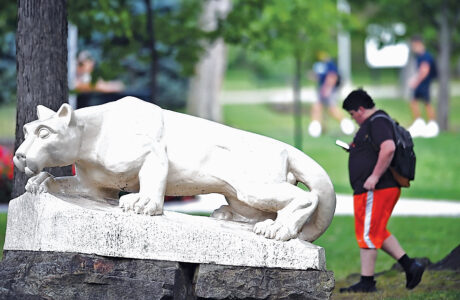
Penn State Altoona Director of Enrollment Management Shari Routch said, "We are fortunate because the Penn State name does have a draw."
One of the reasons for the colleges' decline is related to the drop in the population. "There are fewer high school students graduating every year," she said.
People are not having as many children as they used to, and Routch said she has seen experts saying it will cause a demographic cliff by 2026.
Universities are seeing the effects of this more in central Pennsylvania than in places such as Philadelphia.
For the fall semester, Routch said Penn State Altoona won't get the official numbers until about October.
In the spring semester, their enrollment was 2,500.
Indiana University of Pennsylvania also saw declines, but there is also a positive trend and enrollment is up for the last year, according to Michelle Fryling, executive director of media relations.
"We won't have final figures for a month or two, but things are looking very positive for fall," she said.
IUP's Strategic Plan in 2020 has played a big part in the upward trend by becoming more student-centered.
The university also streamlined its majors and programs, increased opportunities for students to do research in all fields and continued to offer programs that students and employers need.
"We also concluded an $81.6 million campaign that included funding for scholarships to help with affordability," Fryling said.
Yale attributes the Mount's success to its commitment to support for career success and developing community business partnerships that benefit both students and the regional workforce.
The Mount also focused on new scholarships and other financial commitments to students to ensure education remains affordable.
The Mount has added some new majors to address community needs, such as echocardiography and ultrasonography.
Pandemic shift
After the pandemic, a lot of high school students could not afford college.
"Many are not able to go straight into college after their senior year," Routch said.
Some decide to go right into the workforce to make money to attend college and then decide not to go at all.
There are also trends of more students choosing community college, associate degrees or vocational training instead of the traditional four-year college.
Routch still believes in the institution of college.
"Those who attend college still earn more than those who didn't and have more wealth over their lifetime," Routch said.
Homan said while many college-going students faced affordability challenges last year due to the rise in inflation, Juniata is committed to affordability and understands the important investment students and families are making in their education.
Throughout the year, the college awarded more than $40.1 million in scholarships and grants.
Juniata also has a low default rate of 0.9%, compared to the national average of 11.5%.
That means that 99% of their students achieve outcomes that make the debt they have manageable.
"We strive to ensure that we help families maximize the use of financial resources available to help them succeed at Juniata," Homan said.
Juniata has introduced new programs over the past four years, including criminal justice, environmental engineering, exercise science, a 3+1 accelerated dual-degree bachelor's/master's program and master's degrees in bioinformatics and data science.
The enrollment gains this year are represented by students pursuing their programs in arts, business, humanities, math and computer science, natural science and social sciences.
Juniata's new student enrollment increase includes a 60% rise in students who reside in central Pennsylvania, but also students who reside in 23 states and 13 countries around the world.
Penn State Altoona's new Chancellor Ron Darbeau is investing resources into growth opportunities to continue to attract people by adding more sports programs and academic majors in high demand.
Many incoming students pursue mechanical engineering, nursing, business and other STEM-related majors, and Penn State Altoona offers the only four-year transportation engineering program.
Mirror Staff Writer Cati Keith is at 814-946-7535.