
College students face food insecurity
Local institutions aim to assist those whose SNAP benefits will be expiring
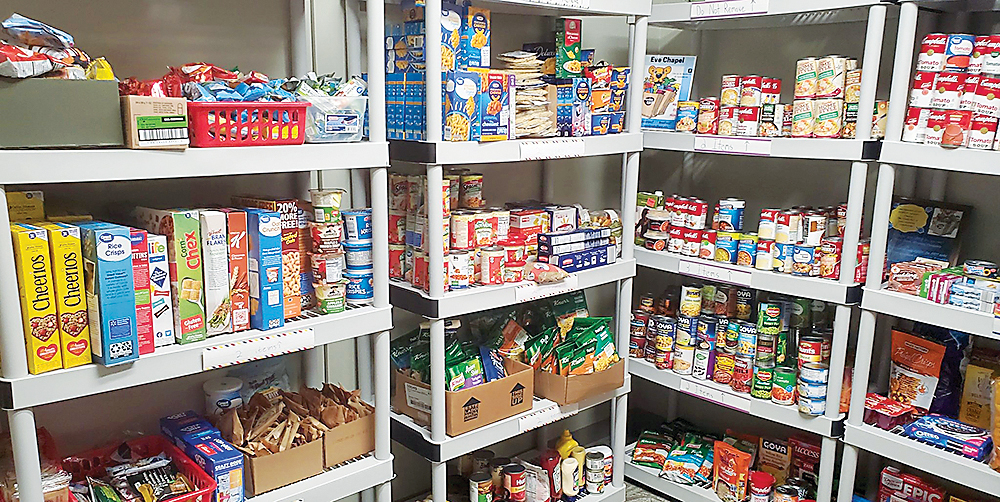
The grab-n-go shelves of Penn State Altoona’s Ivyside Eats are stocked with items available to students. During the 2022-23 academic year, 30% of PSU Altoona students used the service. Courtesy photo
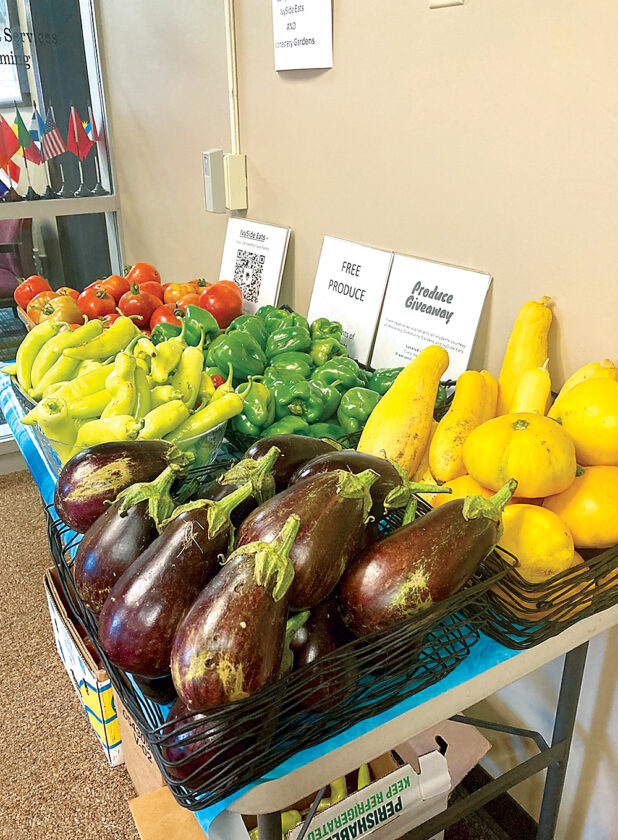
Ivyside Eats also offers students free produce. Penn State Altoona students can make an appointment for the confidential service using their Penn State ID number; no additional information is required. Courtesy photo
The grab-n-go shelves of Penn State Altoona’s Ivyside Eats are stocked with items available to students. During the 2022-23 academic year, 30% of PSU Altoona students used the service. Courtesy photo
Ivyside Eats also offers students free produce. Penn State Altoona students can make an appointment for the confidential service using their Penn State ID number; no additional information is required. Courtesy photo
Trending
College is often the next big step in a young adult's life, but along with the pressures of academic success in a new environment, many students may face going hungry due to lack of funds.
During the pandemic, the U.S. Department of Agriculture relaxed eligibility requirements for the Supplemental Nutrition Assistance Program, commonly known as SNAP or food stamps. That allowed access for students on financial aid with no expected family support and anyone who qualified for work-study programs, regardless of hours worked.
Researchers estimate up to 3 million college students were added to the program as a result.
Now, those additional benefits are going away.
Students had until June 30 to recertify under the pandemic-era rules, but the expanded eligibility will only last for one more year as states gradually revert to pre-pandemic rules.
While the number of students affected by the change is unknown, many colleges and universities already have programs in place to help students facing food insecurity.
At Penn State Altoona, students are supported by Ivyside Eats, which aims to reduce student hunger rates.
Through education, food drives, donations, volunteering and community events, Ivyside Eats provides students with a variety of foods and hygienic products at no cost.
Students can make an appointment for the confidential service using their Penn State ID number; no additional information is required.
Sue Patterson, who is in charge of the program, said it has grown during the last four years. During the 2022-23 academic year, 30% of PSU Altoona students used Ivyside Eats, she said.
"We tracked 382 visits," Patterson said, though those visits don't account for the students who took advantage of seven grab-n-go shelves.
Those visits also don't include the more than 750 meals served to students through Ivyside Eats, she added.
Ivyside Eats provides more than food -- there are self-care items, feminine hygiene products, laundry detergent, fabric softener, school supplies, printing cards, hats, gloves and more for students on a tight budget.
"We know students can't learn if they do not have their basic needs met," Patterson said. Ivyside Eats "was to meet those needs."
Food insecurity increasing
Many people don't realize that college students face food insecurity, but it is an increasing issue, Patterson said.
"College students are no exception -- food and especially healthy food items are expensive," she said.
Bob Knipple, executive director of housing and dining at the University of Pittsburgh at Johnstown, agrees.
Students who live on campus have meal plans, Knipple said, but those who live off campus or commute may not.
He knows both groups can struggle with getting food.
"College students struggling to get food are driven by the economy, and everything being more expensive with inflation," he said.
UPJ provides a food pantry that is open to all students. Located in room 142 in the Student Union Building, the pantry is available from 1 to 4 p.m. Mondays, Wednesdays and Thursdays.
"It is completely anonymous," Knipple said, noting there is no tally of the exact number of students who use the pantry and users can take as many items as they need.
Donations often come from faculty, staff, students, he said, and the campus dining company, Chartwells, also makes a contribution.
Knipple said if they find a student who is in need of a hot meal, they can provide them with one in the dining hall.
'A hard topic'
Catherine's Cupboard and the Mountie Career Closet at Mount Aloysius College offers help to any student in need.
Sam Wagner, vice president of marketing and communications, said the food pantry -- named for Catherine McAuley, who founded the Religious Sisters of Mercy -- is operated by the office of mission, ministry and service.
The pantry supports students "who have inadequate amounts of or unreliable access to food and basic hygiene items," he said.
Catherine's Cupboard, a free and confidential service, provides nonperishable food, snack items and hygiene products. Household items and baby products are oftentimes available as well.
"We also serve a large number of adult students who are supporting families and often working full-time jobs," he said.
During the last academic year, there were 50 to 70 visits to the pantry, he said. In addition, the career closet was used by 15 to 20 students.
The closet offers professional attire for job interviews or other occasions.
The Mount's students -- residential and commuters -- come from many different financial backgrounds and family situations, Wagner said.
The support services are both free and confidential, because he said some students might be too afraid or embarrassed to ask for help.
College officials said there are many systems in place to support students in both academics and in their personal lives.
"It can be a hard topic for students to acknowledge, and at times we discover issues with food insecurity only after another issue arises, such as a drop in grades or attendance issue," Wagner said.
Mirror Staff Writer Cati Keith is at 814-946-7535.