
Revitalizing history — Historic Black cemetery to receive state funds
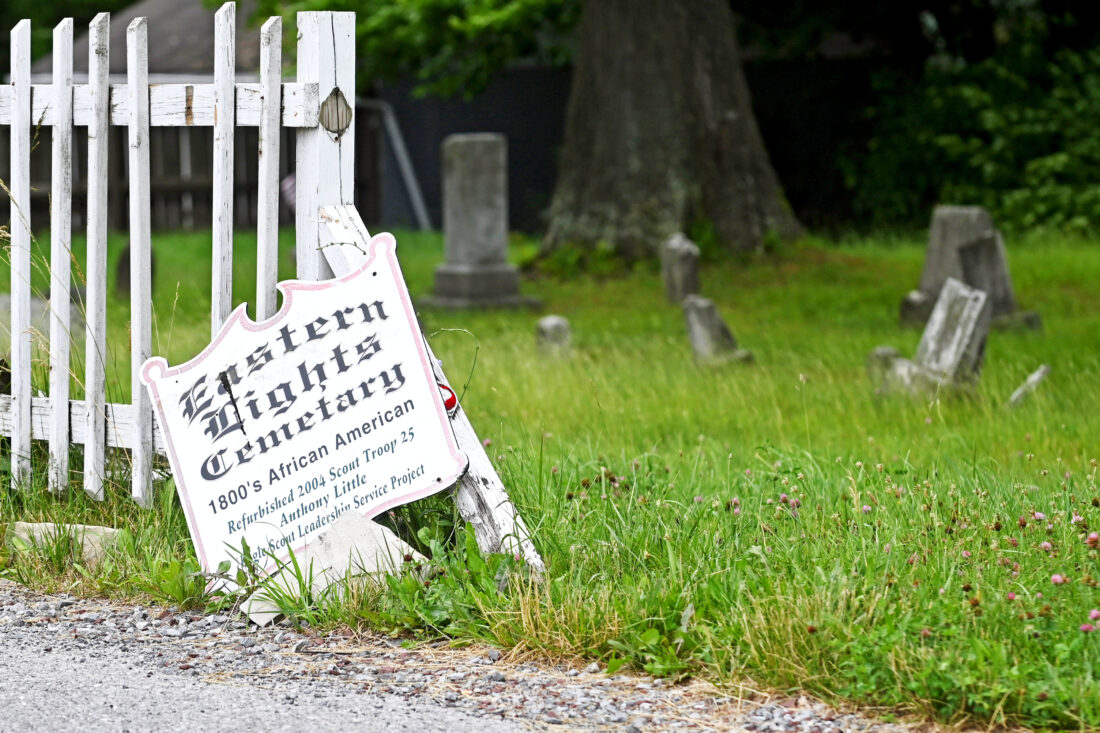
Mirror photo by Patrick Waksmunski The Eastern Light Cemetery, located along the 100 block of S. 10th Street, was among the 13 cemeteries to receive funds to help preserve history as part of the African American Cemetery Stewardship Program.
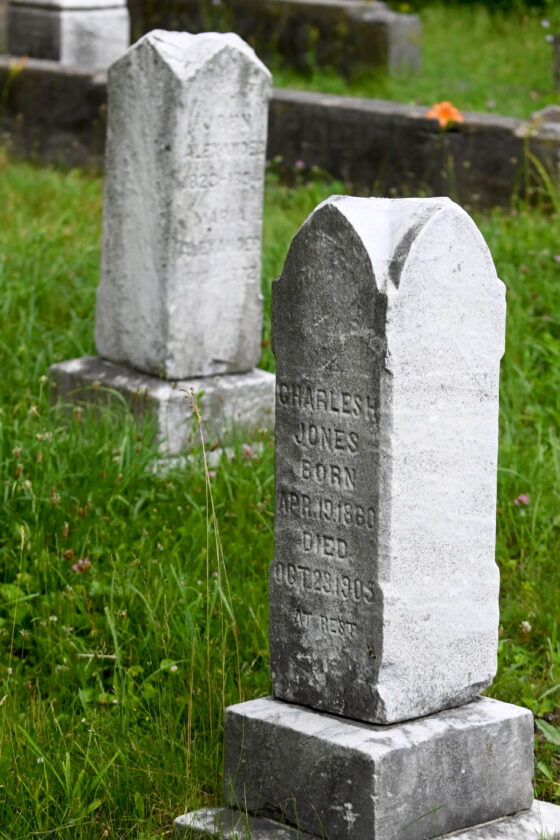
Mirror photo by Patrick Waksmunski Gravestones are located in the Eastern Light Cemetery in Altoona. Today, the cemetery is no longer active, with the latest marker dated 1944.
Mirror photo by Patrick Waksmunski The Eastern Light Cemetery, located along the 100 block of S. 10th Street, was among the 13 cemeteries to receive funds to help preserve history as part of the African American Cemetery Stewardship Program.
Mirror photo by Patrick Waksmunski Gravestones are located in the Eastern Light Cemetery in Altoona. Today, the cemetery is no longer active, with the latest marker dated 1944.
Trending
A relatively unknown historic site in Altoona recently got a boost after the Pennsylvania Hallowed Grounds and Preservation Pennsylvania announced a wave of grants.
Eastern Light Cemetery, 10th Street and First Avenue, was among the 13 cemeteries to receive funds to help preserve history as part of the African American Cemetery Stewardship Program.
Local historian Harriet Gaston said she is excited to see the grant money coming to the county after being contacted by the Blair County Historical Society to apply for the funds.
"I am thrilled," she said. "It is a way to revitalize a piece of Altoona and Blair County history."
Gaston said she wants to acknowledge those who are buried in the cemetery, which was created in 1864.
The land, which fronts 10th Street and Oak Ridge Cemetery, was purchased by John Ferguson, George Hooper and John Alexander for African American citizens of Altoona.
The cemetery came into existence when Ferguson's sister was denied burial in the white-owned cemeteries in the city, records show.
About 200 people are buried on the small plot above Oak Ridge Cemetery, where a sign found leaning against a white picket fence reads "Eastern Lights Cemetary." According to the sign, the 1800s African American cemetery was refurbished in 2004 by Scout Troop 25's Anthony Little, as an Eagle Scout project.
The ownership of the roughly quarter-acre-cemetery is unknown, Gaston said, but it is maintained by volunteers.
The funding announcement includes a $2,000 direct grant to be used for work on the cemetery's grounds and restoration of cemetery monuments, said Steven B. Burg, a professor of history at Shippensburg University, who will serve as the consultant for the cemetery. The local cemetery also received $5,000 to be used for developing a preservation plan for the cemetery.
In his role as a consultant, Burg will work to help local organizers develop a plan prioritizing maintenance, interpretation and preservation needs.
Board members of Pennsylvania Hallowed Grounds will also work with the cemetery's stewards and consultant to create a collaborative effort to ensure the long-term preservation of the cemetery.
"This is an effort to put something in place to make it sustainable," Gaston said of the work.
Possible projects could include repair and repainting of the cemetery fence, signage, tree work or other needs identified by the group working to restore the cemetery, Burg said.
Gaston is looking forward to Burg's help, hoping that documents related to the cemetery's creation can be found in the county courthouse.
Remembering and documenting those buried in the cemetery is important, she said.
"These were people who made the choice to come to work and worship here in the community with each other to help Altoona grow. A number of them worked as porters at Logan House," Gaston said.
Six members of the United States Colored Troops who fought in the Civil War are buried at Eastern Light.
They include Pvt. Stephen Holinger, Pvt. Granville Hurley, Sgt. George W. Jackson, Pvt. John Love, Cpl. William M. Molson and Pvt. James W. Thomas.
Pennsylvania had supplied the majority of Black men who volunteered or enlisted to fight in the Civil War, she said.
Molson is likely the most famous of those buried at Eastern Light, Gaston said, noting he was a flag bearer and was part of the 43rd Regiment of the USCT infantry.
"He and other Black men were at the siege of Petersburg. He would be the most decorated person buried there," she said. "He fought at the siege of Petersburg and the infantry was at Appomattox when Robert E. Lee surrendered."
The first Black graduate of then-Altoona High School, William H. Smith, is also buried in Eastern Light.
Today, the cemetery is no longer active, with the latest marker dated 1944.
"It is not in bad shape," Gaston said. "Volunteers cut the grass, but they need equipment to take down a tree."
Gaston said other organizations interested in helping restore the cemetery are welcome.
According to a news release announcing the funding, more than 100 African American cemeteries have been identified in Pennsylvania.
The cemeteries often lack funding, and development coupled with changing demographics means that a lot of the state's history and heritage is in danger of being lost.
The Pennsylvania Hallowed Grounds and Preservation Pennsylvania program funding comes from the African American Cultural Heritage Action Fund through the National Trust for Historic Preservation with support from The JPB Foundation and The 1772 Foundation.
"The hallowed grounds that cradle our ancestors will be preserved for future generations to visit, research and honor," said Mindy Gulden Crawford, executive director of Preservation Pennsylvania.
Mirror Staff Writer Walt Frank is at 814-946-7467.