
Efficiency key to dairy farms
Farmers face challenges keeping herd comfortable, dealing with rising costs and lack of manpower
Trending
While the dairy industry continues to play a huge role in Pennsylvania's economy, farmers are facing multiple challenges as Americans mark Dairy Month.
Only Wisconsin has more than Pennsylvania's 5,000 dairy farms.
Pennsylvania's dairy herd has been decreasing steadily for many years. In the last 10 years, the state's herd size has shrunk 12% or by 65,000 head which has gone hand in hand with a decline in the number of dairy farms, according to spokeswoman Emily Barge of the Center for Dairy Excellence.
Pennsylvania has 468,000 cows that produce nearly 10 billion pounds of milk, ranking eighth in the nation, Barge said.
Generally speaking, technology is responsible for the increase in production per cow, said Justin Gochnour, owner of Jus-Den Farm of New Enterprise.
"Studies along with technology have shown us what a cow needs to thrive and show full potential. Cow comfort, proper nutrition and the ideal environment are some of the many things we've come to understand over the years that are so important to realizing the capabilities of the cow," Gochnour said.
Efficiency has always been a key to success. One of the major things in the dairy industry is the pounds of milk per cow and that number has risen substantially over the years.
"Every day in the life of a dairy farmer revolves around efficiency. We're always looking for ways to improve," Gochnour said.
One example he cited is the use of chillers and plate coolers to quickly reduce the temperature of milk before it hits the bulk tank to not only reduce utility costs but to also help improve the quality of the milk.
Double cropping, such as planting wheat or rye in the fall and then harvesting it for silage in the spring, then planting corn, he said.
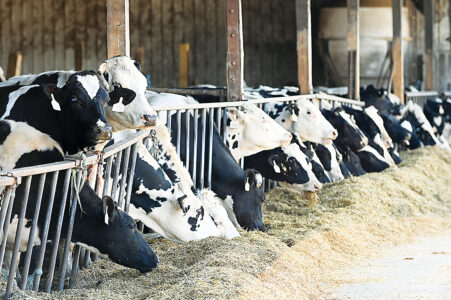
Pennsylvania dairy farmers continue to focus on cow comfort and management, which is increasing production, said Dave Smith, executive director of the Pennsylvania Dairymen's Association.
"Dairy farmer management starts with a newborn calf, and improved calf nutrition and housing practices help cattle to develop into more productive cattle. Significant use of research and utilization of forages fed to cattle are very helpful. Harvesting of forages is very time sensitive to maximizing the nutrition needed for dairy cattle, and increased monitoring of the best times to harvest, creates better nutrition for the cows," Smith said.
The dairy industry continues to face numerous challenges, the biggest is probably rising input costs and shrinking margins, Barge said.
More farms are addressing those challenges by pursuing value-added opportunities like ice cream, milk, yogurt and cheese sold directly from the farm and adding other enterprises, like poultry, agritourism, custom farming and others, Barge said.
Gochnour said the biggest challenge is an uncertain marketplace.
"Our costs continue to rise and our income continues to be so unstable. The world market conditions have a significant impact on the prices we are paid. And with milk being a perishable commodity, we have to sell it everyday no matter the price," Gochnour said.
That's a huge difference from other products like corn, which can be stored until prices increase.
Finding labor and competition for farm land are also big challenges, Smith said.
Gochnour said there is so much misinformation out there regarding milk.
"I wish the general public could understand how pure and natural milk really is. Take out the special interest groups that are trying to push an agenda and just look at the facts. Milk truly is nature's most perfect food," Gochnour said. "The public needs to know how much we care for our cows and how hard we strive to produce a perfectly wholesome, healthy product all while at the same time ensuring the responsible management of our land and waterways. We love our cows, we love our land. And as anyone should know you take care of the things in life that you love. "
Mirror Staff Writer Walt Frank is at 814-946-7467.