
Residents advised to be on lookout for lanternfly
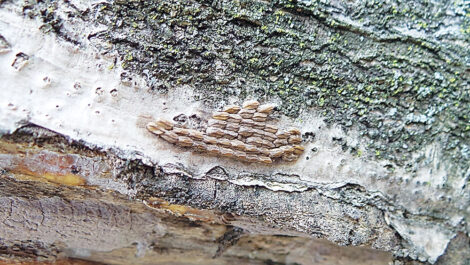
Learn to identify egg masses, scrape off before hatch, experts say
Trending
As spring approaches, Blair County residents are being warned to look out for invasive pests, such as the spotted lanternfly.
Originating in Asia and spreading across the state, spotted lanternflies do not harm people physically, but people may be bothered by them when the insect population explodes. Their presence can also attract many stinging insects like hornets, wasps and yellow jackets.
Penn State Extension educator Thomas Ford said this pest has prevented people from enjoying their summers on their decks and in their backyards, as the pest creates a sugary substance called honeydew.
Spotted lanternflies feed heavily on trees and the excess honeydew seems to "fall like rain" and coats "everything in its downward path."
Despite Blair County being one of the 51 countries under the state-imposed quarantine zone, the owners of Oak Spring Winery and Way Fruit Farm did not see many spotted lanternflies last summer.
"We've been lucky so far," said Way Fruit Farm owner Jason Coopey. "So far we don't have to do anything special to treat anything invasive."
However, spotted lanternflies hitchhike from the eastern part of Pennsylvania through transportation like trains, buses, trucks and equipment. Ford says Penn State Extension now sees the heaviest population around Greenwood, Juniata, Pleasant Valley, and the population is moving southward toward Logan Valley Mall and surrounding communities.
Ford says he anticipates a "larger population" this year.
While many people use sticky wraps like extra wide flypaper on trees to treat spotted lanternflies, Penn State Extension's website doesn't suggest people do that because it might "occasionally capture birds and other creatures."
Ford urges people to learn to identify the egg masses and scrape them off before the nymphs hatch out.
People can use cardboard or old credit cards to scrape eggs into plastic bags containing hand sanitizer or alcohol, which kills the eggs.
The eggs can then be disposed of in the trash.
People can also learn to build a circle trap for spotted lanternflies at extension.psu.edu/how-to-build-a-new-style-spotted-lanternfly-circle-trap.