Panel denies convict’s retrial plea
Johnson serving life sentence for murder of girlfriend
A state appeals court this week rejected a request for a new trial filed by a Richland Township, Cambria County, man convicted in 2017 of murdering his girlfriend to obtain money so he could buy crack cocaine.
According to the Pennsylvania Superior Court opinion, David Leon Johnson, now 43, during the early morning of March 31, 2015, arrived at the township police department and admitted he killed his girlfriend, Allison Vaughn, 30.
According to a summary of the murder by the Superior Court, Johnson told a police detective that he had smoked crack on the afternoon of March 30, 2015, and when his girlfriend returned to their apartment after an evening out, he demanded she give him her personal identification number so he could obtain money from an ATM machine for more crack.
When she refused, a struggle ensued as he tried to secure her with duct tape.
He ended up stabbing her twice on the side of her neck and then proceeded to draw money from her bank account to buy more crack, then he drank wine and took a shower before going to the police department.
Cambria County Judge Partrick Kiniry presided over a five-day bench trial and found Johnson guilty of first- and second-degree murder, aggravated assault, robbery and theft.
He is serving a life sentence in the State Correctional Institution at Forest.
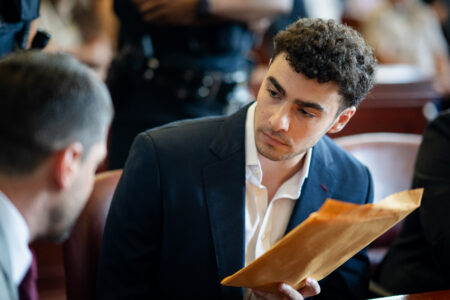
Johnson, through Blair County attorney Matthew R. Dombrosky, filed a post-conviction appeal in which the defense claimed Johnson’s public defenders Michael Filia and Patricia Moore erred by not seeking to suppress their client’s statement to police.
The appeal asked if Kiniry erred or abused his discretion by failing to find trial counsel ineffective for failing to try to suppress Johnson’s statement.
An opinion written by Superior Court Judge Judith F. Olson found Johnson’s defense team was not ineffective in and ruled “that trial counsel had an objectively reasonable basis for not pursuing a motion to suppress Johnson’s statement.”
Citing legal precedent, the Superior Court opinion explained, “The test is not whether other alternatives were more reasonable, employing a hindsight evaluation of the record.” The test is whether defense counsel “had some reasonable basis” for not seeking suppression of the statement.
The defense attorneys explained they did not believe the trial court would suppress the statement and contended the statement demonstrated that Johnson had “diminished capacity” when giving the statement — that the influence of the crack cocaine and alcohol from the day before resulted in his waiver of exercising his right to have an attorney present during the interrogation.
The statement also showed that Johnson had remorse for his actions, the defense attorneys contended.
The diminished capacity defense also would lower the charge from first- to third-degree murder — another reason for not seeking suppression, they explained in outlining their trial strategy.
The statement also emphasized Johnson’s contention that he did not intend to kill his girlfriend, only frighten her so he could get her PIN to obtain money.
“Upon review, we concur with (Judge Kiniry) that trial counsel had an objectively reasonable and strategic basis for not pursuing a motion to suppress statements appellant made to police shortly after the incident,” summed up the three-judge Superior Court panel that reviewed the case.
Judges Mary Jane Bowes and James G. Colins were on the panel with Olson.
Local News
No mail delivery for Juneteenth holiday
The Altoona Mirror will be printing a Friday, June 19, paper. Due to the Juneteenth holiday, however, mail ...

Young entrepreneurs
Convicted Clearfield bomber wants guilty verdict vacated

Claysburg-Kimmel School District adopts budget, delays tax hike vote

Hollidaysburg Area School District holds line on taxes, adopts 2026-27 budget