
Heating up: Cost of oil raises concerns as winter nears
Trending
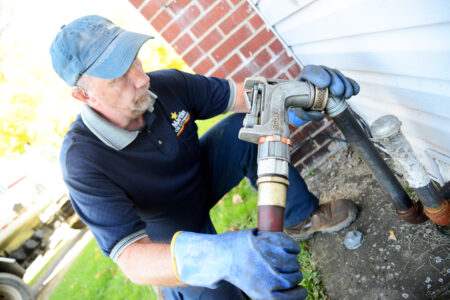
A mild winter, as predicted by Accuweather senior meteorologist Paul Pastelok, could help area residents this year as they face the daunting cost of keeping warm in homes heated by oil furnaces.
Just like almost every other commodity, the price of heating oil has skyrocketed in recent months.
According to Sel-Lo Oil, which lists heating oil prices on its website, those purchasing 100 gallons of heating oil will pay $5.65 per gallon. A blend of heating oil and kerosene is $6.05, and kerosene only is $6.45. The prices were last updated Monday, Oct. 24.
Purchasing 200 gallons or more will save consumers a few cents per gallon, according to the website. While not all oil companies put their prices online, and at one point Sel-Lo didn't list the prices because the market was so volatile, prices between companies typically vary by just a few cents per gallon.
A graphic on the U.S. Energy Information Association website, which offers independent statistics and analysis, shows Pennsylvania residential heating oil in October 2021 averaged a little over $3 a gallon, though by March 2022, that price had risen to nearly $5 a gallon.
Today's higher prices are nearly unmatched as the last time heating oil prices climbed above $4 a gallon was in February and March 2014, when a gallon of heating oil fluctuated at just under $4.10, the graphic shows. In January 2020, the price climbed to $3.24 before dropping back to $2.36 by the end of March 2020.
Looking for alternatives
Higher heating bills may see local residents dipping into savings, bundling up at home and setting their thermostats lower in an effort to conserve fuel.
As residents look for alternatives to oil, local dealers who specialize in heat pumps, wood, coal and pellet stoves have seen an uptick in inquiries and orders.
Bovard Heating of Altoona is one of those dealers experiencing more interest in heat pump systems, according to sales representative Robert McMullen.
"We've seen a big surge in people wanting prices and getting installations of heat pumps," he said.
A heat pump can heat a home at a much more efficient rate than an oil-burning furnace alone. They're also a green option, having a minimal effect on the environment. In the summer, a heat pump can be used to cool a home, too.
McMullen said there has been a steady growth in heat pump sales over time but rising oil prices definitely contributed to the recent increase.
The jump in purchases coupled with supply chain issues have slowed installation of the systems, though, McMullen said.
For those who decide to switch to a heat pump as their main source of home heating, "payback has never been better than now" because of the current oil prices, he said, noting it doesn't take long to recoup the investment.
Wood, coal and pellet stoves were in short supply last year, as people looked for supplemental heat sources while stuck at home during the pandemic.
This year, the supply issues have been handled much better, but there are still some hiccups, said Brent Krug, one of the owners of Heating World in Loretto.
"We ordered a lot of stuff back in March or April," Krug said. "Things trickle in instead of coming all at once."
Krug said very few people have one source of heat because they "like to have options."
Like Bovard, Heating World has been slammed with inquiries lately, and Krug said the business is currently booked into January for installations.
"It's usually maybe a month wait, not three," Krug said. "People are just begging for us to come out or fit them in if we have cancellations."
But supplemental heat sources some people may use worry local firefighters.
Interim Altoona Fire Chief Adam Free said it's important to keep standalone heaters far away from any flammable upholstery or furniture and heaters should be turned off if no one is in the room.
"Usually the wintertime is a busier time for us," Free said of local fire companies.
Portable heaters should be plugged directly into outlets rather than using extension cords or power strips, as extension cords and strips may overheat.
While wood burning fireplaces can warm up a home, chimneys should be checked to make sure there are no obstructions and fires should be extinguished before residents go to bed or leave the house.
A common practice to heat the home -- opening the oven door and turning the appliance on high -- is dangerous, Free said.
Oven fires are a fairly common reason the department is called to homes during the colder seasons, he said.
"People are trying to save some money, so they use the oven to try and heat their house," Free said.
Buying oil on a budget
Distributors in the region said there are options for folks buying heating oil on a budget.
Martin Oil Co. is one of several that offer discounts to senior citizens and for those who pay their bill within 10 days. In addition, most oil distributors will deliver for free to those buying at least a certain amount, such as 100 gallons.
Martin Oil offers senior citizens a discount of 2 cents per gallon for customers aged 62 or older to help them mitigate costs, said public relations director Cindy Petucci.
Blair Senior Services President Steve Williamson said everyone's heating costs will likely continue to go up, so he encourages seniors to use his office as a resource for solutions if they are having trouble buying heating oil this season.
"A lot of people we work with are on fixed or limited incomes," Williamson said.
Williamson said the Low Income Home Energy Assistance Program is a helpful option for seniors, as well as families and individuals with limited income. The LIHEAP application period for 2022-23 opened Nov. 1, and Williamson said Blair Senior Services can help any individuals over 60 years old apply for the program.
Ted Harris, executive vice president of the Pennsylvania Petroleum Association, encourages customers to reach out to their distributors to see if there are any programs available to spread out payments or reduce costs.
"Nearly all heating oil providers in the greater Altoona/Blair County area are family-owned businesses who are a part of your local community," Harris said. "They want to work with their customers and neighbors to keep your heating expenses as manageable as possible."
Petucci said Martin Oil like other distributors, has a budget plan which spreads payments throughout the year. Customers need to call their local office to apply and set up the plan.
Many factors weigh in on oil prices
Harris said heating oil prices have increased just as other utility bills and transportation costs.
But, he said, it's important not to blame local companies for the fluctuating cost of heating.
"Attempting to predict the price of future energy costs is similar to predicting the future trajectory of the stock market," Harris said. "Your local energy provider does not have control on the price of heating oil, diesel fuel and gasoline, which are publicly traded commodities."
Barry Ickes, head of the economics department at Penn State University, said there are several factors that go into rising oil prices, including demand and environmental concerns.
Ickes said oil production fell during the pandemic due to there not being as high of a demand, but as companies needed to increase their supply again as the world opened back up, they were not well prepared.
That unpreparedness, he said, has been due, in part, to the push toward renewable energy. He says the transition to environmentally friendly energy has been "mismanaged."
"Five, 10 years ago, U.S. (oil) production was growing dramatically. That kept a lid on prices," Ickes said.
Now, oil companies are more cautious when it comes to finding new supplies because of climate change policies, so companies and their investors are hesitant to go "all in" like they used to out of fear new laws and policies would ruin any new endeavors.
That newfound caution limits oil production and, by consequence, makes prices skyrocket, he said.
Mild winter predicted
Early models are showing this winter season should be more mild than in recent years, meteorologist Pastelok said.
Accuweather has looked at two previous winters in the last decade -- 2011-12 and 2013-14 -- to line up with this upcoming season, and Pastelok said the winter of 2011-12 looks more plausible this year.
"We don't need the 2013-14 season again," Pastelok said, referring to the brutally cold weather experienced that year.
Pastelok said the worst cold of the year will likely act as "bookends," bringing some cold fronts at the end of fall and then returning in March and April.
"It doesn't look good going into March and April," Pastelok said. "We could be using more heat on the back end than we usually do."
January will also offer some colder weather, but December should be fairly mild. Pastelok said there should be less than 30 inches of snow this winter -- a low in recent years.
Oil future isn't promising
Much to the disappointment of oil furnace owners, the future doesn't look promising, according to Ickes.
The only options for relief need to come from an adjustment to sanctions for Russia or a faster transition to green energy.
Ickes said Europe is experiencing the same struggles as the U.S. in the fallout of sanctions placed on Russia in response to the war in Ukraine. The EU is looking for options to punish Russia but allow it to export oil, he said.
"There's this plan to place a price cap on Russian exports" in Europe, Ickes said. "The idea is to allow Russia to export, but to cap the price."
In a way, Ickes said, prices being high is a good sign because it means the economy hasn't hit a "full-blown recession" yet.
The higher prices are also a good sign for climate change advocates and efforts in the renewable energy industry.
"Oil prices being high is a good thing, in a way, because it's an incentive to find renewable sources quicker," Ickes said. "From a climate standpoint, high oil prices are a good thing."
Neither of those observations make the reality of the current oil market any easier for consumers to swallow, Ickes admitted.
Mirror Staff Writer Nate Powles is at 814-946-7466.