
Feast or famine: Avian flu slashes turkey supply
Trending
It may be more difficult or expensive to complete Thanksgiving dinners this year, as local turkey suppliers have experienced shortages of the holiday's staple dish following outbreaks of avian flu around the country.
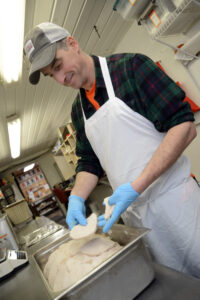
Holland Brothers Quality Meats and Catering in Duncansville is one of the companies who have struggled with buying turkey this year. The supplier carries some turkey products year-round, like sliced deli meat, but typically sells Thanksgiving entrees, including turkey breast meat, in the fall.
This year, co-owner Mike Holland said the supplier has had to cap the number of meals they are offering due to the shortage. He said they typically feed around 500 people each season with their Thanksgiving meals but have had to cut about half of their turkey availability and offer ham meals instead.
"It's a juggling game," Holland said. "I don't see us not feeding the same amount of people. But their option just might have changed from turkey to ham."
He said that Holland Brothers will still be offering Thanksgiving side dishes and other meats throughout the season through online ordering and its retail store.
"The meals are a nice piece of business that we would always have, but we have different avenues that the business is driving right now," Holland said.
Avian flu
One factor especially affecting turkey availability for Holland Brothers and other retailers this year is avian flu. The Pennsylvania Department of Agriculture defines it as a virus that is "very contagious and can cause serious disease and high mortality" to birds. This includes domestic poultry like chicken, turkey and quail.
The Centers for Disease Control and Protection says that avian flu is very rarely transferred to humans and that its main concern is the "major agricultural implications" that come from flocks of birds becoming infected.
This year, the deadly category of the virus, Highly Pathogenic Avian Influenza, is affecting flocks in Pennsylvania, with at least 19 commercial flocks and 4.3 million birds were detected with the virus as of Nov. 3 by the USDA.
Most turkey producers have not had a chance to recover from these issues since HPAI outbreaks spread in 44 different states across the country this year. As of Oct. 7, about 7.15 million turkeys were lost to the virus nationwide, according to the USDA's Animal and Plant Health Inspection Service.
These losses have trickled their way down the supply chain to cause the shortages some retailers, like Holland Brothers, are seeing now.
"We still have some turkey in-house," Holland said. "But not a whole lot."
Holland said the business also relies on catering corporate meals, which often include turkey. The owner said some of the stock that is normally sold for Thanksgiving will be saved for catering events closer to Christmas due to the shortage. Holland also said the success of its retail store in Duncansville has also helped to balance the effects of the shortage.
"That's a big plus for us," Holland said. "We just have to make sure our retail will continue to be stocked."
Rhodes Meat Market in Martinsburg also said it was low on supply of turkey this year, but does not typically carry many whole birds for Thanksgiving. The store had not yet received its shipment from Imler's Poultry, a supplier based in Duncansville, and was not seeking an alternative supplier. Repeated attempts to get comment from Imler's Poultry were unsuccessful.
The shortage has also forced an increase in the prices of turkey this year. According to the USDA's National Retail Report for turkey, the price of frozen hens, the type of bird most often eaten at Thanksgiving, is now 97 cents per pound. This is compared to last year's price at 88 cents per pound. Prices in the Northeast, including Pennsylvania, are currently even higher, averaging at $1.02 per pound for a whole frozen turkey.
Additional impacts
The avian flu has also affected the availability of sliced deli turkey, according to Amy Mearkle, director of marketing and advertising at DelGrosso Foods, which oversees Marianna's Fundraisers.
The company typically offers turkey hoagies as part of its selection but has recently had to limit the option for some fundraisers.
"We just try to move those customers over to other options," Mearkle said.
While some fundraisers remain limited for now, Mearkle said she is unsure of the future of the turkey shortage.
"I wish we had that crystal ball," Mearkle said. "The bird flu has really caused a backlog in the industry; it's really, really tough."
Marianna's has not had to adjust the pricing of its hoagies, but the USDA retail report shows the prices of sliced turkey as high as $11.99 per pound in northeastern stores. Sliced turkey requires more processing than a whole turkey, so costs of labor are also factored into the price.
The lingering effects of the pandemic's supply chain issues have not made turkey production any easier this year, according to the Holland Brothers owner.
"Labor supply is at a shortage here as well," Holland said. "But we still have a fair amount of business going out for Thanksgiving."
Conversely, one of the country's largest turkey brands, Butterball, has not reported difficulty in producing the Thanksgiving staple this year, according to spokesperson Christa Leupen. She said that consumers can expect the usual availability and range of sizes from Butterball turkeys at grocery stores.
"We share the same perspective as the National Turkey Federation that 'anyone looking for a turkey product this year will be able to find one,'" Leupen wrote in an email.
Leupen said that Butterball has implemented changes to its biosecurity protocols after the avian flu outbreaks of 2015 and this year, only about 1% of the brand's production was affected by the virus.
Just last month, an egg farm in Iowa that houses over a million chickens was infected with avian flu, according to a report by the USDA. A commercial turkey farm in Lehigh County, Pennsylvania, was also infected this month. Those outbreaks are too recent to affect this Thanksgiving's poultry availability, but it could mean these shortages may worsen in the months ahead.
The USDA Retail Report shows that the majority of turkey purchases are made during the week of Thanksgiving, which falls on Nov. 24 this year. Consumers should try to shop earlier this year to get the best deal and availability on the Thanksgiving dish.
Mirror Staff Writer Linden Markley is at 814-946-7520.