
Nation pays tribute
Americans slowly emerge from pandemic to honor fallen soldiers

Mirror photos by Patrick Waksmunski Clyde Kuncelman, 5, and his sister, Claire Kuncelman, 6, both of Ebensburg, wave flags during the Blair County War Veterans Council Memorial Day Parade in Altoona on Monday morning.
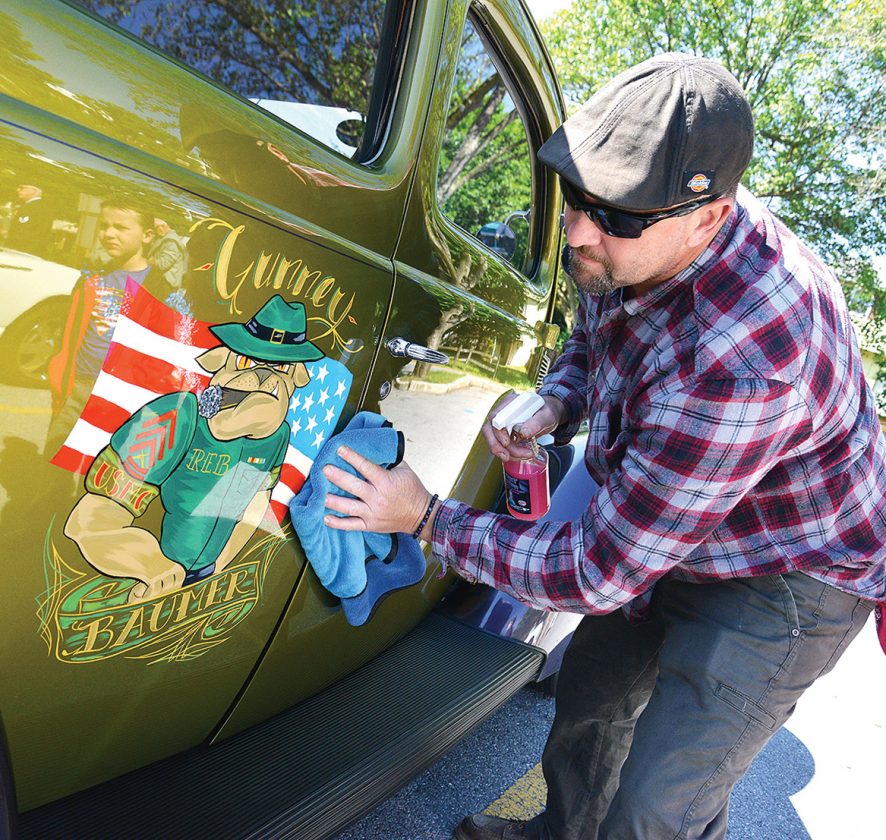
Jodi Baum of Altoona shines the side of his 1937 Ford that honors his late brother, Marine Gunnery Sgt. Ronald E. Baum of Hollidaysburg, who died May 3, 2004, serving during Operation Iraqi Freedom.
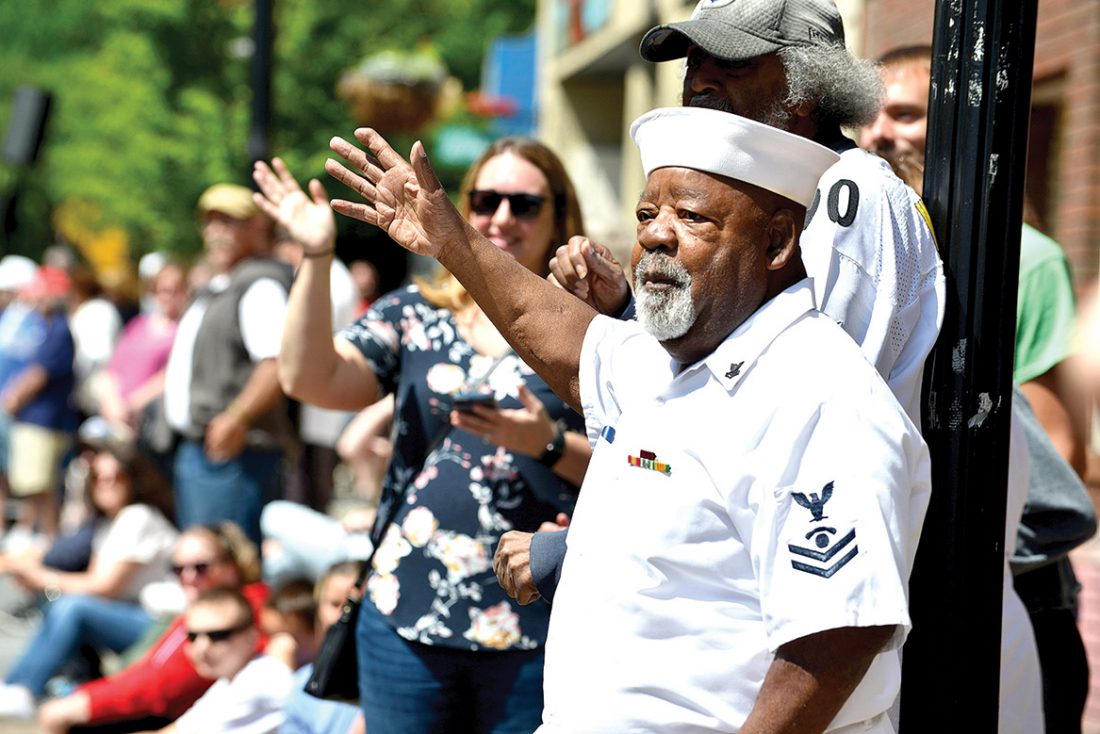
The Rev. Paul Johnson of Altoona donned his U.S. Navy dress white uniform to wave to fellow veterans. Johnson served from 1968-71, including about nine months of combat during the Vietnam War.
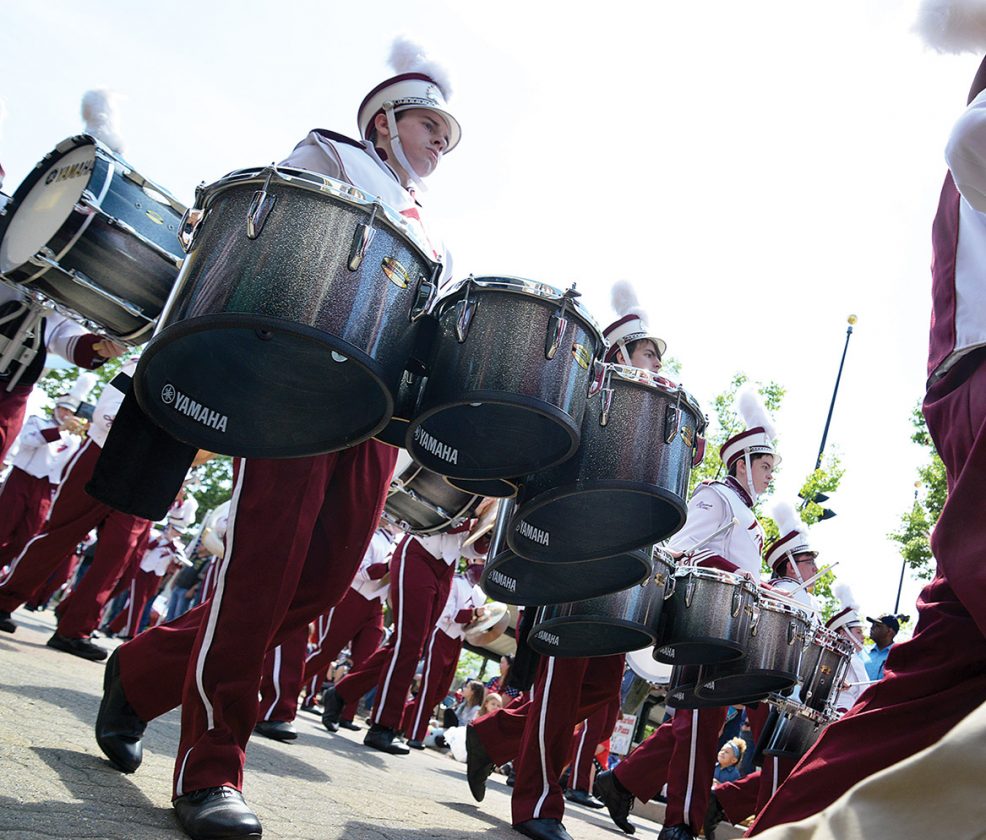
The Altoona Area High School Marching Band makes its way along 11th Avenue during the Blair County War Veterans Council Memoria Day Parade in Altoona on Monday.
Mirror photos by Patrick Waksmunski Clyde Kuncelman, 5, and his sister, Claire Kuncelman, 6, both of Ebensburg, wave flags during the Blair County War Veterans Council Memorial Day Parade in Altoona on Monday morning.
Jodi Baum of Altoona shines the side of his 1937 Ford that honors his late brother, Marine Gunnery Sgt. Ronald E. Baum of Hollidaysburg, who died May 3, 2004, serving during Operation Iraqi Freedom.
The Rev. Paul Johnson of Altoona donned his U.S. Navy dress white uniform to wave to fellow veterans. Johnson served from 1968-71, including about nine months of combat during the Vietnam War.
The Altoona Area High School Marching Band makes its way along 11th Avenue during the Blair County War Veterans Council Memoria Day Parade in Altoona on Monday.
Trending
A nation slowly emerging from social distancing measures imposed by the coronavirus pandemic honored generations of U.S. veterans killed in the line of duty on a Memorial Day observed without the severe pandemic restrictions that affected the day of tribute just a year ago.
Memorial Day parades and events were held in localities large and small across the country Monday, many resuming after being canceled last year as the pandemic hit with full force.
President Joe Biden honored America's war dead at Arlington National Cemetery by laying a wreath at the hallowed burial ground and extolling the sacrifices of the fallen for the pursuit of democracy, "the soul of America."
Biden invoked the iconic battles of history and joined them to the present as he implored Americans to rise above the divisions straining the union, which he described in stark terms.
The president was joined Monday by first lady Jill Biden, Vice President Kamala Harris and second gentleman Doug Emhoff in a somber ceremony at the Virginia cemetery's Tomb of the Unknown Soldier, which is dedicated to deceased service members whose remains have not been identified.
His face tight with emotion, Biden walked up to the wreath, cupping it in his hands in silent reflection, then making the sign of the cross. His eyes were wet. The gathered dignitaries and military families were hushed and solemn; the chattering of cicadas loud.
In remarks that followed, Biden called on Americans to commemorate their fallen heroes by remembering their fight for the nation's ideals.
"This nation was built on an idea," Biden said. "We were built on an idea, the idea of liberty and opportunity for all. We've never fully realized that aspiration of our founders, but every generation has opened the door a little wider."
He focused much of his speech on the importance of democracy, saying it thrives when citizens can vote, when there is a free press and when there are equal rights for all.
"Generation after generation of American heroes are signed up to be part of the fight because they understand the truth that lives in every American heart: that liberation, opportunity, justice are far more likely to come to pass in a democracy than in an autocracy," Biden said. "These Americans weren't fighting for dictators, they were fighting for democracy. They weren't fighting to exclude or to enslave, they were fighting to build and broaden and liberate."
But he suggested these ideals are imperiled.
"The soul of America is animated by the perennial battle between our worst instincts, which we've seen of late, and our better angels," he said. "Between Me First and We the People. Between greed and generosity, cruelty and kindness, captivity and freedom."
After the ceremony, the Bidens stopped by a row of gravestones in a cemetery where some 400,000 are buried in the gentle hills and hollows.
This year's remembrances were as painful, if less restrictive, as those held on Memorial Day 2020, when Americans settled for small processions and online tributes instead of parades. The pandemic last year forced communities to honor the nation's military dead with modest, more subdued ceremonies that also remembered those lost to the coronavirus.
With restrictions lifting, Americans paid tribute in public gatherings this year -- and like last year, they also remembered the thousands of veterans who died from COVID-19. Still, there were some vestiges: An early morning wreath laying ceremony at the National Memorial Cemetery of Arizona was shared virtually.
That wasn't the case at a long-delayed veterans and airmen's reunion in West Hills, California, a Los Angeles suburb where veterans gathered face to face for the first time Monday since their weekly reunions were shut down 14 months ago by the pandemic.
"This is a special group of veterans who are trying not to be homebound," Ed Reynolds, a Vietnam War and Air Force veteran, told KTLA-TV. "It's good to see these faces again. It's sort of emotional," he said, visibly emotional himself.
Reynolds said some 12 members of the group had died over the past year, though none of them from COVID-19.
For a select few, the Memorial Day weekend marked the final farewell, decades in the making, of the remains of fallen heroes from World War II. They included two Kentucky men -- U.S. Navy Fireman 3rd Class Welborn L. Ashby, who was killed at 24, and U.S. Navy Seaman 2nd Class Howard Scott Magers, killed at 18 -- who perished in the Dec. 7, 1941, Japanese attack on Pearl Harbor. Some 2,403 Americans died in the attack.
Magers' remains arrived in Barren County on Saturday after they were identified by the federal Defense POW/MIA Accounting Agency. He was laid to rest with full military honors, the Daily News reported.
A Memorial Day service was being held for Ashby in Beaver Dam, followed by burial at Centertown Cemetery with full military honors, including a "Missing Man" flyover by vintage planes.
In Tennessee, the body of U.S. Marine Capt. Glenn Walker, one of more than 1,100 Marines killed in the 1943 Pacific Battle of Tarawa, is coming home, his family told The Tennessean this weekend. The family plans a reunion and burial in July.
"I get emotional when I think of the life he could have had," said Walker's nephew Lane Martin. "The good is that we've reached out to family all over the country and drawn us back together."
In Florida, former President Donald Trump joined in remembering the country's fallen heroes.
"The depth of their devotion, the steel of their resolve, and the purity of their patriotism has no equal in human history," Trump said in a statement posted on his website.
In Denver, veterans and their families paid silent tribute among thousands of polished marble headstones, each meticulously adorned with an American flag, at Fort Logan National Cemetery -- a scene marked at national cemeteries across the nation.
Monday's commemorations were held as new data released by the U.S. Centers for Disease Control and Prevention suggest that new cases of COVID-19 are plunging and that more than 40% of the U.S. population has been fully vaccinated. With the declines, most states have been reducing or dropping most social distancing restrictions.
As of Saturday, the rolling seven-day average of new cases in the U.S. had dropped to 18,913, according to the CDC -- the first time that average had dipped below 20,000 a day since March 2020.