Convicted murderer’s appeal tossed
Renchenski fighting judgement since conviction for ’82 Clearfield County murder
The Pennsylvania Superior Court has rejected an appeal filed by a former resident of Reynoldsville who was convicted in Clearfield County of first-degree murder nearly 36 years ago.
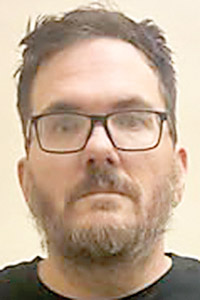
Charles S. Renchenski was 21 years old when he was arrested in 1982 for the strangulation death of Rosemarie Foley.
Renchenski met Foley, 26, while playing pool in a bar during the evening of Aug. 17, 1982.
They both drank a lot and went bar-hopping as the evening wore on.
After going to two other bars, Renchenski and Foley stopped in a wooded area of Clearfield County to “make love,” according to the story told by Renchenski to investigators.
However, the affair turned violent when they began to argue, and Renchenski stated, “I snapped out and hit her. … I don’t know. It was rapid succession — socked her and hit her with a log.”
The cause of Foley’s death was eventually ruled “asphyxiation due to strangulation.”
A jury in 1984 convicted Renchenski of first-degree murder, and in 1985 he was sentenced to life in prison by the late Clearfield County President Judge John K. Reilly Jr.
That began what the state courts have at times termed a “convoluted” and “tortuous” path by Renchenski as he attempted to appeal his first-degree conviction.
His latest attempt was rejected Tuesday by the Pennsylvania Superior Court.
Renchenski, acting as his own attorney, took exception to the dismissal of his latest petition by Clearfield County Judge Fredric J. Ammerman, who on Sept. 30 declared it to be untimely.
The journey begins
The defendant’s conviction and life sentence were upheld by the Superior Court in 1986 and the Pennsylvania Supreme Court refused review on Oct. 14, 1986.
In 1988, Renchenski on his own filed a post-conviction petition, which was rejected by the sentencing judge, but the Superior Court vacated the dismissal and sent it back because Renchenski was not represented by an attorney.
The trial court appointed an attorney for him but in 1993 permitted the attorney to withdraw his representation.
No new attorney was assigned to carry on the appeal, which lay dormant for the another 10 years, when Renchenski, again acting on his own, filed an amendment — citing new evidence — to his initial post-conviction petition.
It had been 14 years at this point since the Superior Court sent the case back to the county court for the appointment of an attorney.
The county judge dismissed the “amendment,” contending that it was really a second post-conviction appeal, which according to court rules, should have been filed years earlier.
The Superior Court upheld the local judge’s ruling, but in Tuesday’s opinion admitted the court had “erroneously quashed” the appeal as being untimely.
The state Supreme Court then vacated the Superior Court order after realizing Renchensi’s initial post-conviction appeal had never been resolved.
The case came back to the Clearfield County once again, and a new attorney was appointed for Renchenski.
A renewed appeal
He filed a new petition, but by this point the case was so old that the prosecution indicated that if a new trial were ordered, it would be prejudiced because many of the witnesses would no longer be available.
The county judge, the Superior Court and the Supreme Court all agreed that the petition had to be dismissed due to prejudice to the prosecution, noting that Renchenski had “essentially abandoned” his appeal by letting it sit for so many years.
That led to Renchenski’s latest appeal contending he is being “subjected to the deprivation of his liberty without legal representation and without a remedy in due course of law.”
He contends the ruling that the prosecution would be prejudiced removed whatever remedy he had in the law.
The opinion issued this week by Superior Court judges Dan Pellegrini, Mary P. Murray and Maria McLaughlin, indicated that Renchenski waived his appeal rights on the “remedy” by not appealing the Supreme Court’s final ruling on the issue to the U.S. Supreme Court.
Renchenski’s petition to have his appeal heard at the state level therefore was dismissed as untimely.
However, the U.S. District Court in Johnstown in 2015 heard Renchenski’s claims that his 1982 trial was unfair.
He challenged the conviction in the federal court contending: jury instructions were erroneous; that his case should have been tried by an out-of-county jury; that his attorney did not call a psychologist to the stand who would have indicated the killing was not premeditated but occurred in the “heat of passion”; that the prosecutor’s closing statement was “inflammatory”; and that his attorney had failed to call character witnesses on his behalf.
U.S. Magistrate Keith A. Pesto in Johnstown, issued a 48-page opinion recommending Renchenski’s request for a new trial be rejected because, “There is no substantial claim of error and the evidence of Renchenski’s guilt is overwhelming.”
U.S. District Judge Kim R. Gibson accepted Pesto’s recommendation and dismissed Renchenski’s petition.
The defendant remains incarcerated in the State Correctional Institution at Coal Township.
Local News

US launches rescue operation after Iranian state TV claims fighter jet went down, AP source says
Two Blair County men arrested in sexual, physical abuse of juvenile

Judge: Antis Township can decertify Pinecroft Volunteer Fire Company
Philly Federal Reserve officials visit Clearly Ahead Development in Clearfield County
CLEARFIELD — Philadelphia Federal Reserve President and CEO Anna Paulson and Executive Vice President William ...

Uncertain forecast: Weather woes may affect stream levels for start of trout fishing season in Blair County