
‘We see you’: For survivors, stigma of suicide can lead to isolation
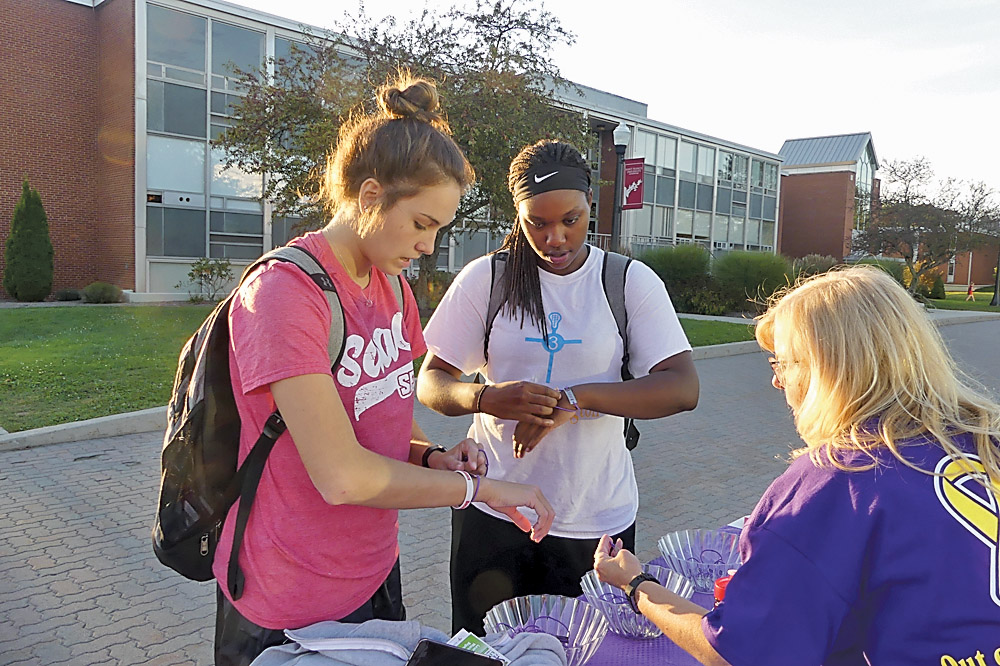
Saint Francis University women’s basketball teammates Jenna Mastellone (left) and Jada Dapaa select bracelets as reminders of “Hope,” “Love” and “Faith” as Susan Obarsky of the Center for Counseling helps. Mirror photo by Patt Keith
LORETTO — Saint Francis University students and faculty walked to raise awareness of suicide prevention efforts and to support family and friends who have been touched through the tragic loss of a loved one.
Many times the family, friends and coworkers of a person who has died through suicide experience isolation, said Susan Obarsky, assistant director of the university’s counseling center.
“People don’t know what to say, so they end up not saying anything. In this opportunity, we are saying to suicide loss survivors, ‘We see you.’ The stigma surrounding suicide often keeps people from reaching out, and it can be isolating for suicide loss survivors.”
The two-hour walk on Wednesday night followed by a vigil and candlelight service capped the university’s monthlong participation in National Suicide Prevention Month.
In 2017, 14 out of every 100,000 Americans died by suicide, according to an analysis released by the Centers for Disease Control and Prevention’s National Center for Health Statistics.
Wednesday’s events were sponsored by Saint Francis University’s Counseling Center, Residence Life and Campus Ministry programs and supported by several community organizations that set up booths and offered information.
More than 100 names were read at the vigil inside Immaculate Conception Chapel.
“It’s a time to remember loved ones and to provide comfort for those who survive,” Obarsky said. “Each suicide has a huge ripple effect.”
In addition to raising awareness, Obarsky said, the educational efforts strive to give students knowledge of local resources to turn to if they or friends talk about suicide or exhibit signs like changes in appetite or sleep patterns.
The university used an evidenced-based program to inform students.
“It’s called QPR for Question Persuade and Refer,” Obarsky said. “It’s like CPR is for the body. It’s a protocol for general mental health and is designed to remove barriers to help by asking questions, listening and finding resources in the community. We’re trying to equip students to respond and be a link to help.”
Kate Gavin, suicide prevention case manager with the U.S. Department of Veterans Affairs, worked a table to increase awareness among students of the risk factors associated with veterans, such as length of deployment and combat injuries.
“Many of the students have said they personally know or have a relative that is a veteran,” she said. “So we are reaching out so they know the signs. Also, this community has had significant losses, so we want to help in any way we can.”
Gavin was referring to two SFU students who committed suicide off-campus during summer recess.
At the counseling center’s table, two members of the women’s basketball team selected bracelets to be worn in remembrance.
“We want to support the efforts to raise awareness,” student Jada Dapaa said.
While the campus has held similar events in previous years, Obarsky said senior Megan Oravetz played a crucial role in expanding the event.
Oravetz, a resident assistant, said she became involved because mental health awareness is an important issue to her. She recruited other students, including student Renan Fuentes, who comes from Brazil.
“I don’t see enough emphasis here (in America) on mental health,” he said. “There is a lot of attention paid to take care of bodies, but not minds.”
Mirror Staff Writer Patt Keith is at 949-7030.
Finding help
If you are feeling suicidal, contact the National Suicide Prevention Lifeline at: 800-273-8255 to be connected to a crisis counselor. Locally, call Cambria Reach toll-free at 877-268-9463.
To learn how you can help, contact the Cambria County Yellow Ribbon Suicide Prevention Program at 535-6222.
Local News
Chestnut Ridge vice principal receives probation in failure to report abuse case

Altoona teen charged with animal cruelty for allegedly beating dog with bat

Spring Cove School District weighs tax hike

Trump: US will ‘finish the job’ in Iran soon
A matter of pride: Tyrone high school students turn out to help clean up their community