
Trump cuts China tariffs after meeting Xi in SKorea
China to purchase 25M metric tons of US soybeans
Trending
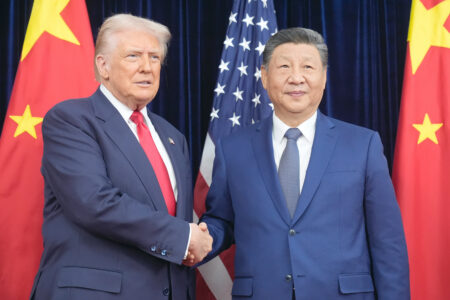
ABOARD AIR FORCE ONE -- President Donald Trump described his face-to-face with Chinese leader Xi Jinping on Thursday as a roaring success, saying he would cut tariffs on China, while Beijing had agreed to allow the export of rare earth elements and start buying American soybeans.
The president told reporters aboard Air Force One that the U.S. would lower tariffs implemented earlier this year as punishment on China for its selling of chemicals used to make fentanyl from 20% to 10%. That brings the total combined tariff rate on China down from 57% to 47%
"I guess on the scale from 0 to 10, with ten being the best, I would say the meeting was a 12," Trump said. "I think it was a 12."
Treasury Secretary Scott Bessent said China agreed to purchase 25 million metric tons of U.S. soybeans annually for the next three years, starting with 12 million metric tons from now to January. U.S. soybean exports to China, a huge market for them, had come to a standstill in the trade dispute.
"So you know, our great soybean farmers, who the Chinese used as political pawns, that's off the table, and they should prosper in the years to come," Bessent told Fox Business Network's "Mornings with Maria."
Trump said that he would go to China in April and Xi would come to the U.S. "some time after that." The president said they also discussed the export of more advanced computer chips to China, saying that Nvidia would be in talks with Chinese officials.
Trump said he could sign a trade deal with China "pretty soon."
Xi said Washington and Beijing would work to finalize their agreements to provide "peace of mind" to both countries and the rest of the world, according to a report on the meeting distributed by state media.
"Both sides should take the long-term perspective into account, focusing on the benefits of cooperation rather than falling into a vicious cycle of mutual retaliation," he said.
Despite Trump's optimism after a 100-minute meeting with Xi in South Korea, there continues to be the potential for major tensions between the world's two largest economies. Both nations are seeking dominant places in manufacturing, developing emerging technologies such as artificial intelligence, and shaping world affairs like Russia's war in Ukraine.