
The Century Mark: Black’s Willow Run Farm in Sinking Valley joins state’s list of centennial farms
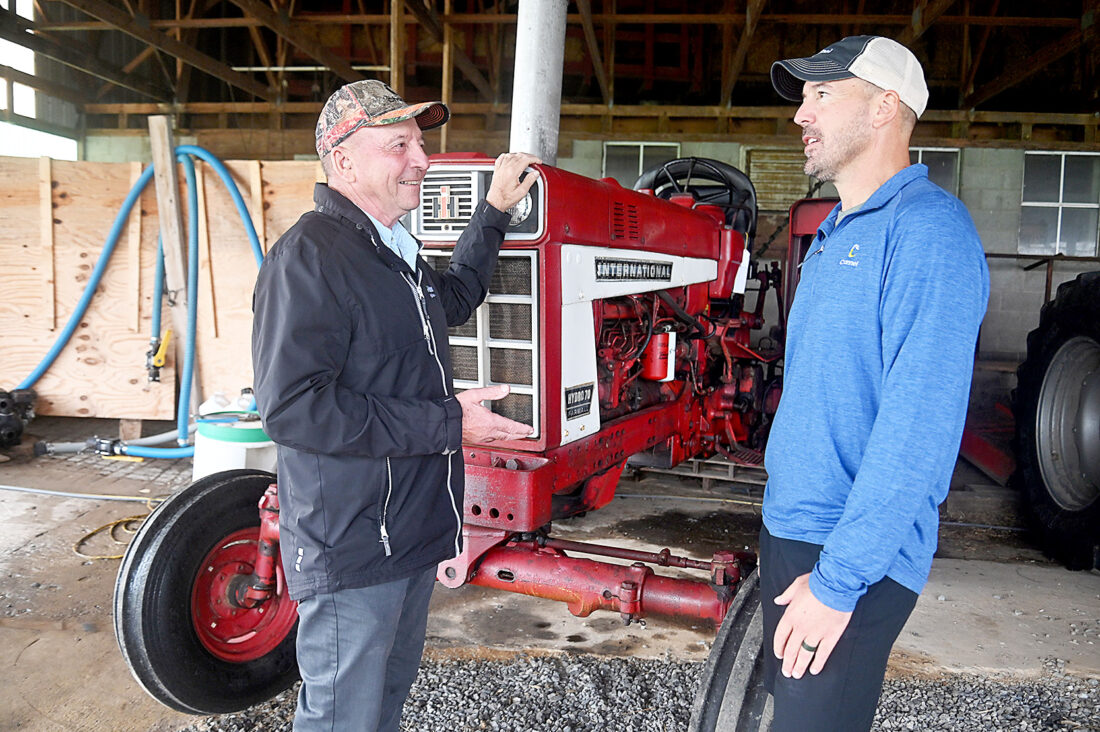
Bob Black (left) talks with his son, Clint Black, at the family’s Black’s Willow Run Farm in Sinking Valley. The family’s farm was among seven farms recognized as centennial farms during Ag Progress Days in August. Mirror photo by Patrick Waksmunski
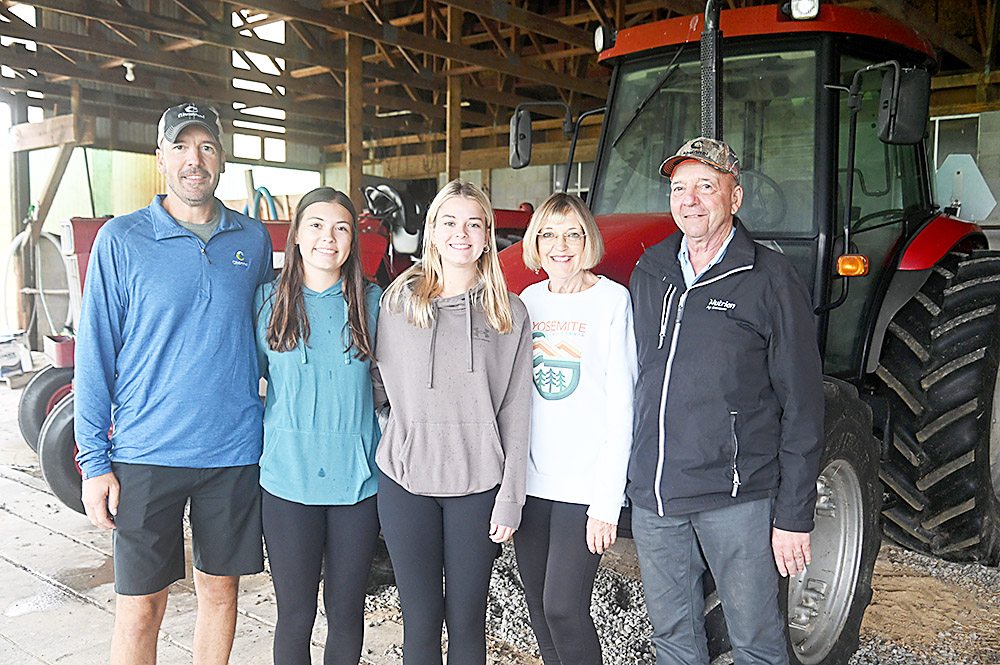
Black’s Willow Run Farm in Sinking Valley has been in the Black family since 1890. Pictured (from left) are Clint Black; daughters, Ally Black and Taylor Black; mother, Penny Black; and father, Bob Black. Clint’s wife, Jessica Black, is absent from the photo. Mirror photo by Patrick Waksmunski
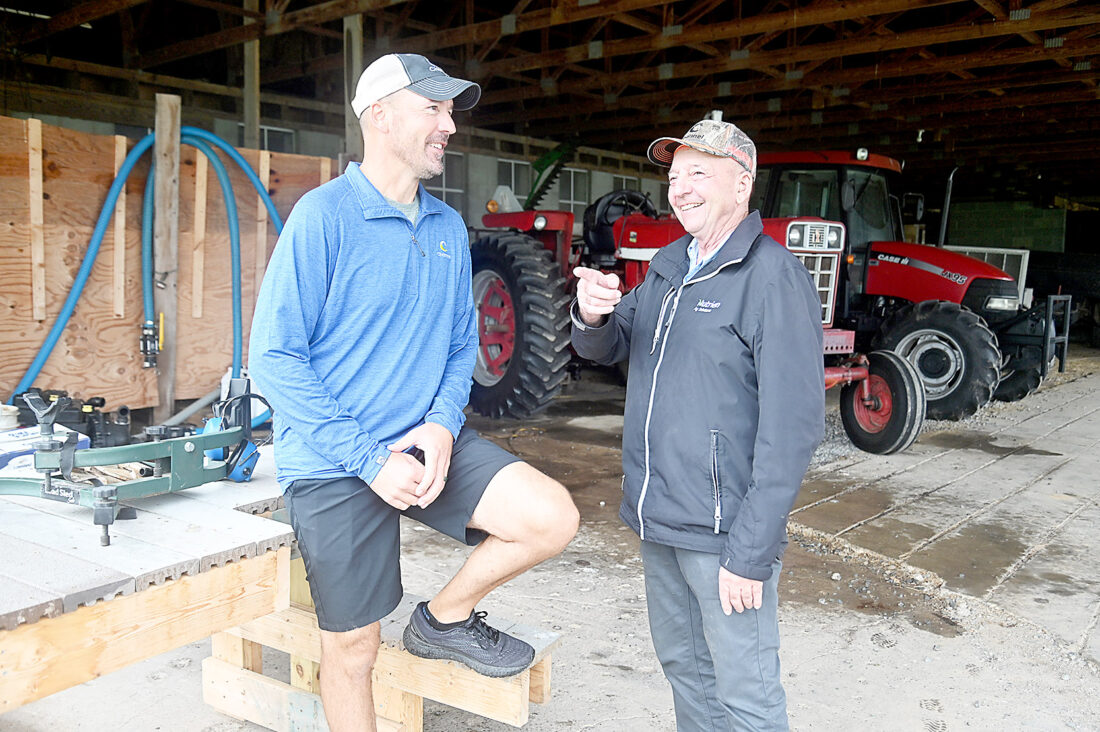
Click Black (left) talks with his father, Bob Black. Mirror photo by Patrick Waksmunski
Bob Black (left) talks with his son, Clint Black, at the family’s Black’s Willow Run Farm in Sinking Valley. The family’s farm was among seven farms recognized as centennial farms during Ag Progress Days in August. Mirror photo by Patrick Waksmunski
Black’s Willow Run Farm in Sinking Valley has been in the Black family since 1890. Pictured (from left) are Clint Black; daughters, Ally Black and Taylor Black; mother, Penny Black; and father, Bob Black. Clint’s wife, Jessica Black, is absent from the photo. Mirror photo by Patrick Waksmunski
Click Black (left) talks with his father, Bob Black. Mirror photo by Patrick Waksmunski
Trending
A Sinking Valley farm recently became Blair County's 10th centennial farm.
Black's Willow Run Farm was among seven farms recognized as centennial farms during Ag Progress Days.
A Perry County farm was recognized as a Bicentennial Farm.
"We celebrate eight farm families who have made tremendous contributions to feeding Pennsylvanians and preserving our agricultural heritage," state Agriculture Secretary Russell Redding said. "These farms and families have varied histories, yet all have the common attributes of sustainability, durability, and perseverance as caretakers for the land."
Since the Pennsylvania Department of Agriculture started the Century Farm program in 1977 and the Bicentennial Farm Program in 2004, more than 2,300 farms have been recognized. The program's goal is to emphasize the importance of economic and rural heritage and traditions in Pennsylvania.
Farms owned by the same family for at least 100 consecutive years are eligible to be named a Pennsylvania Century Farm. A family member must live on the farm, and the property must include at least 10 acres of the original farm or earn more than $1,000 annually from sales of farm products.
"I just thought about it and didn't know why we shouldn't apply. We did, the original farm house and part of the original barn are still here," said Bob Black, who represents the third generation of the Black family. "I was born and raised here, I am 76. I am not retired, I help out on the farm but I'm not the boss."
"It is a pretty unique recognition that took four generations to complete," said Bob's son Clint Black, who today owns the farm with his wife, Jessica.
Neighboring farmer Dennis Hazenstab suggested the Blacks look into applying for the centennial farm designation.
"I think it is terrific, not many farms make it to the third or fourth generation, Clint lives and breathes the smell of the dirt. They value living on a farm," Hazenstab said. "Even though Bob is semi-retired, people call him constantly for advice.
The Tyrone Township farm dates back to 1890.
James Black, Clinton and Jessica Black's great-grandfather, purchased the farm on Dec. 31, 1920. James Black paid $28.57 per acre for 140 acres. James Black supplemented his farm income by working at the Pennsylvania Railroad in Altoona.
"He raised chickens and sold eggs to his co-workers," Bob Black said.
James Black ran the farm until he died in 1949. At that time, Samuel Black, Bob's father, took over and changed the operation to a dairy farm.
"He sold his milk to McMahons Dairy. We had 100 dairy cows, that was a good size at the time," Bob Black said.
Samuel Black was killed in an automobile accident in 1976 and Bob took over the farm.
"We sold milk and got into genetics, the embryo transplant program. We sold frozen embryos to Europe and Saudi Arabia. We were the best of the best for about ten years. It was good while it lasted, we sold embryos until the early 1990s," Bob Black said.
Bob Black decided to switch from a dairy farm to a crop farm about 2000.
"You had to either expand or exit," Clint Black said.
"You could see the writing on the wall: get big or get out," Bob Black said. "Today we are a crop farm. We grow corn, wheat, soybeans and alfalfa."
It isn't easy running a crop farm.
"Unless you have about 1,000 acres you can't survive as a crop farmer," Bob Black said.
"The way the farm economy has changed,the majority of people who farm it is not their sole source of income," said Clint Black, who works for St. Louis-based Bayer Crop Science and works with seed dealers across the northeast. Jessica is the dean of students at Tyrone Elementary School.
Farming has changed over the years, going from "horses to tractors," and with technology playing a big role with bigger tractors, drones and the internet, Bob Black said.
The farm was placed in Pennsylvania's farmland preservation program in 1995.
"We put it in a land preservation program for eternity so it cannot be developed, we wanted it preserved the way I got it," Bob Black said.
"The only thing that can be built are agricultural buildings," Clint Black said.
The family-run operation has survived hardships such as the original barn burning down in 1964.
"One third of the barn is original, the stone foundation, we renovated and expanded it," Bob Black said.
The original farm house is still used today.
"When grandpa bought it there was no electricity, running water or a basement. He dug out a basement and put in a furnace and electricity and got rid of the outhouse," Bob Black said.
The Black family is proud the farm has survived for more than 100 years.
"You need to have a good working relationship between generations and the ability to overcome significant challenges through the years and you have to be flexible on what it takes to survive," Clint Black said.
Clint Black said he would be pleased if one of his daughters, Taylor, 22, or Ally, 19, would one day take over operation of the family farm.
Mirror Staff Writer Walt Frank is at 814-946-7467.