
War sparks fuel crisis in Russia
Trending
The lines are growing at Russian gas stations -- and so is the frustration and uncertainty as several months of Ukrainian attacks have set oil refineries ablaze and choked supplies for motorists across the vast country.
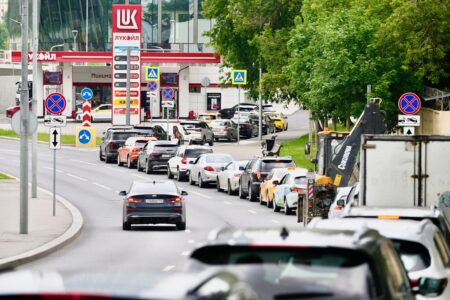
Fuel rationing has been introduced in many regions, with hourslong queues of cars snaking beside roads. Social media videos show drivers aghast at the lines or swearing at empty gas pumps and rising prices. The mayor of the Siberian city of Irkutsk even ordered portable toilets brought in to accommodate those in line.
The fuel crisis -- unprecedented for a nation that is one of the world's biggest energy producers -- has brought Moscow's full-scale invasion of Ukraine home to ordinary Russians like few other events in the war, now in its fifth year.
It drew a rare admission from President Vladimir Putin, who acknowledged "problems persist for both motorists and businesses," and "there are still queues at petrol stations, and finding the right grade of petrol isn't always easy."
He insisted the shortages are "not critical" and "temporary."
But that appeared to do little to reassure at least one motorist in Moscow, the wealthy capital typically better-insulated from economic shocks than the rest of the country.
"I think the situation is not very good," the motorist waiting in line told The Associated Press on Monday, the day after Putin's televised remarks.
"They say one thing on television, and in reality it's another. … People are queueing everywhere," he added, declining to give his full name out of safety concerns.
Ukrainian President Volodymyr Zelenskyy on Monday echoed that sentiment, writing on Telegram that "Putin can go on and on, claiming on TV that he supposedly has everything under control," but Russians can see that the war "has reached the point where even an oil state -- a gas station, as Russia used to be called -- is now facing gas shortages."
Ukraine hits energy targets multiple times
An AP count shows over 50 reported attacks by Ukraine on oil refineries, depots, terminals and other energy infrastructure in Russia and the illegally annexed Crimean Peninsula since March. Often, the same facility was hit more than once -- such as the refinery in the Black Sea town of Tuapse that was struck four times.
The amount of crude oil Russia processed into fuel in June was down 25% from a year ago, to 3.95 million barrels per day -- the lowest level in more than two decades, said Gary Peach, oil markets analyst at Energy Intelligence.
"The outages are extraordinary," he said.
Gasoline production has fallen 17% to 850,000 barrels a day, from 1.03 million a day a year ago -- far short of what the domestic market needs. Russia exports relatively little gasoline.
About a third of Russia's oil refining capacity is offline, said Chris Weafer, CEO of Macro-Advisory Ltd. Consultancy, noting that because refineries don't publicly confirm the extent of the damage, his estimate comes from anecdotal evidence and oil industry sources.
"It comes at a very critical time for the Russian economy, in that the agriculture season, particularly the harvest season, is now starting to ratchet up," increasing demand, Weafer said.
Ukrainian officials describe the strikes as a campaign to pressure Moscow to end the war by undermining military logistics and supply lines and weakening its ability to mount front-line assaults.
In particular, Kyiv has sought to isolate Crimea, which was seized from Ukraine in 2014 in a move most nations don't recognize. Attacks this year forced the Moscow-installed authorities to enact fuel rationing on the peninsula in May and halt sales to civilians there altogether. Limited sales later resumed in the city of Sevastopol.
Ukraine carried out major drone strikes on Russia's two largest cities, embarrassing the Kremlin with images of black plumes of smoke that circulated widely online, despite regulations restricting their publication.
A June 3 attack on a St. Petersburg oil terminal darkened the sky as Putin prepared to host his annual economic forum to attract foreign investment. On June 18, a similar cloud rose from the Moscow Oil Refinery.