
Families criticize Mexico for missing
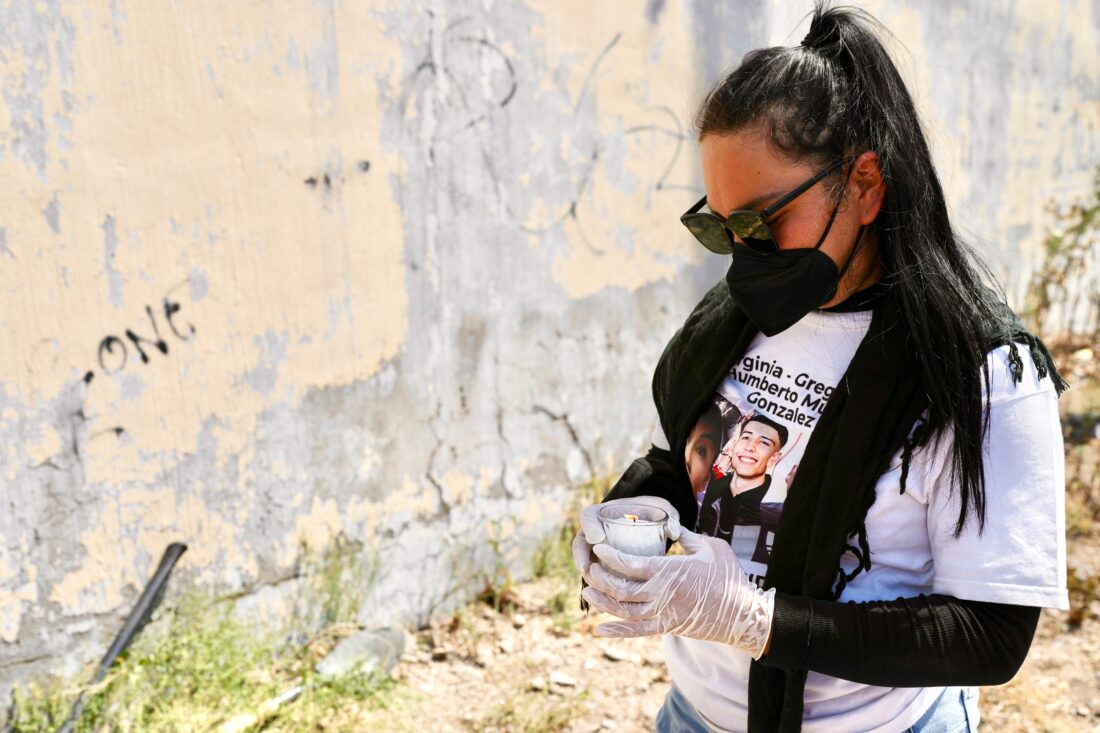
The Associated Press / A relative of a missing person, part of a group called the Guerreros Buscadores, lights a candle on March 24 after finding skeletal remains buried in Tlajomulco de Zuniga, on the outskirts of Guadalajara, Mexico.
MEXICO CITY — Mexico’s government said in a new report Friday that it identified signs of life for a third of the country’s 130,000 registered missing people, an announcement that was quickly criticized by a number of search groups who called it another attempt to undermine the depth of Mexico’s disappearance crisis.
The mounting criticism cut to the heart of fierce debate over how Mexico tracks disappearances, which have soared since the beginning of the drug war in 2006. While authorities say figures are overcounted, families say the number of missing people in Mexico is actually far higher. Both blame what they see as a lack of reliable data on failures by local governments and deep-seated impunity.
Mexican authorities said Friday that by cross-referencing things like vaccination records, birth and marriage registries and tax filings, officials found that 40,367 people — around 31% of reported disappearances — showed some activity in government records since they’d been reported missing. Marcela Figueroa, a top security official, said it indicated that those people might still be alive.
Using that search method, and consulting with a number of search groups, she said that the government was able to track down 5,269 people and mark them as “found.”
Figueroa described many of those cases as “voluntary absences,” citing a number of examples of men leaving their partners for another woman being reported as missing and women running away from abusive relationships.
“Not all disappearances are the same,” she said, adding that the government was constantly working to locate Mexico’s missing people.
Efforts to ‘hide and downplay’ numbers
But Hector Flores, a leader of a search collective in the heart of Mexico’s disappearance crisis, the state of Jalisco, said he saw the Friday report as “misleading” and said the government’s methodology lacked transparency.
Groups like his have accused the government for years of trying to disappear the disappeared to save face on an international stage. Historic corruption and lack of investigation into such cases has fueled distrust among families who believe that changes to the registry could cut real cases from the list and hinder search efforts.
“For us, it’s just another attempt by the administration to hide and downplay the numbers and continue to paint a picture that doesn’t reflect the reality of what we’re living through,” said Flores, whose 19-year-old son was forcibly disappeared by agents from the Jalisco state prosecutor’s office in 2021.
According to figures shared Friday, 46,000, or 36%, of those registered as disappeared had missing data like names and dates that made searches impossible.
Meanwhile, 43,128, or 33%, showed no registered activities in government databases. Of those, less than 10% are under criminal investigation, something Figueroa called a failure by Mexican authorities.
Figueroa also said the government was more vigorously monitoring local prosecutor’s offices that have failed to investigate and accurately document cases of missing people, and has sought to boost the number of cases being investigated.
“Society and the families can trust in the records and better tools to search for people,” Figueroa said.
The reinterpreted figures are part of a larger effort to bring order to a convoluted data set that connects to a collective trauma scarring the Latin American nation.
Forcibly disappearing people has long been a tactic by cartels to consolidate control through terror while also concealing homicide numbers.
International News
Families criticize Mexico for missing
Daily briefing
Nation Guthrie to return to ‘Today’ show Savannah Guthrie, who will return on April 6 as co-host of ...

Iran strike wounds US troops at air base
Russia says it shot down almost 400 Ukrainian drones
Russian air defenses downed 389 incoming Ukrainian drones, Russia’s Defense Ministry said Wednesday, in what was ...
Brazil’s former President Jair Bolsonaro to be sent home from hospital
Brazil Bolsonaro to be sent home from hospital SAO PAULO — Brazil’s former President Jair Bolsonaro will be ...
Iran rejects US ceasefire plan, issues demands
DUBAI, United Arab Emirates — Iran on Wednesday dismissed an American plan to pause the war in the Middle East ...