
Beluga whales frolic in warming bay
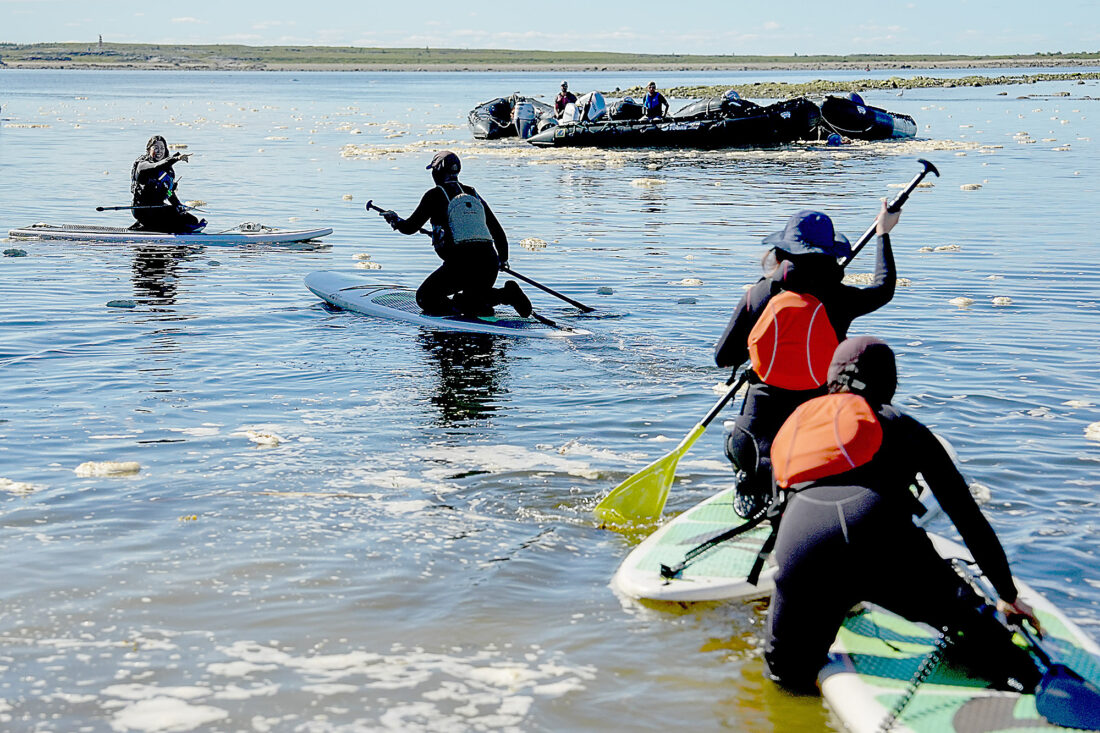
Erin Greene (left) owner of Sup North, directs a person while leading a paddleboarding tour on Aug. 8 in Churchill, Manitoba. The Associated Press
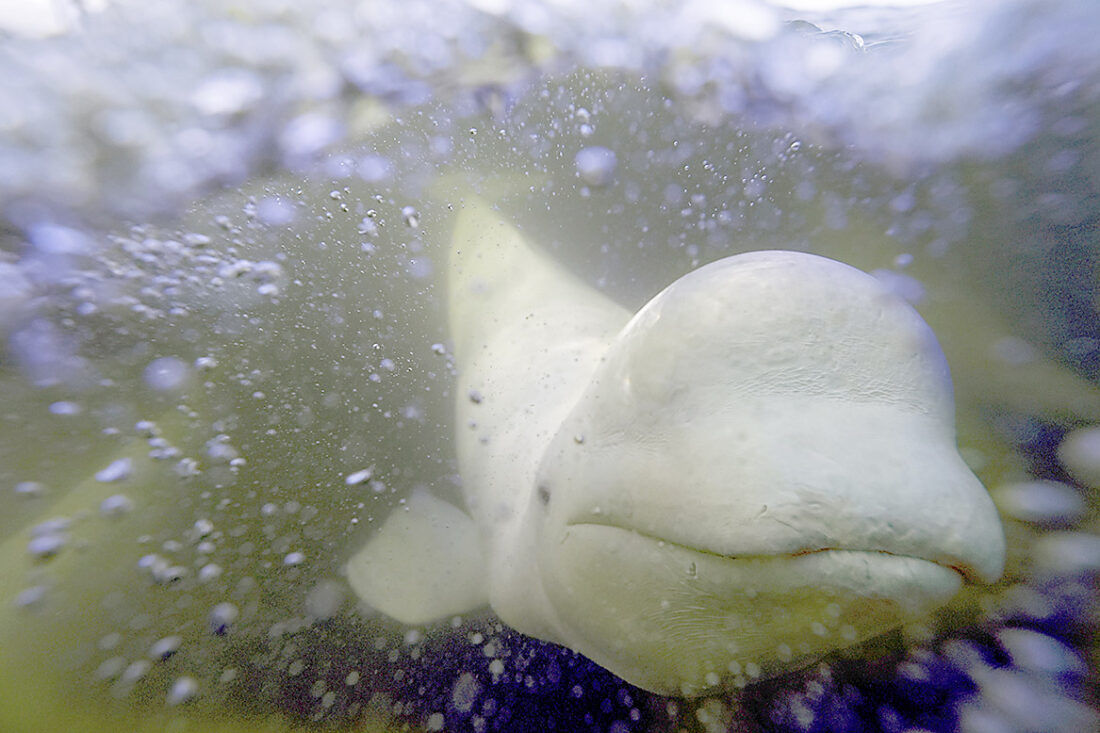
A beluga whale swims behind a boat through the Churchill River on Aug. 5. The Associated Press
Erin Greene (left) owner of Sup North, directs a person while leading a paddleboarding tour on Aug. 8 in Churchill, Manitoba. The Associated Press
A beluga whale swims behind a boat through the Churchill River on Aug. 5. The Associated Press
Trending
ON HUDSON BAY -- Playful large white beluga whales bring joy and healing to Hudson Bay. Their happy chirps leap out in an environment and economy threatened by the warming water melting sea ice, starving polar bears and changing the entire food chain.
Loud and curious belugas swarm boats here, clicking, nudging and frolicking. At any given summer moment on the Churchill River that flows into the Hudson Bay, as many as 4,000 belugas can be up and down the waterway, surrounding vessels of all sizes. That makes it hard to find a place where you don't see them, said whale biologist Valeria Vergara, senior scientist at the Raincoast Conservation Foundation. It's in their nature.
"The social butterflies of the whale world. … You can see it in Churchill," Vergara said.
The town of Churchill is counting on that to continue. The mostly Indigenous community, pulled out of economic doldrums by polar bear tourism, faces the prospect of a dwindling number of bears because of climate change. So it is counting on another white beast, the beluga, to come to the rescue and entice summer tourists -- if the sea mammals can also survive the changes to this gateway to the Arctic.
There's something healing about belugas. Just ask Erin Greene.
Greene was attacked by a polar bear in 2013. She doesn't like to go into details about the attack, but Mayor Mike Spence said she was thrashed by a bear which had her in its jaws. A neighbor hit the bear with a shovel, and a third person used a truck to scare off the bear, which was later found and killed. Years later, Greene said contact with the sociable whales helped pull her out of post-traumatic stress disorder. Now she goes out in the water with them, on a paddleboard, and sings to and with the whales. She also rents paddleboards to tourists, so they can do the same.
Greene, who isn't native to Churchill but came to work in the tourism industry, tried yoga, which eventually led to paddleboarding in Hawaii. It made her feel a little better, so she thought she'd bring it back to Churchill where there isn't just water, but belugas. And that helped her heal, "moving through the various stages of dealing with trauma," she said.
But it's not just her, she said. When she brings her customers into the water, inches from the whales, they also feel better.
"I've never seen an animal except for maybe puppies bring that amount and capacity of joy to people," Greene said. "Everybody's smiling when they get off the water… Everybody's just experiencing joy.
And it's the whales that provide that."
"With the beluga whales, I think it's quite a different connection than with any other animal because the whales are truly choosing to socialize with you. They want to play," Greene said. "That's really what sets them apart from other animals. They're so gentle. They have no desire to hurt the human."
It doesn't hurt that the whales have gotten to know Greene. Vergara has no doubt that they know her.
Greene sings to the whales, including "Yellow Submarine" by the Beatles. She also sings the Will Ferrell Eurovision movie song "Husavik (My Hometown)" with the lyric, "where the whales can live 'cause they're gentle people."
That lyric is close to reality, whale expert Vergara said.
"They really have traits that are so similar to human culture, so we can really empathize with them," Vergara said. "They form communities and networks. They cooperate and help raise each other's young. They're unbelievably vocal. They're probably one of the most acoustically active or vocal mammals, along with humans, on Earth."
Sea ice is shrinking all over the Arctic, including here in Hudson Bay. And even though this is probably the biggest beluga population in the world, scientists are a bit concerned.
"The disappearing ice is going to affect them," Vergara said. "We don't know how they're going to react to shifts in water temperature, shifts in food availability, shifts in the availability of regular prey."