
Tick awareness emphasized
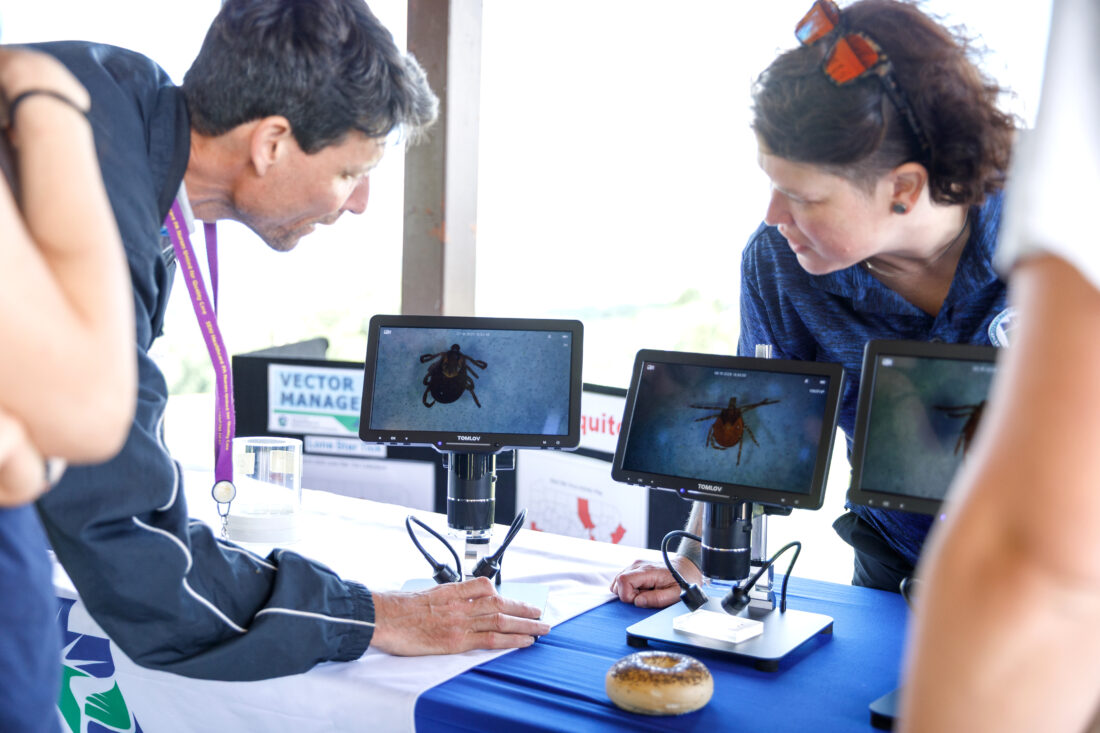
Educational displays providing information on ticks, prevention strategies and Lyme disease are seen during a public awareness event at Sam Lewis State Park. Commonwealth media services
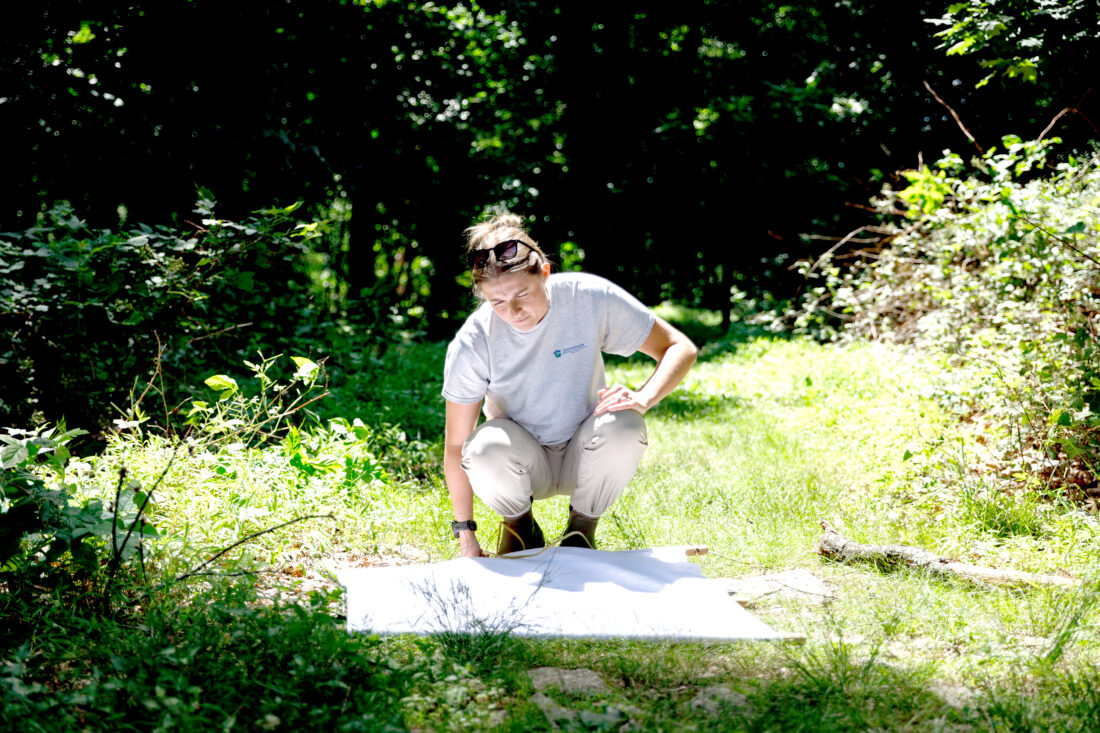
DEP Tick Biologist Holly Chapman demonstrates a tick drag used for surveying tick populations. Commonwealth media services
Educational displays providing information on ticks, prevention strategies and Lyme disease are seen during a public awareness event at Sam Lewis State Park. Commonwealth media services
DEP Tick Biologist Holly Chapman demonstrates a tick drag used for surveying tick populations. Commonwealth media services
Trending
YORK -- To help residents plan outdoor activities safely, the state Department of Health maintains an online dashboard that shows where ticks are prevalent so people can take appropriate precautions.
The dashboard can be found by visiting pa.gov/agencies/health then click on Diseases and Conditions, then Tick Diseases.
On Monday, representatives of the state Department of Conservation and Natural Resource, the state Environmental Protection Agency and the health department gathered a the Samuel S. Lewis State Park in York County to highlight the importance of preventing tick bites and Lyme disease while enjoying the commonwealth's parks, forests and outdoor recreation opportunities this summer.
"Whether you're exploring one of Pennsylvania's 125 state parks, hiking in our 2.2 million acres of state forestlands, or relaxing in one of the more than 6,500 local parks right in your own community, it's essential to understand the risks and be prepared throughout the year," said DCNR Secretary Cindy Adams Dunn. "Taking proper steps to reduce the chances of being bitten is key, as ticks are found in both urban and rural settings -- typically in shrubs, weeds, leaf litter, tall grasses, and anywhere there is foliage."
Pennsylvania typically ranks among the top 10 states in the country for Lyme disease cases per 100,000 residents. Last year, DOH recorded 18,747 lab-confirmed cases of Lyme disease. Most cases can be treated successfully with a short course of antibiotics, but if left untreated, Lyme disease can spread to joints, the heart and the nervous system.
"Spending time in nature has many benefits to both physical and mental well-being, and I want to encourage all Pennsylvanians to have fun outdoors this summer," said DOH Secretary Dr. Debra Bogen. "However, it's important to do so safely, by taking precautions beforehand and doing tick checks after. If you are experiencing any symptoms of tickborne illness, I encourage you to contact your health care provider right away."
Ticks are found in every county, from Philadelphia to Erie, said DEP Secretary Jessica Shirley.
Tips for tick bite prevention:
– Cover exposed skin and wear light-colored clothing to make it easier to spot ticks.
– Use EPA-approved insect repellent for tick prevention.
– Before heading outdoors, treat shoes, clothes, and gear with permethrin.
– After coming indoors, check yourself, children and pets thoroughly for ticks and remove any promptly.
– Shower soon after spending time outside to help wash away ticks that may have gone unnoticed.
– Place clothes in the dryer on high heat to kill any remaining ticks.
Benefits of being outdoors:
– Improving cardiovascular health
– Strengthening muscles and bones
– Reducing the risk of chronic diseases
– Lowering stress and improving mental health
– Increasing social connection
For more information on Lyme disease, visit DOH's Tickborne Diseases webpage.
Sam Lewis is an 85-acre state park with stunning views from Mt. Pisgah, an 885-foothigh ridge that separates Kreutz Creek Valley to the north and East Prospect Valley to the south.
Visit DCNR's website for more information about what to do at state parks and where to go on public lands, including local parks and for scenic views.