
St. George Orthodox marks 100 years of ministry
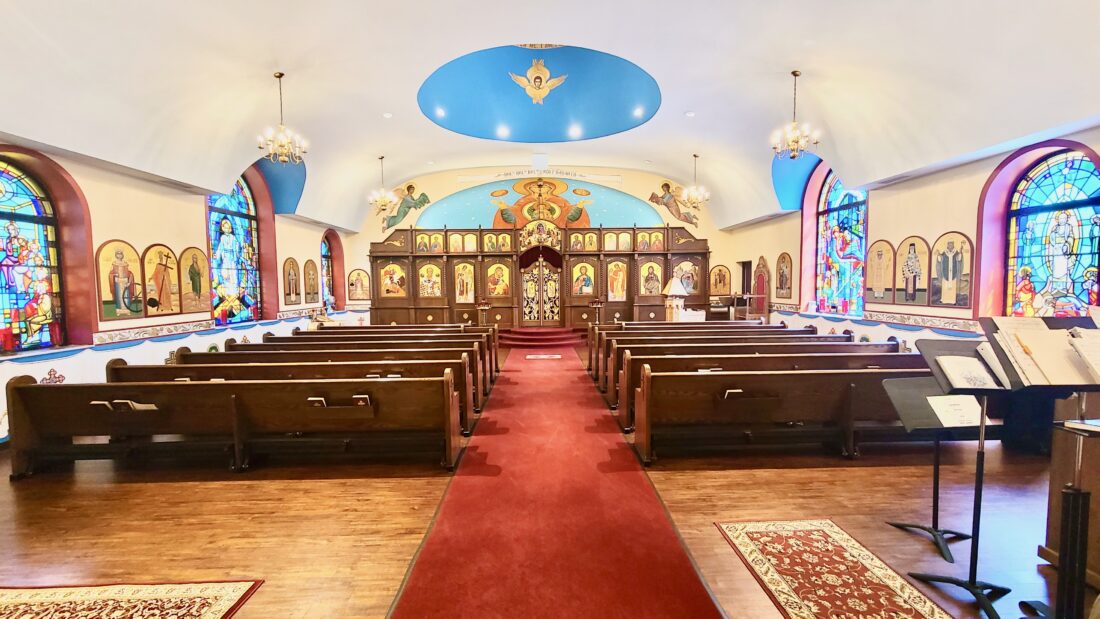
Pictured is the interior of St. George Orthodox Church, which marked its 100th anniversary in September. Courtesy photo
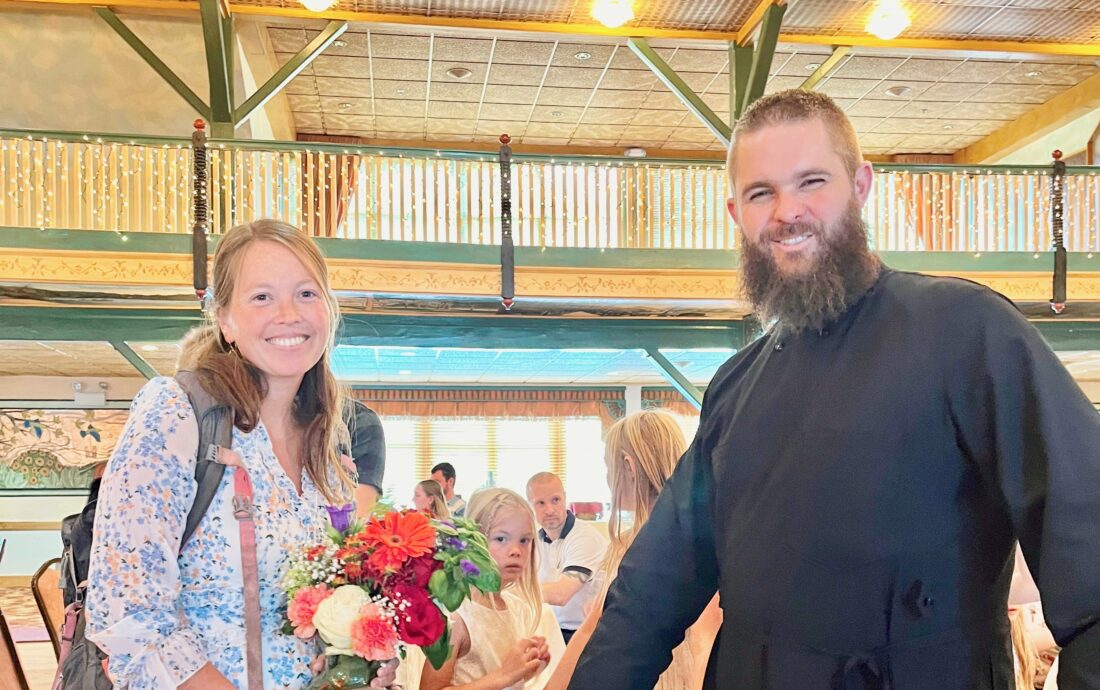
The Rev. Isaac Danevecius (right) and wife, Morielle, attended the 100th anniversary celebration at The Casino at Lakemont Park. Courtesy photo
Pictured is the interior of St. George Orthodox Church, which marked its 100th anniversary in September. Courtesy photo
The Rev. Isaac Danevecius (right) and wife, Morielle, attended the 100th anniversary celebration at The Casino at Lakemont Park. Courtesy photo
Trending
St. George Antiochian Orthodox Church recently celebrated the 100th anniversary of having its first permanent priest.
The church, now located at 519 58th St., Altoona, was originally named the St. George Syrian Orthodox Church.
The church began as a mission in 1918 for Orthodox Christians who immigrated from the Ottoman Empire of the Middle East to Altoona.
The first of the immigrants were Albert and Anna Makdad who arrived in 1891 from present-day Lebanon, with their daughter Mary. From that date until 1922, over 100 families from Lebanon, Syria and Palestine joined them.
Coming from small villages, they were not exposed to the Industrial Revolution and the machinery experienced by immigrants from Europe, but rather, in the rural Ottoman Empire, farming and trading were their livelihoods.
Once in Altoona, they became self-sufficient by peddling, then opening storefront stores selling confections, cigars and fruit. They lived above the stores.
By 1912, there were stores on Eleventh Avenue as well as scattered throughout Altoona neighborhoods. From 1918-24, they were served by itinerant priests in immigrant homes.
In 1924, the first permanent priest, the Rev. George Kattouf and his wife and children arrived. He arranged for services to be held at St. Luke's Episcopal Church in one of the Sunday School rooms. Two years later, the Christian and Missionary Alliance Church at 809 15th Street was purchased as their first permanent home.
In 1969, Altoona's redevelopment purchased the building and the congregation built the new edifice at 519 58th Street.
Following World War II, many of the American born sons of the immigrants returned home to marry women not of Middle East origin. Thus the church services were served in English, and a choir and choral music added to the traditional Byzantine Chant used for centuries.
By the 1960s, to reflect the change in ethnicity, the church removed the word Syrian from its title and replaced it with Antiochian to indicate that it traced its origin to the city of Antioch, where the followers of Jesus Christ were first called Christians in 33 A.D. St. Peter was their first bishop.
From the mid-20th century to the present, the church membership has slowly evolved into one with few traces of its ethnic origin and, like its sister churches throughout the United States, has welcomed a stream of converts who sought it out.
Today, with its pews full (Sunday attendance averaging 70), and a Sunday school, choir and chanters, it is predominantly a church of converts reflecting the trend of its Archdiocese nationally.
In celebration of the over 100 years of existence in Altoona, a banquet was held in the grand hall at The Casino at Lakemont on Sunday, Sept. 15. The Master of Ceremony was Michael Nerenberg, president of the church council.
Opening the program were remarks given by the Rev. Isaac Danevicius, pastor of St. George. The invocation and blessing were given by Bishop Thomas, presiding bishop of the Diocese of Oakland, Pa., and Charleston, W.Va. This was followed by the luncheon and a welcoming address by the bishop, a short history of the parish by parishioner Michael G. Farrow, Ph.D. Remarks were given by Michael Nerenberg on growing up in the parish. An open microphone for memories by those in attendance was provided.
An illustrated booklet for the 100th anniversary celebration was written by Farrow, "Origins of the Migration of Orthodox Christians from the Ottoman Empire to Altoona, Pennsylvania and establishment of St. George Antiochian Orthodox Church 1891 - 2024." The booklet includes the history of the church and photos of the 21 priests that served the parish. Also prominently featured are stories of over 100 immigrants who formed the early parish, why they settled in Altoona, lists of the early immigrants and their wives, addresses and photos of many of their early 20th-century businesses, as well as a chronology of important historical dates in the life of the parish.