
Time saver: Clock repairman turns back classic clocks for annual daylight saving time
Clock repairman turns back classic clocks for annual daylight saving time
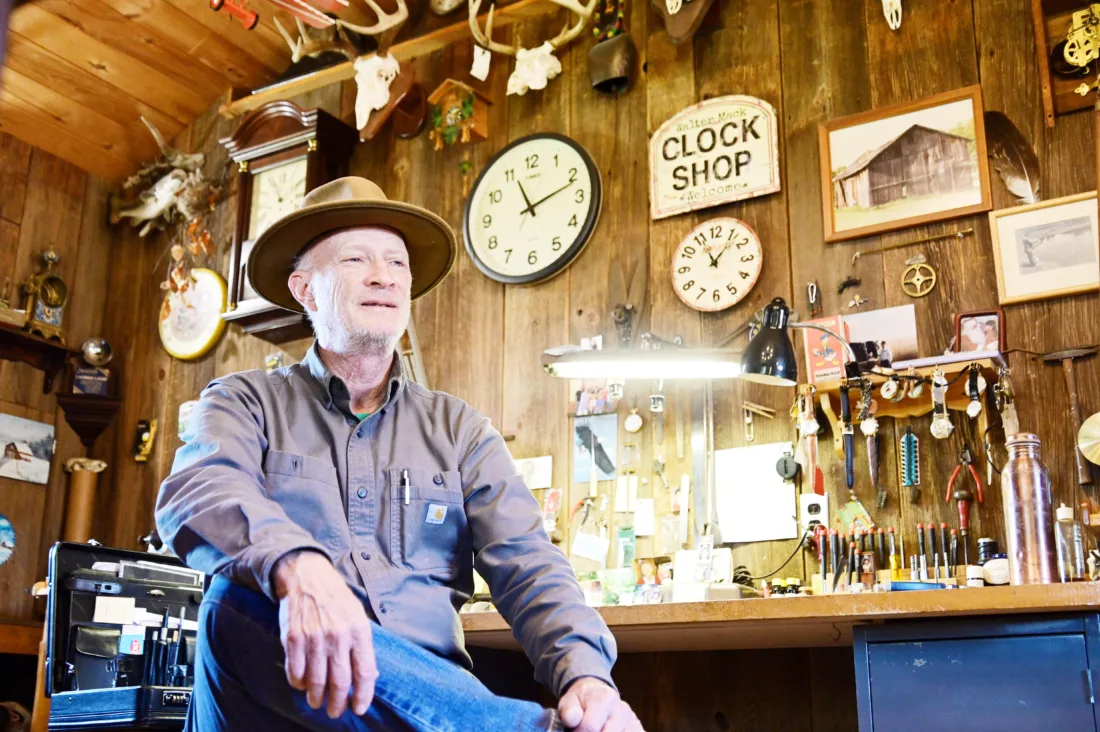
Walt Mack sits in his shop west of Vintondale. Mirror photo by Patrick Waksmunski
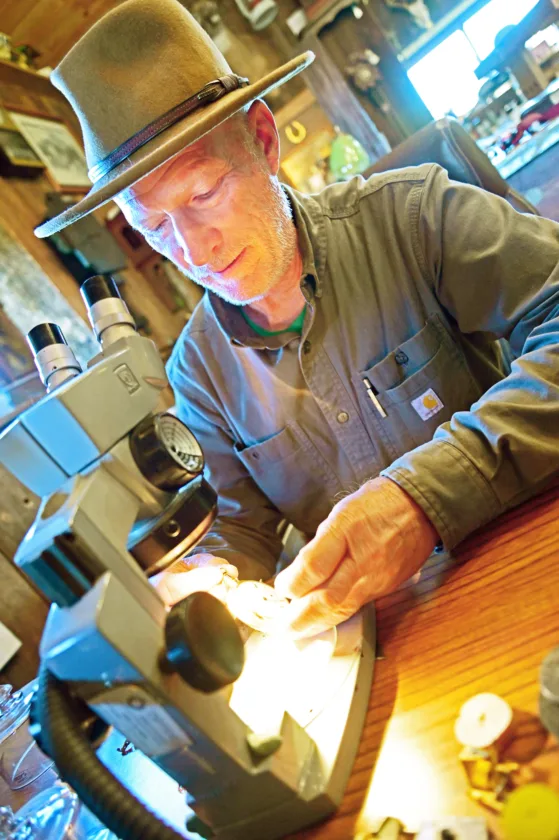
Walt Mack uses a microscope to work on the minute workings in a watch. Mirror photo by Patrick Waksmunski
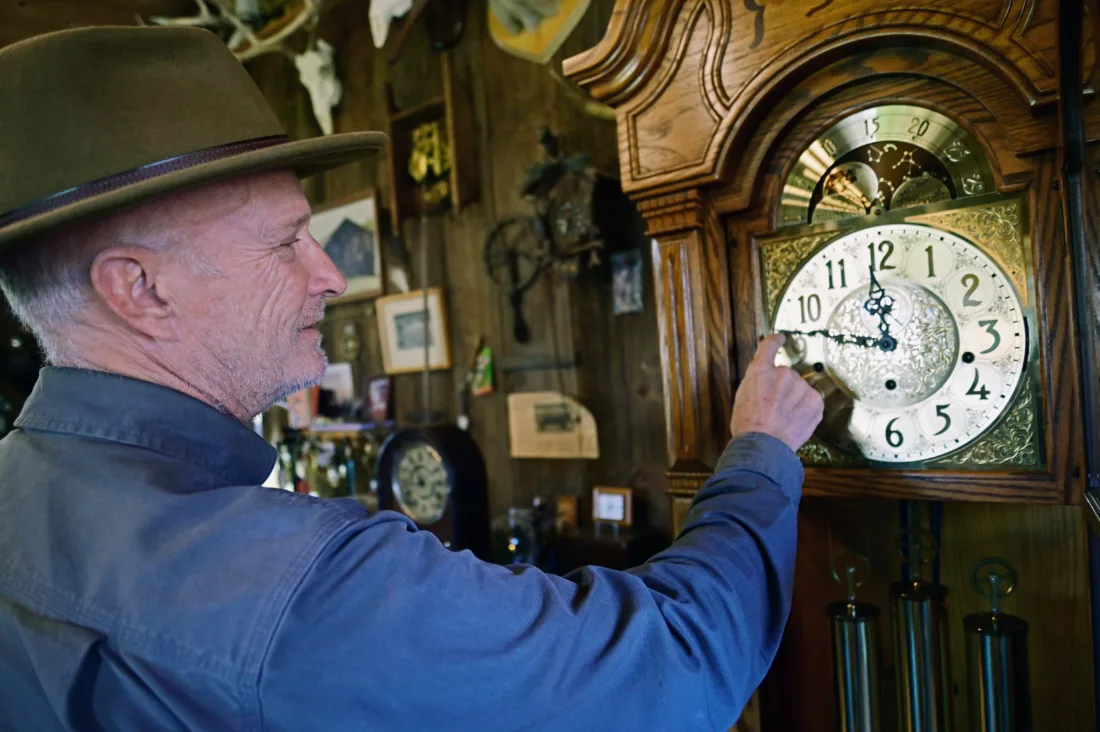
Walt Mack sets the time on a grandfather clock with a moon phase dial. Mirror photo by Patrick Waksmunski
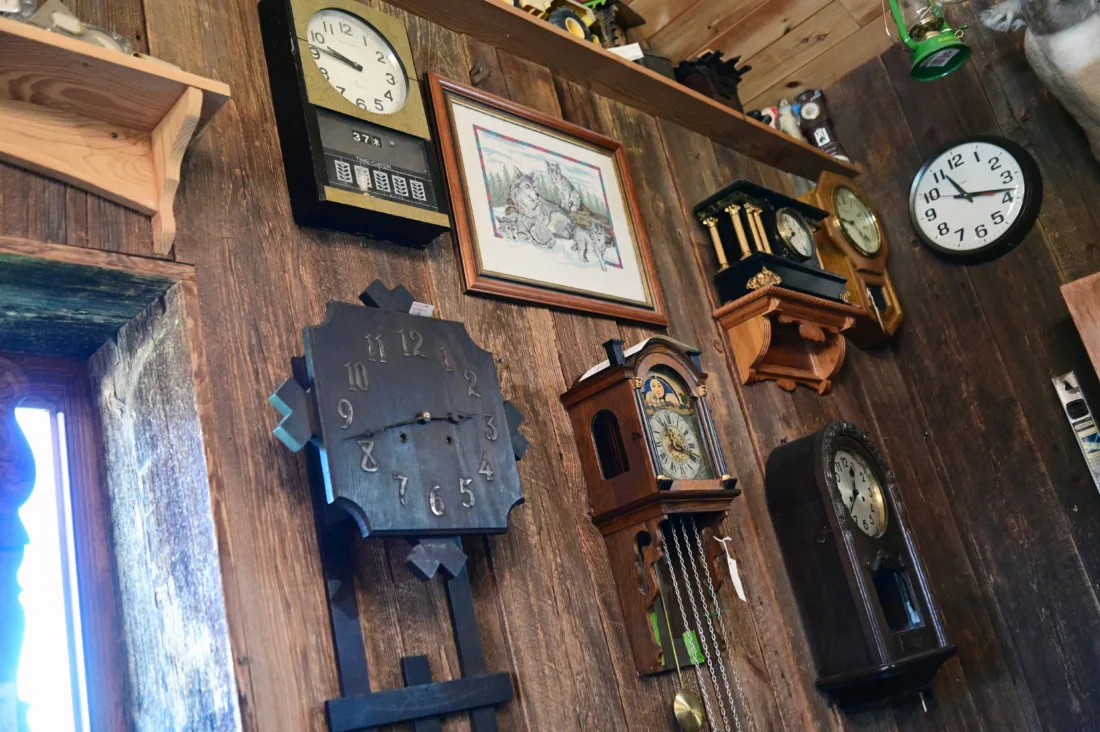
Walt Mack's shop has a variety of clocks on the walls. Mirror photo by Patrick Waksmunski
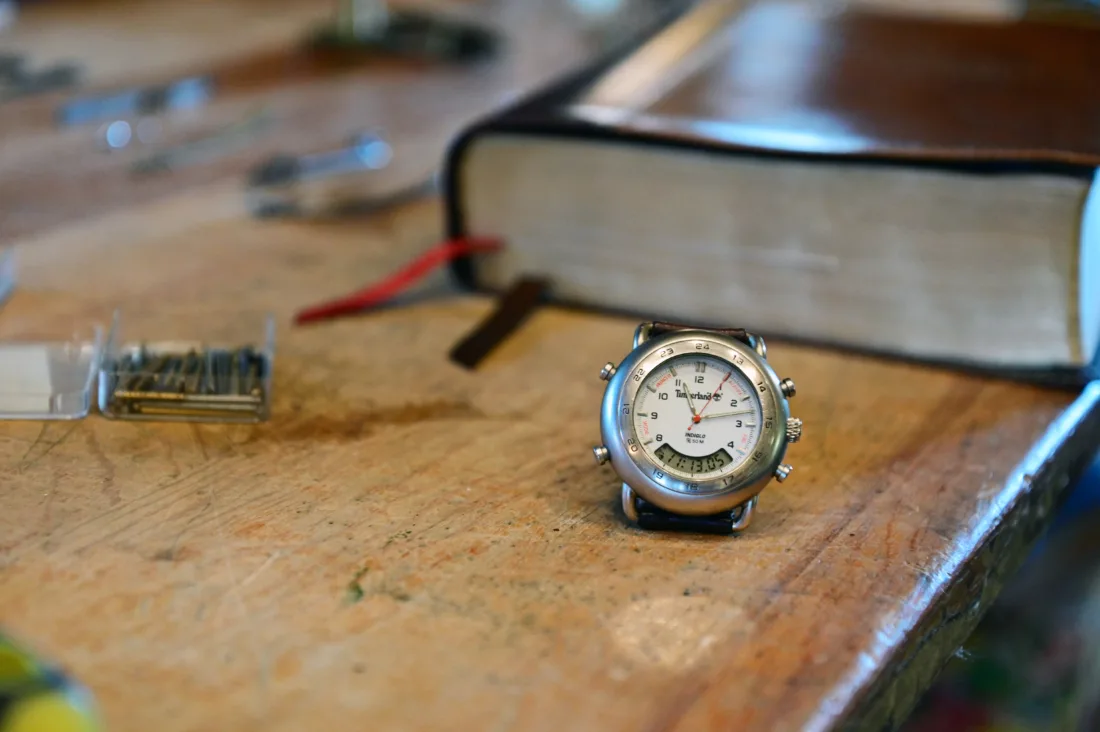
Walt Mack set all of his clock to this Timberland watch made by Timex. Mirror photo by Patrick Waksmunski
Walt Mack sits in his shop west of Vintondale. Mirror photo by Patrick Waksmunski
Walt Mack uses a microscope to work on the minute workings in a watch. Mirror photo by Patrick Waksmunski
Walt Mack sets the time on a grandfather clock with a moon phase dial. Mirror photo by Patrick Waksmunski
Walt Mack's shop has a variety of clocks on the walls. Mirror photo by Patrick Waksmunski
Walt Mack set all of his clock to this Timberland watch made by Timex. Mirror photo by Patrick Waksmunski
Trending
VINTONDALE -- Antique clocks are timeless, but this time of year, they need daylight saving time adjustments.
For 37 years, Mack's Clock Repair in Vintondale has helped local residents keep on time by adjusting their timepieces to the biannual changes.
"Of course, all the clocks in here, I have to reset them all," owner Walt Mack said with a laugh, pointing out the watches, anniversary clocks, cuckoo clocks and grandfather clocks ticking in his shop. He uses a trusty Timberland watch -- made by Timex -- to set all his clocks.
While people nowadays use digital clocks on their smart devices, he mostly works on mechanical clocks that hold sentimental value for customers.
"They're just like your car or a lawnmower," he said. "They wear out after a while."
Daylight saving time isn't his busiest season; April and May are. He isn't sure why he typically gets more business in the springtime instead of the fall or the holidays.
He gets more phone calls this time of year with people asking how to set their clocks to the new time.
"Personally, I prefer the longer daylight hours in the evening as opposed to the morning," he said, adding that he would abandon time changes altogether for longer evenings.
"I do like the daylight in the evening," he said.
Business time
Before starting his clock repair business, Mack attended trade school for watches and clocks in Lancaster, then worked at Timex as a process product engineer for 13 years. He worked with the design group to verify designs, the manufacturers to verify tools used to assemble watches and the assembly plants to help with start-up production. They also built functional and cosmetic prototypes for marketing.
"Timex inspects their watches at plus or minus three seconds a month," he said. "If they gained or lost four seconds a month, we threw them out."
In the past, more people pursued clock repair as a profession, he said, noting that every jewelry store had its own watchmakers and clockmakers. Now, those jobs are nonexistent.
"There isn't the demand for it," he said.
Most watchmakers and clockmakers left the trade, as they struggled to make a living from it, he said. Mack, however, stuck with the trade long enough so that people now come to him for their clocks.
Many grandfather clocks still exist in the area, he said, so they are a popular type of clock in his shop. Mack spends at least two or three days traveling to fix customers' clocks in their homes.
"For grandfather clocks, I travel up to about three hours," he said.
Anniversary clocks, which are wound once a year, are also popular but difficult to fix, even for experienced clockmakers, he said.
"I'm the only one around who I know of that will touch them," he said.
He works on other sentimental clocks as well, including cuckoo clocks and pocket watches. Fixing wristwatches also brings in its own business, including the occasional Rolex wristwatch.
But no matter the clock's type, the cleaning process is similar: he tears it apart, puts it through his cleaning tank and dries it off before reassembling it.
"As I put them back together, I fix anything that's worn or broken," he said.
Everything old is new again, and people still collect antique timepieces and invest in mechanical wristwatches. But Mack said antique clocks will never receive the same level of business they once did, as digital clocks are accessible on smart devices.
"Mechanical clocks will never be what they were," he said. "But they still make very nice mechanical watches."
Mirror Staff Writer Colette Costlow is at 814-946-7414.