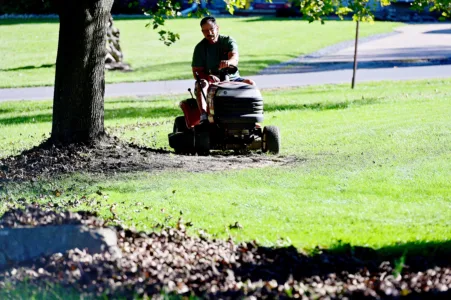
Bob Lonero mows his lawn and the fallen leaves in the yard of his Meadow Lane home in Duncansville on Tuesday afternoon. Mirror photo by Patrick Waksmunski

Bob Lonero mows his lawn and the fallen leaves in the yard of his Meadow Lane home in Duncansville on Tuesday afternoon. Mirror photo by Patrick Waksmunski
Amtrak’s second round-trip Pennsylvanian will begin running Nov. 18, and the schedule for both trains is now set, according to…
HOLLIDAYSBURG — With caseloads piling up, Blair County’s Chief Public Defender Julia Burke requested funding to add two attorneys to…
HOLLIDAYSBURG — A Blair County judge upheld the lengthy sentence imposed on a city man convicted in May of attempted…
With the November midterm elections approaching, environmental and community advocates gathered at the Capitol Rotunda in Harrisburg Tuesday to protest…
HARRISBURG — Pennsylvania will spend nearly 40% of its $50.8 billion budget on education this year. The size of that…

PITTSBURGH — The Pittsburgh Penguins have acquired defenseman Spencer Stastney from Edmonton in exchange…


MILL HALL — Addison Lindsay won in straight sets at No. 1 singles, and Lucy and…

Following are the highlights of head coach Matt Campbell, defensive coordinator D’Anton Lynn, quarterback…
UNIVERSITY PARK — The Penn State women’s basketball team found out on Tuesday it will have…

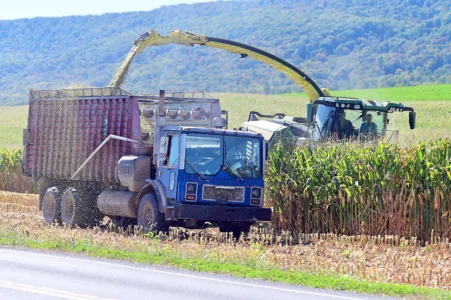
A crew from Rodney Metzler Farms harvests a field of corn for silage on…
US stocks rise to a record on expectations The U.S. stock market hit an all-time high as expectations rise for companies to keep making more money. The S&P 500 climbed 0.6% Tuesday and topped its prior record set in August. The Dow Jones Industrial Average added 0.5%, and the Nasdaq composite tacked 0.4% onto…
It will be a boost of great potential if the Altoona-Blair County Development Corporation is successful in “constructing” the foundation for purchase of the Logan Valley Mall by an apparently yet-to-be-finalized investor group. If all of the pieces of the purchase puzzle come together, as envisioned, the road presumably will be paved for revitalization…
Editor’s note: The following information was provided by the prothonotary’s offices at area county courthouses. Blair County BOWMASTER — Alexander M., Duncansville; Abbie L., no address available. Married July 12, 2021. LOWERY — Alicia, Hollidaysburg; Tyrone, Altoona. Married Dec. 5, 2014. BEAUCHAMP — Barbara C., Hollidaysburg; Stephen Jr., Buxton, Maine. Married Aug. 6, 2000.…