How Blair County evolved over 250 years
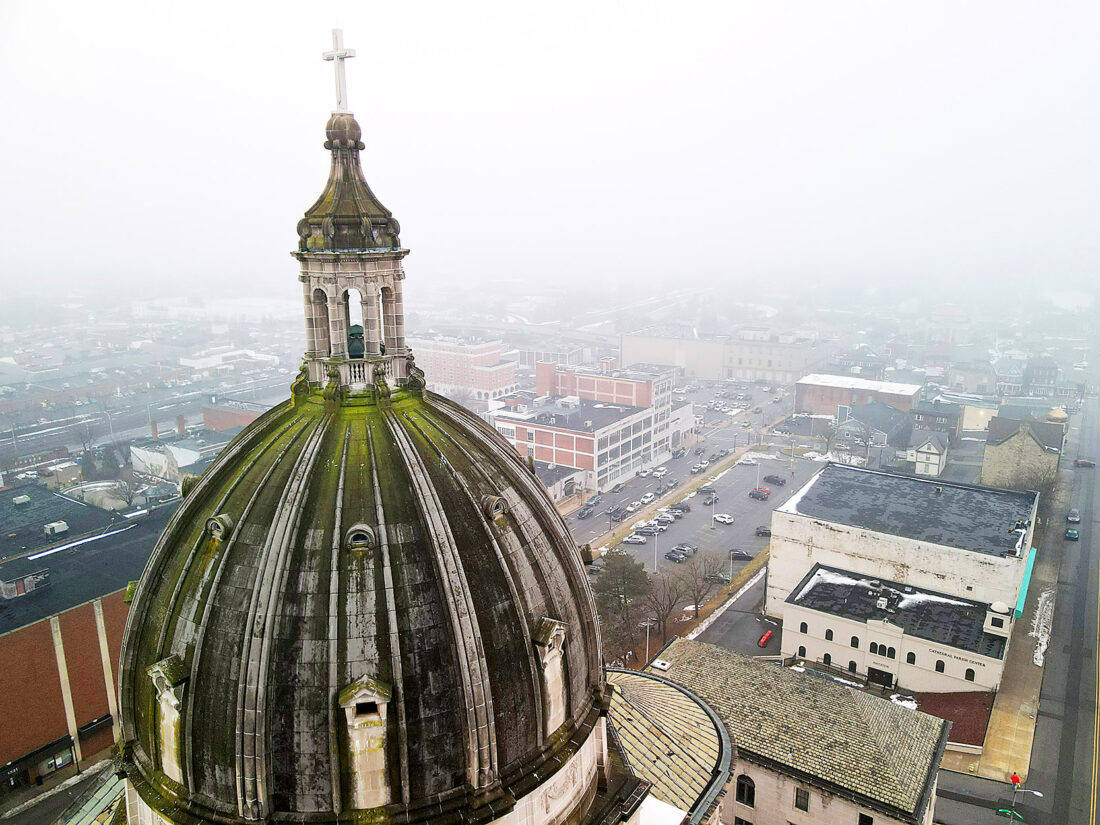
Mirror photo by Patrick Waksmunski / The land on which Altoona now sits was a different world during the time of the nation’s founding.
While Blair County’s landscape is filled with houses and lined with paved roads today, the region appeared drastically different 250 years ago.
Pennsylvania was one of the original 13 colonies in 1776, and many of its residents played a crucial role in the American Revolution. Some notable events that happened in the colony include the signing of the Declaration of Independence in Philadelphia and the first United States president, George Washington, crossing the Delaware River.
But Pennsylvania looked different over 200 miles west, being dominated by a range of mountains, according to local historians.
Since Blair County was incorporated in 1864, the region was originally part of Bedford County, said Jim Lowe, president of the Blair County Historical Society, who authored a book about Blair County’s involvement in the American Revolution.
At the time, Bedford County was the intersecting line between the furthest point European settlers had made west, he said.
Lowe said it was a challenging time for settlers to establish their lives in the region because everyone lived long distances from each other.
“They couldn’t run down to the local supermarket, grocery store or Lowe’s for building supplies,” he said. “You had to take care of everyone on your own, and you were self-sufficient.”
The region was largely untouched by human hands, Penn State Altoona assistant teaching professor of history Jared Frederick said.
Towns and neighborhoods were few and far between, he said, noting that there were clusters of log cabins or small frontier blockades. Frankstown was one of the established communities in the region.
Life in the Allegheny Mountains
The region hosted a mixture of individuals during the American Revolution, Frederick said, including immigrant families, indentured servants and enslaved people.
“They’re going to the only place where they can start their lives anew,” he said.
Meanwhile, Native Americans in the Delaware, Shawnee and Seneca tribes were being pushed out of their land.
Many people living in the region were very poor because the prime real estate of Pennsylvania was occupied by aristocratic families on the eastern side of the Susquehanna River for the better part of the century, he said.
Starting a family in the region came with a lot of danger, he said, as many settlers with farms had many children to help with the farm, but that also meant more mouths to feed.
Back then, it was more than common to see the father tend to the farm with the help of his children, while the mother took care of cooking and cleaning, even gutting and preparing a dead deer for dinner, Lowe said.
Areas such as Sinking Valley and Morrisons Cove were prime farming spots, and he said many settlers flocked there to grow spices, raise animals and harvest produce.
Many people grew the produce or spices they needed in their own backyards, he said.
Medical services weren’t available the way they are now, he said, so settlers grew their own ingredients for medicine or traded their products with neighbors if need be.
Transportation was mostly done on foot, but horseback was used if someone was in a hurry, and carts and wagons were used if someone was moving something heavy, he said.
“The canals won’t appear for another 50 years, railroad lines another 75,” he said. “It’s primitive transportation.”
Fighting on the frontlines
Regional settlers weren’t fighting full regiments of redcoats on their land during the American Revolution, but rather native people who responded to the insurrection of their land.
Notable deaths at this time include Hollidaysburg founder William Holliday’s three children, two daughters and one son, who were murdered after an attack on the family farm in 1779, according to Jim Snyder Jr., president of the Blair County Genealogical Society.
He said that Holliday’s son was shot in the heart, but his one daughter was still alive. Holliday tried to put his daughter on horseback, but a Native American fighter grabbed and killed her. The next day, two more individuals were killed in the Morrisons Cove area, he said.
Residents were also divided on the political landscape, Lowe said, as about one-third of the colonies were patriots, one-third were loyalists and the remaining section was neutral to the war.
Looking at these numbers, there was a huge political divide in the region, as some Pennsylvanians wanted to throw their lot in with the rebellion, Frederick said, while others were proud to call themselves Britons. And those caught in the middle were seen as targets from both sides.
“It was nothing less than a civil war,” he said.
However, it wasn’t until about 50 years later that the canal systems were installed, one of the largest innovations made in the Blair County region, before the railroad lines.
“It’s incredible to think that many lived to see that transportation come into being,” he said, adding that these advancements speak to the technological innovations people pride themselves on.
While 250 years feels like a long time ago, Snyder said it’s still important for people to care about their local history.
“I tell people it’s fascinating how things develop,” he said.
Mirror Staff Writer Colette Costlow is at 814-946-7414.
Local News
Doggy paddle
PSU librarian visits Altoona for research
A Penn State University of Harrisburg librarian visited Altoona Area Public Library last week to access information ...
Two firefighters awarded for bravery, competence
Contacted by phone Monday evening after he received a lifesaving award and valor award for actions during a house ...
AP poll: Fewer Americans say democracy central to US identity
WASHINGTON — As the U.S. prepares for an extravagant celebration of its founding principles, fewer Americans see ...
City man gets up to 23.5 months in stabbing
HOLLIDAYSBURG — A city man who stabbed a woman with kitchen scissors during an argument took a plea agreement and ...